

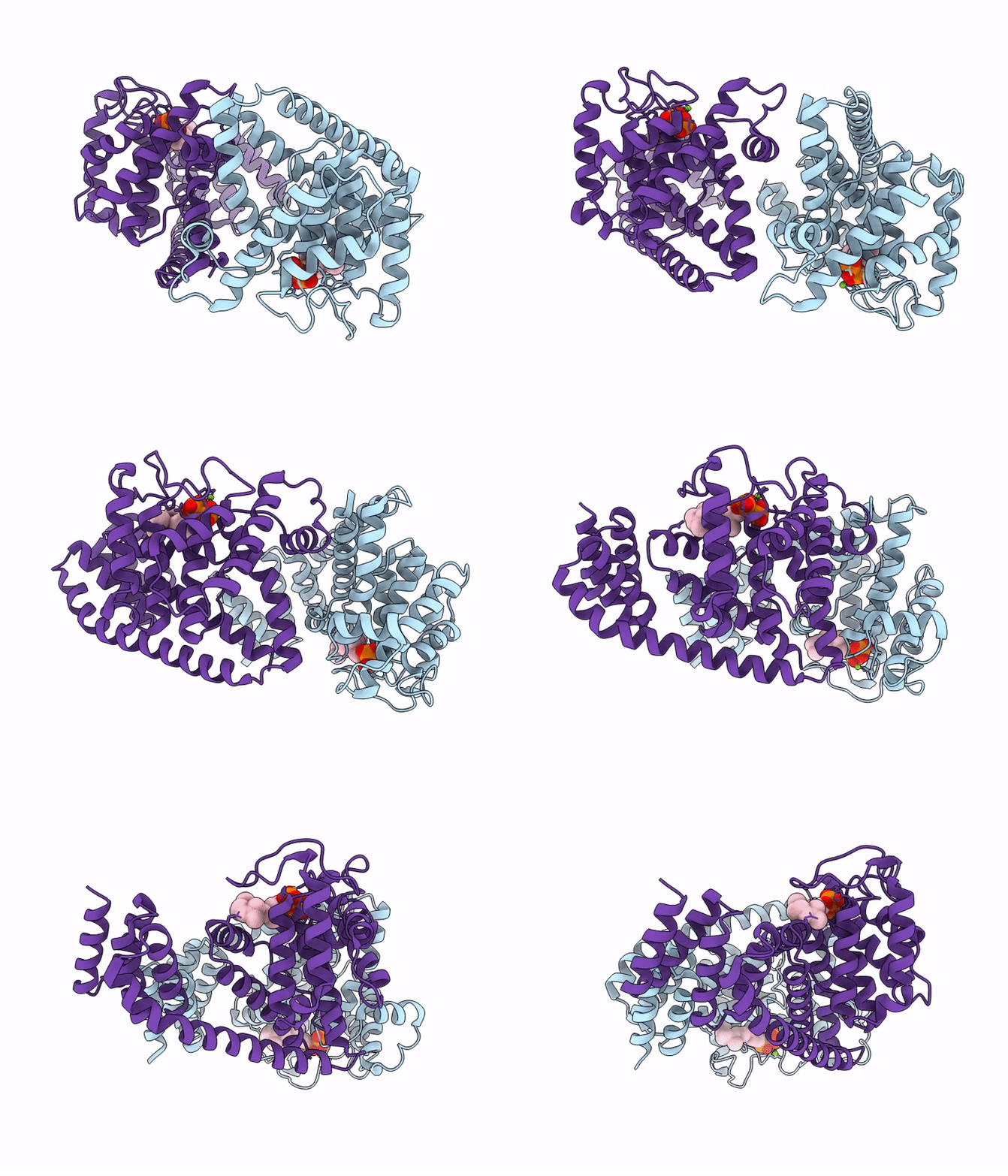
9YZ5 image
Deposition Date 2025-10-30
Release Date 2026-02-25
Last Version Date 2026-03-18
Entry Detail
PDB ID:
9YZ5
Keywords:
Title:
human FicD bound with farnesyl pyrophosphate
Biological Source:
Source Organism(s):
Homo sapiens (Taxon ID: 9606)
Expression System(s):
Method Details:
Experimental Method:
Resolution:
2.58 Å
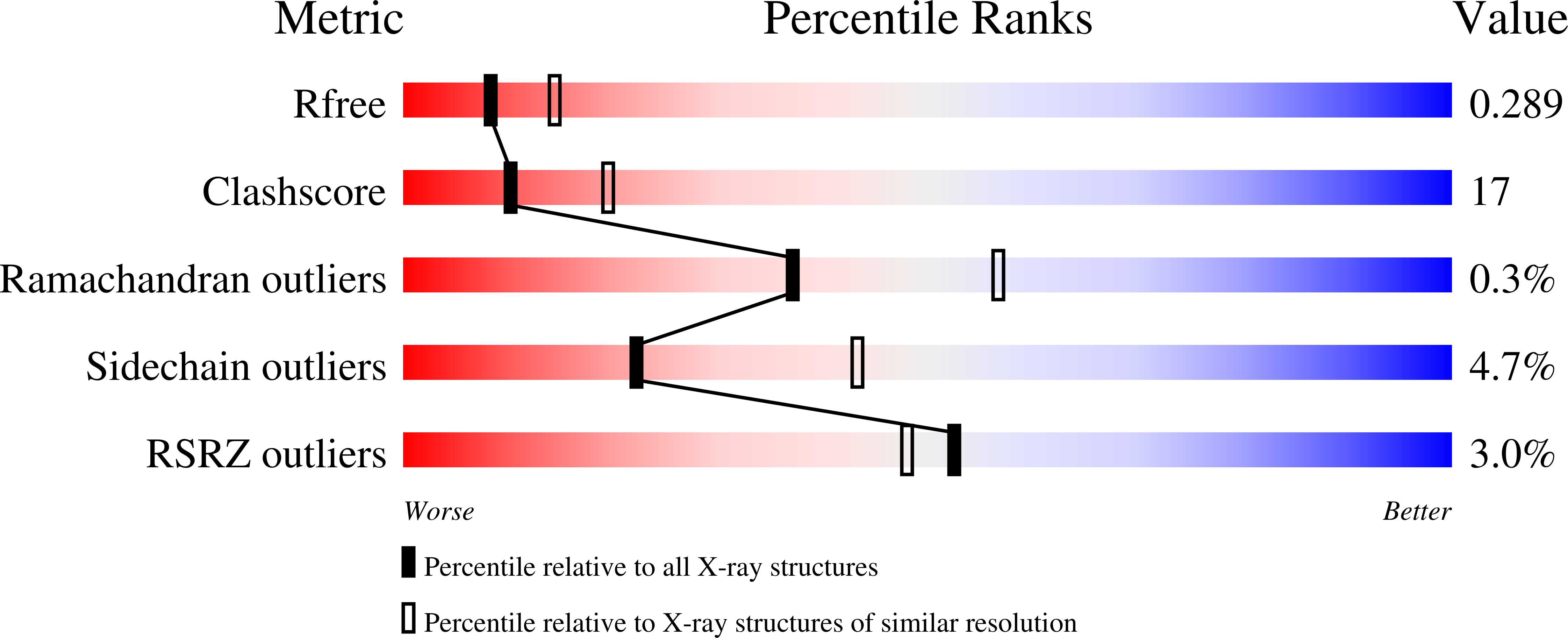
R-Value Free:
0.29
R-Value Work:
0.23
R-Value Observed:
0.23
Space Group:
P 1 21 1
Macromolecular Entities
Structures with similar UniProt ID
Protein Blast
Polymer Type:polypeptide(L)
Molecule:Protein adenylyltransferase F
Gene (Uniprot):FICD
Chain IDs:A, B
Chain Length:330
Number of Molecules:2
Biological Source:Homo sapiens
Primary Citation
Inhibition of FicD-mediated AMPylation and deAMPylation by isoprenoid diphosphates.
Proc. Natl. Acad. Sci. U.S.A. 123 e2533457123 e2533457123 (2026)
PMID: 41779785 DOI: 10.1073/pnas.2533457123

Abstact

FicD regulates Unfolded Protein Response (UPR) through reversible AMPylation and deAMPylation of BiP, an HSP70 chaperone and master regulator of the UPR. FicD activity is regulated by endoplasmic reticulum-stress, catalyzing BiP AMPylation under low stress conditions to hold inactive chaperone in reserve. In stressed cells, FicD deAMPylates BiP, acutely increasing its active pool to assist in protein folding. Variants in UPR machinery, including those in the FicD gene, are linked to hereditary diseases. Despite the known role of FicD in UPR, in-vivo regulation of its activity remains elusive, and identifying metabolites that alter FicD activity could prove useful pharmaceutically. We applied an unbiased high-throughput screening platform, known as Mass spectrometry Integrated with equilibrium Dialysis for the discovery of Allostery Systematically (MIDAS), to identify small molecule metabolites that might regulate FicD activity. MIDAS revealed interactions between FicD and two mevalonate pathway intermediates: geranyl-pyrophosphate and farnesyl-pyrophosphate. Biochemical characterization indicates that both potently inhibit FicD-mediated AMPylation and deAMPylation. The crystal structure of FicD bound to farnesyl-pyrophosphate demonstrates a competitive inhibition mechanism, with the pyrophosphate adopting the alpha and beta phosphate positions of adenosine triphosphate (ATP) and the hydrocarbon chain filling the nucleoside pocket. FicD variants previously appeared as biochemically indistinguishable, yet lead to different human pathologies. We demonstrate farnesyl-pyrophosphate inhibits FicD(R374H) and FicD(R374C) variants implicated in causing hereditary spastic paraplegia, but not the FicD(R371S) variant associated with neonatal diabetes. This study furthers our understanding of FicD inhibitors and distinguishes disease causing variants, providing insight into pharmacological targeting of UPR activity.

Legend

Protein

Chemical

Disease

Primary Citation of related structures
Feedback Form
Name
Email
Institute
Feedback