

9YWS image
Deposition Date 2025-10-25
Release Date 2026-07-22
Last Version Date 2026-07-22
Entry Detail
PDB ID:
9YWS
Title:
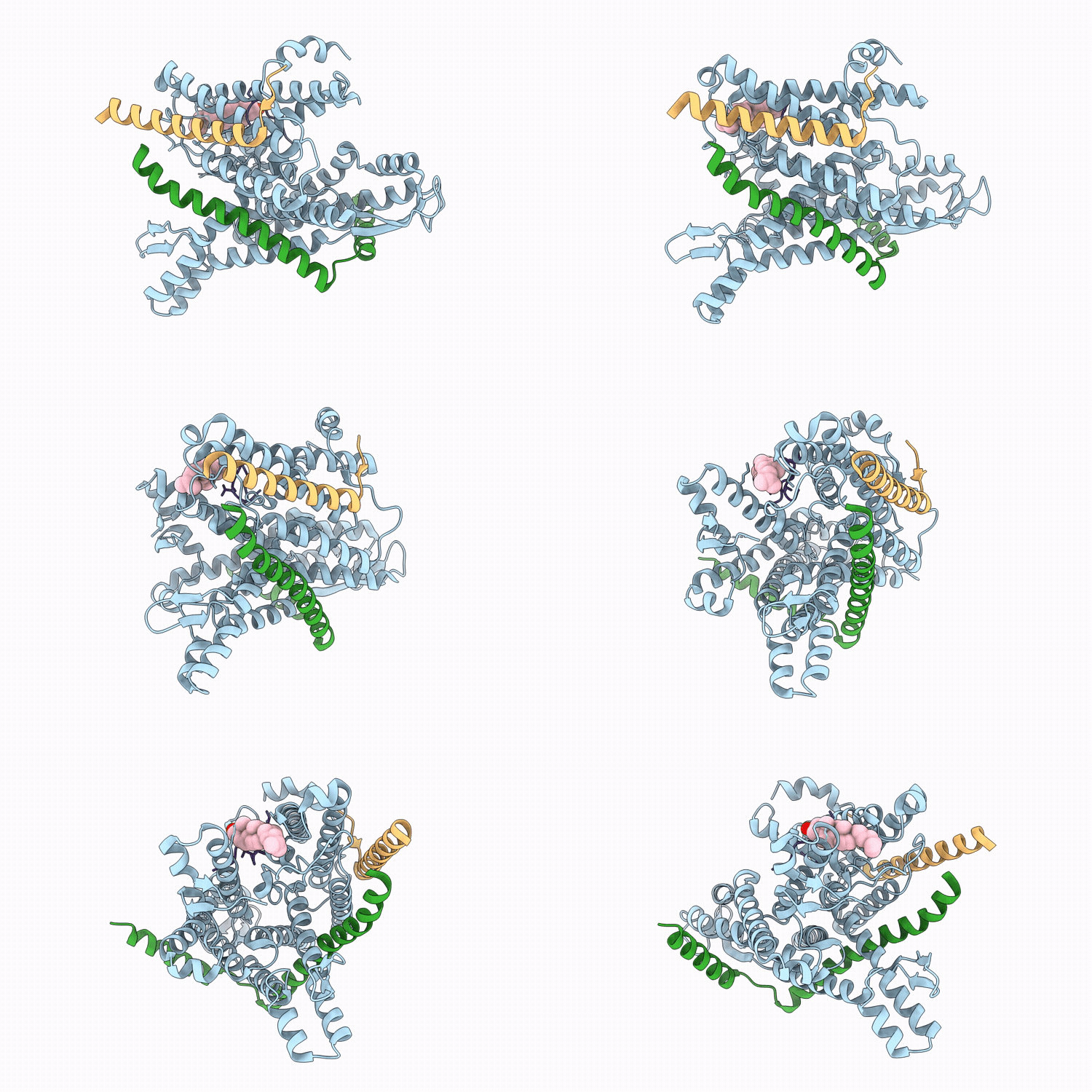
Human Sec61 complex bound to coibamide A
Biological Source:
Source Organism(s):
Homo sapiens (Taxon ID: 9606)
Leptolyngbya sp. (Taxon ID: 47254)
Expression System(s):
Method Details:
Experimental Method:
Resolution:
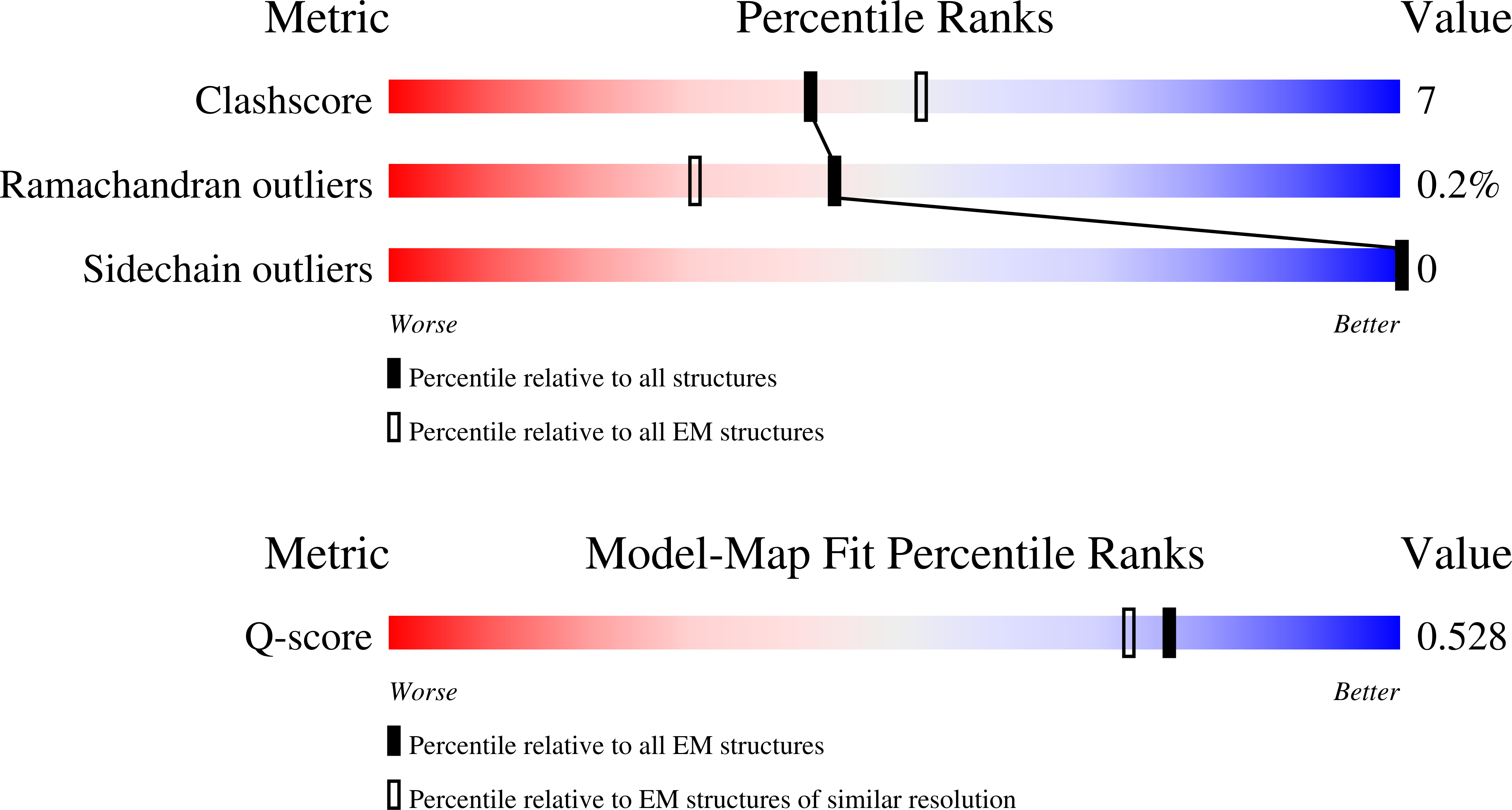
3.10 Å
Aggregation State:
PARTICLE
Reconstruction Method:
SINGLE PARTICLE
Macromolecular Entities
Polymer Type:polypeptide(L)
Molecule:Protein transport protein Sec
Gene (Uniprot):SEC61A1
Chain IDs:C (auth: A)
Chain Length:476
Number of Molecules:1
Biological Source:Homo sapiens
Polymer Type:polypeptide(L)
Molecule:Protein transport protein Sec
Gene (Uniprot):SEC61G
Chain IDs:A (auth: B)
Chain Length:68
Number of Molecules:1
Biological Source:Homo sapiens
Polymer Type:polypeptide(L)
Molecule:Protein transport protein Sec
Gene (Uniprot):SEC61B
Chain IDs:B (auth: C)
Chain Length:96
Number of Molecules:1
Biological Source:Homo sapiens
Polymer Type:polypeptide(L)
Molecule:Coibamide A
Chain IDs:D
Chain Length:11
Number of Molecules:1
Biological Source:Leptolyngbya sp.
Ligand Molecules
Primary Citation
Structure-based design of Sec61 translocon targeting prodrugs minimize off-target toxicity.
Cell Chem Biol 33 823 836.e21 (2026)
PMID: 42263680 DOI: 10.1016/j.chembiol.2026.05.006

Abstact

Coibamide A (CbA) is a cyclic depsipeptide that inhibits the function of the Sec61 translocon and exhibits significant antitumor activity. However, its broad Sec61 inhibition results in non-selective cytotoxicity, limiting therapeutic applications. To elucidate the molecular mechanism of CbA-mediated Sec61 blockade and enable rational prodrug design, we determined the cryo-EM structure of human Sec61 bound to CbA at 3.1 A resolution. The structure reveals that CbA adopts a distinctive lasso-like conformation and occupies the lateral gate of Sec61, a binding site shared with other Sec61 inhibitors, while forming a particularly more expansive set of interactions with the lateral gate. Guided by these structural insights, we conducted structure-activity relationship studies and developed prodrug strategies that modulate CbA's antitumor activity through the controlled perturbation of intramolecular and protein hydrogen bonding interactions. Together, these results establish a structure-guided strategy for prodrug design of CbA and demonstrate the general applicability of backbone-caging to enhance the tolerability of Sec61 inhibitors.

Legend

Protein

Chemical

Disease

Primary Citation of related structures
Feedback Form
Name
Email
Institute
Feedback