

9YTQ image
Deposition Date 2025-10-21
Release Date 2026-02-25
Last Version Date 2026-03-18
Entry Detail
PDB ID:
9YTQ
Keywords:
Title:
Computationally Designed Tetramer of Apo-HC4 (C1 symmetry)
Biological Source:
Source Organism(s):
Expression System(s):
Method Details:
Experimental Method:
Resolution:
4.34 Å
Aggregation State:
PARTICLE
Reconstruction Method:
SINGLE PARTICLE
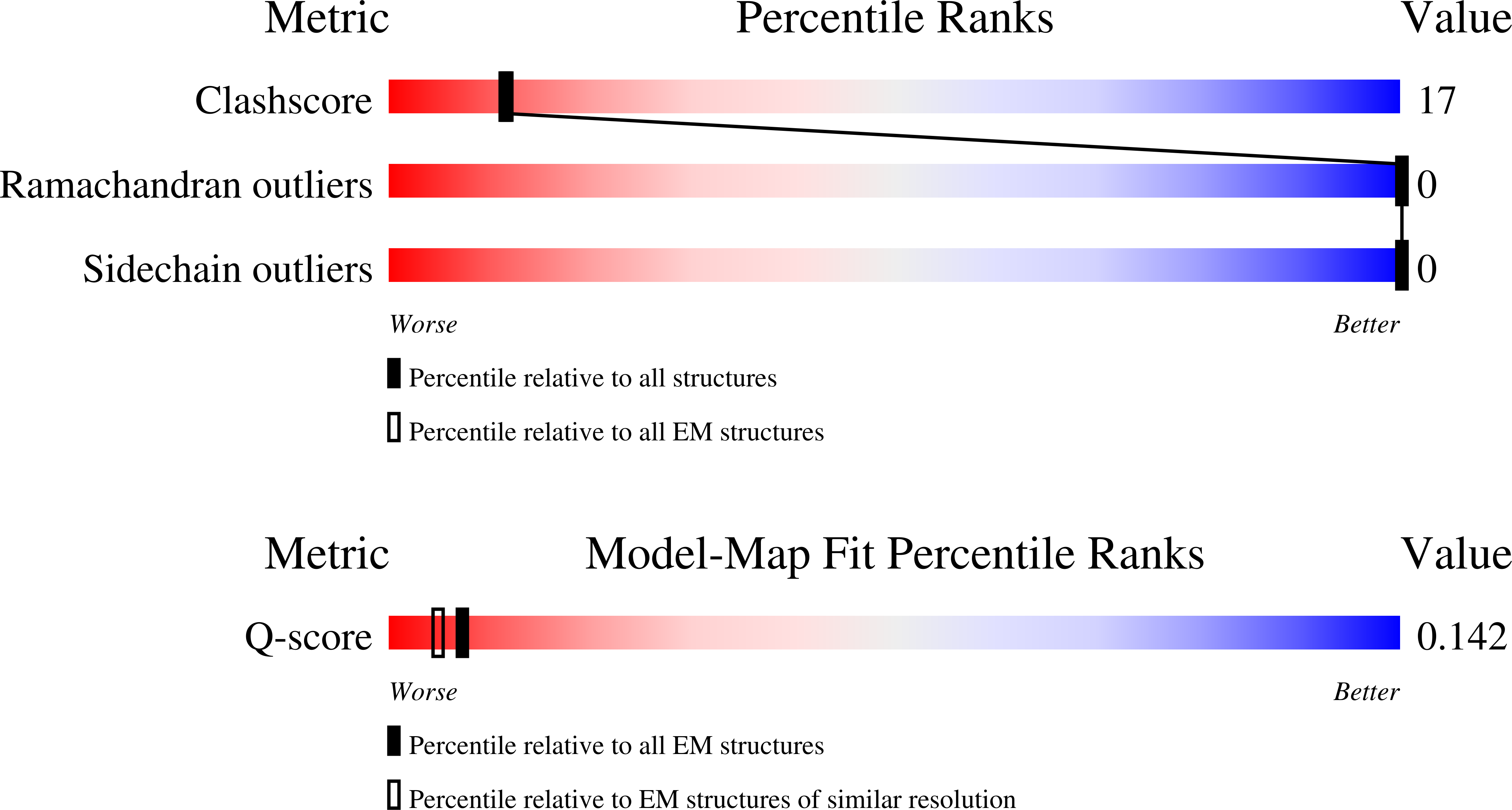
Macromolecular Entities
Protein Blast
Polymer Type:polypeptide(L)
Molecule:Designed tetrameric HC4 prote
Chain IDs:A, B, C, D
Chain Length:138
Number of Molecules:4
Biological Source:synthetic construct
Ligand Molecules
Primary Citation
Computational Design of a Highly Stable Dicopper Catechol Oxidase.
J. Am. Chem. Soc. 148 8361 8373 (2026)
PMID: 41707222 DOI: 10.1021/jacs.5c18979

Abstact

Type 3 (T3) Cu proteins play essential roles in binding and activating molecular oxygen (O(2)) and are prevalent across all domains of life. Despite sharing the same coordination motif, T3 Cu proteins display divergent functions: hemocyanin transports O(2), while tyrosinase catalyzes the hydroxylation of monophenols and the subsequent oxidation of diphenols and catechol oxidase oxidizes only diphenols. Here, we report the design and characterization of a di-Cu protein (Cu-HC4) inspired by the active sites of natural T3 Cu proteins to investigate the structural features that facilitate catalytic oxidase activity. Cu-HC4 is roughly 1/5th the size of the commercially available mushroom tyrosinase and shares only around 20% sequence identity with the T3 Cu protein templates. Notably, Cu-HC4 displays high thermostability and exhibits diphenol oxidation activity at ambient and elevated temperatures (>/=60 degrees C). Cu-HC4 also initiates the formation of melanin polymers, mimicking melanin biosynthesis of natural tyrosinases. Mechanistic investigations demonstrate that Cu-HC4 utilizes both Cu centers cooperatively for diphenol oxidation and requires O(2) for catalysis like natural Cu oxidases but follows a distinct catalytic pathway compared to those enzymes. Cryo-EM characterization of a tetrameric form of HC4 reveals slight deviations in the relative positions of the active site His residues that may account for differences in reactivity between Cu-HC4 and natural T3 Cu enzymes.

Legend

Protein

Chemical

Disease

Primary Citation of related structures
Feedback Form
Name
Email
Institute
Feedback