

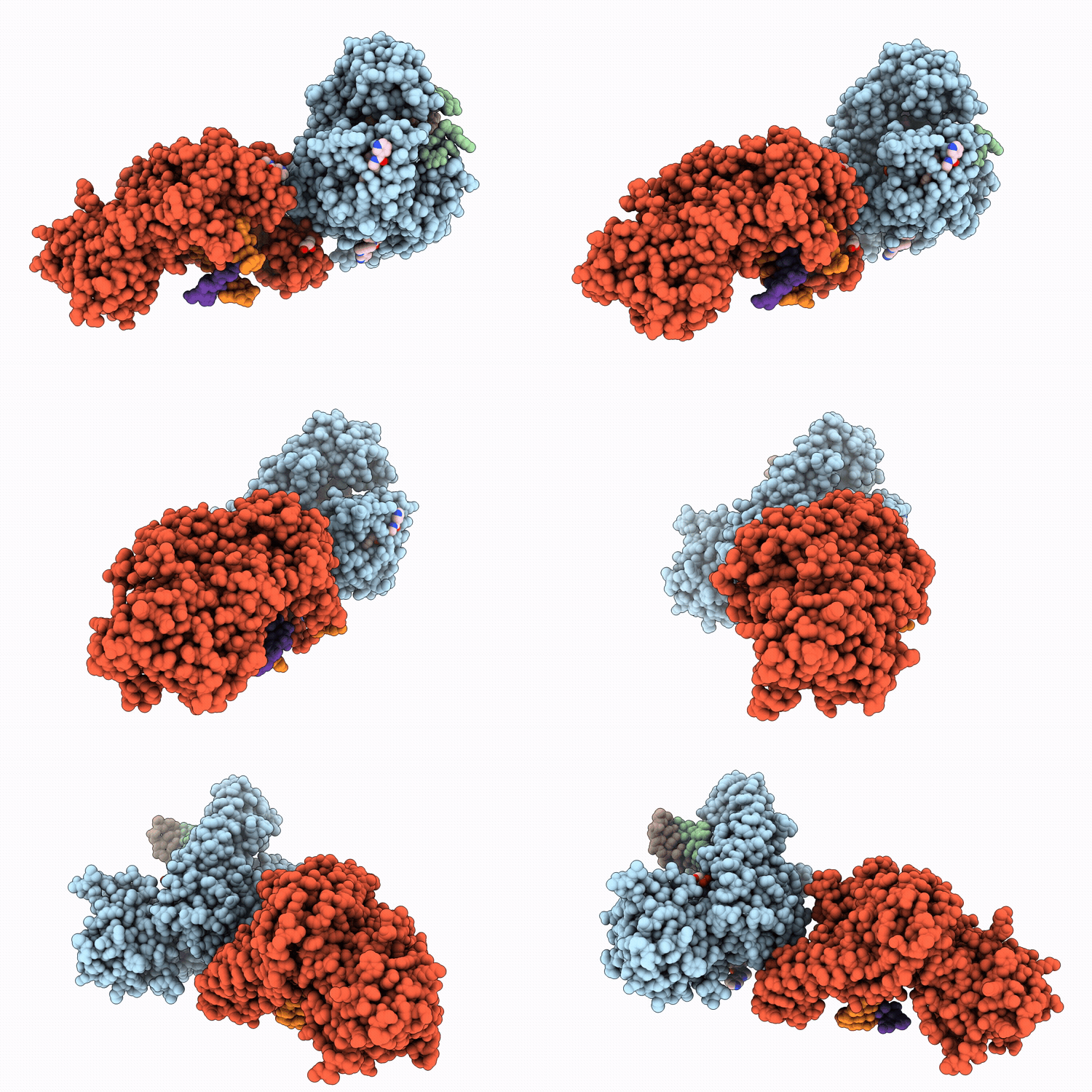
9YSH image
Deposition Date 2025-10-18
Release Date 2026-05-20
Last Version Date 2026-05-20
Entry Detail
PDB ID:
9YSH
Title:
Allosteric inhibitor of human DNA polymerase theta
Biological Source:
Source Organism(s):
Expression System(s):
Method Details:
Experimental Method:
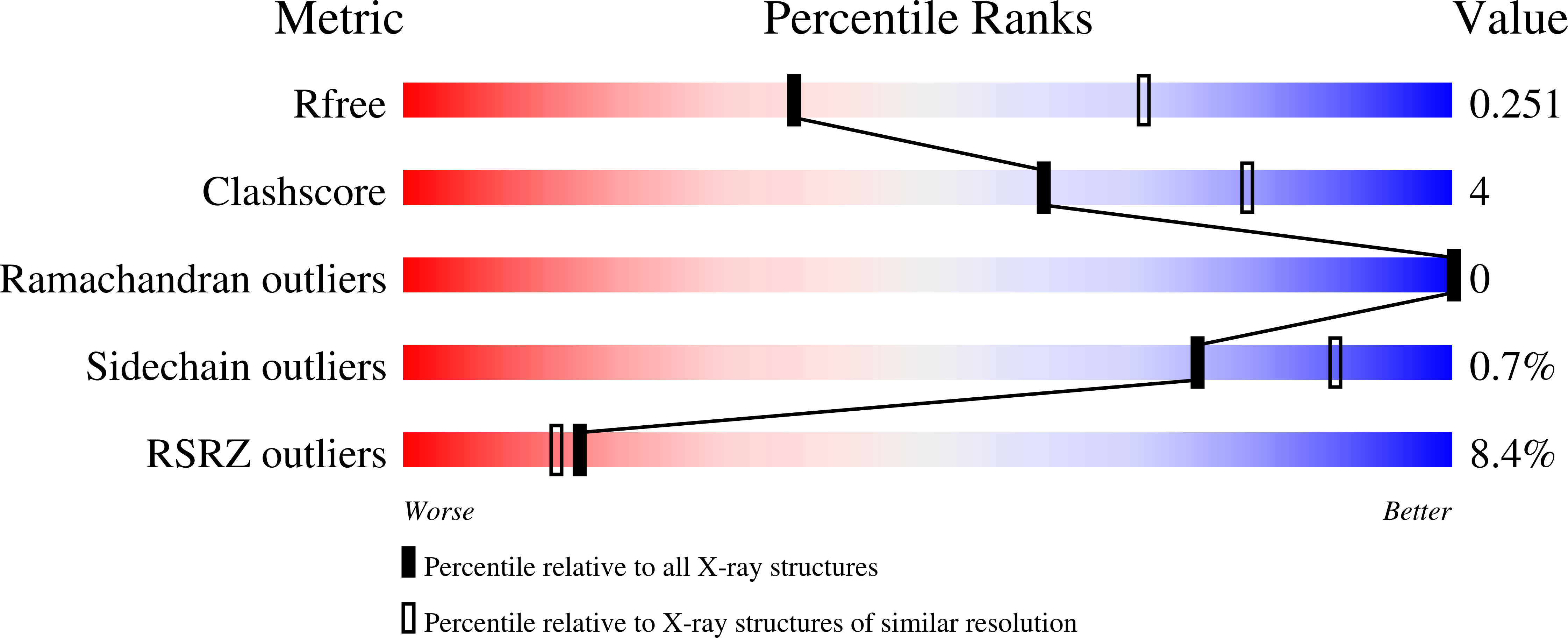
Resolution:
2.71 Å
R-Value Free:
0.25
R-Value Work:
0.21
R-Value Observed:
0.22
Space Group:
C 1 2 1
Macromolecular Entities
Structures with similar UniProt ID
Protein Blast
Polymer Type:polypeptide(L)
Molecule:DNA polymerase theta
Gene (Uniprot):POLQ
Chain IDs:A, D
Chain Length:668
Number of Molecules:2
Biological Source:Homo sapiens
Polymer Type:polydeoxyribonucleotide
Molecule:DNA (5'-D(*CP*GP*TP*CP*CP*AP*
Chain IDs:B, E
Chain Length:17
Number of Molecules:2
Biological Source:synthetic construct
Polymer Type:polydeoxyribonucleotide
Molecule:DNA (5'-D(*GP*GP*CP*TP*GP*TP*
Chain IDs:C, F
Chain Length:13
Number of Molecules:2
Biological Source:synthetic construct
Primary Citation
Design of a Targeted Covalent Probe to Interrogate the DNA Polymerase Activity of Pol theta.
Acs Med.Chem.Lett. 17 433 440 (2026)
PMID: 41704370 DOI: 10.1021/acsmedchemlett.5c00643

Abstact

Human DNA polymerase theta (Poltheta) is essential for microhomology-mediated end-joining (MMEJ) and represents a therapeutic vulnerability in homologous recombination (HR)-deficient cancers. Although reversible inhibitors of Poltheta have advanced into clinical development, covalent chemical probes remain unexplored. Analysis of a previously described structure of the reversible inhibitor compound 37 bound to Poltheta identified Cys2411 as an accessible residue 7.4 A adjacent to the inhibitor binding site. Guided by X-ray crystallographic studies, we designed compound 29 to reduce the separating distance between inhibitor and Cys2411 to 4.7 A and then synthesized RP-4029 by incorporating a vinyl sulfone electrophile. Functional studies revealed efficient covalent linkage to Cys2411 (K (inact) = 11.6 s(-1)), while a high-resolution (2.0 A) cocrystal structure validated the design strategy. These findings establish Cys2411 as a privileged site for covalent inhibitor development and provide a highly potent, selective chemical probe useful for investigating Poltheta biology.

Legend

Protein

Chemical

Disease

Primary Citation of related structures
Feedback Form
Name
Email
Institute
Feedback