

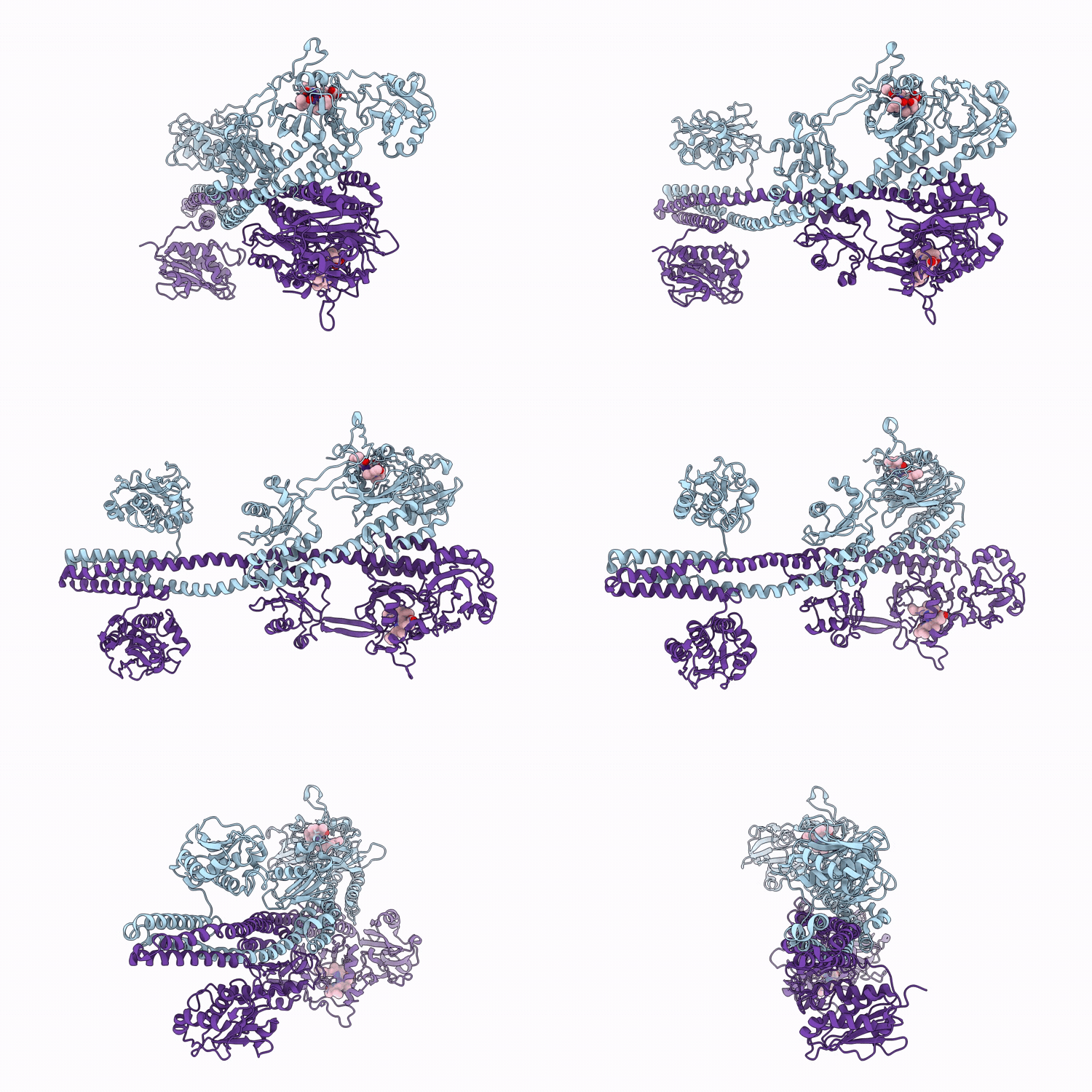
9YS3 image
Deposition Date 2025-10-17
Release Date 2026-06-17
Last Version Date 2026-06-24
Entry Detail
PDB ID:
9YS3
Title:
Pr-pr homodimer state of Stigmatella aurantiaca bacteriophytochrome 2
Biological Source:
Source Organism(s):
Expression System(s):
Method Details:
Experimental Method:
Resolution:
5.85 Å
Aggregation State:
CELL
Reconstruction Method:
SINGLE PARTICLE

Macromolecular Entities
Structures with similar UniProt ID
Protein Blast
Polymer Type:polypeptide(L)
Molecule:Bacteriophytochrome
Gene (Uniprot):SAMN05444354_11920
Chain IDs:A, B
Chain Length:739
Number of Molecules:2
Biological Source:Stigmatella aurantiaca
Ligand Molecules
Primary Citation
A bacteriophytochrome Pr/Pfr heterodimer studied through single-particle time-resolved cryo-electron microscopy.
Commun Chem ? ? ? (2026)
PMID: 42260277 DOI: 10.1038/s42004-026-02084-6

Abstact

Phytochromes are dimeric photoreceptors found in bacteria, fungi, and plants that reversibly interconvert between a red-absorbing Pr state and a far-red-absorbing Pfr state. In bacteria, phytochromes (BphPs) regulate diverse responses through a two-component signaling pathway comprising a C-terminal histidine kinase (HK) and a response regulator. A previous cryo-EM study of the wild-type BphP from Stigmatella aurantiaca (SaBphP2) revealed a stable Pr/Pfr heterodimer in which the two protomers adopt distinct Pr and Pfr conformations. Here, using the Spotiton technique, we captured the same heterodimer by illuminating SaBphP2 particles on the cryo-EM grid and vitrifying them 10 ms later. Comparison with the Pr/Pr homodimer reveals a 180 degrees rotation of the HK domain, driven by an unwinding of the coiled-coil helices that connect the photosensory core to the enzymatic domain. The large-scale reorientations provide mechanistic insight into light-triggered signal transduction mediated by bacterial phytochromes.

Legend

Protein

Chemical

Disease

Primary Citation of related structures
Feedback Form
Name
Email
Institute
Feedback