

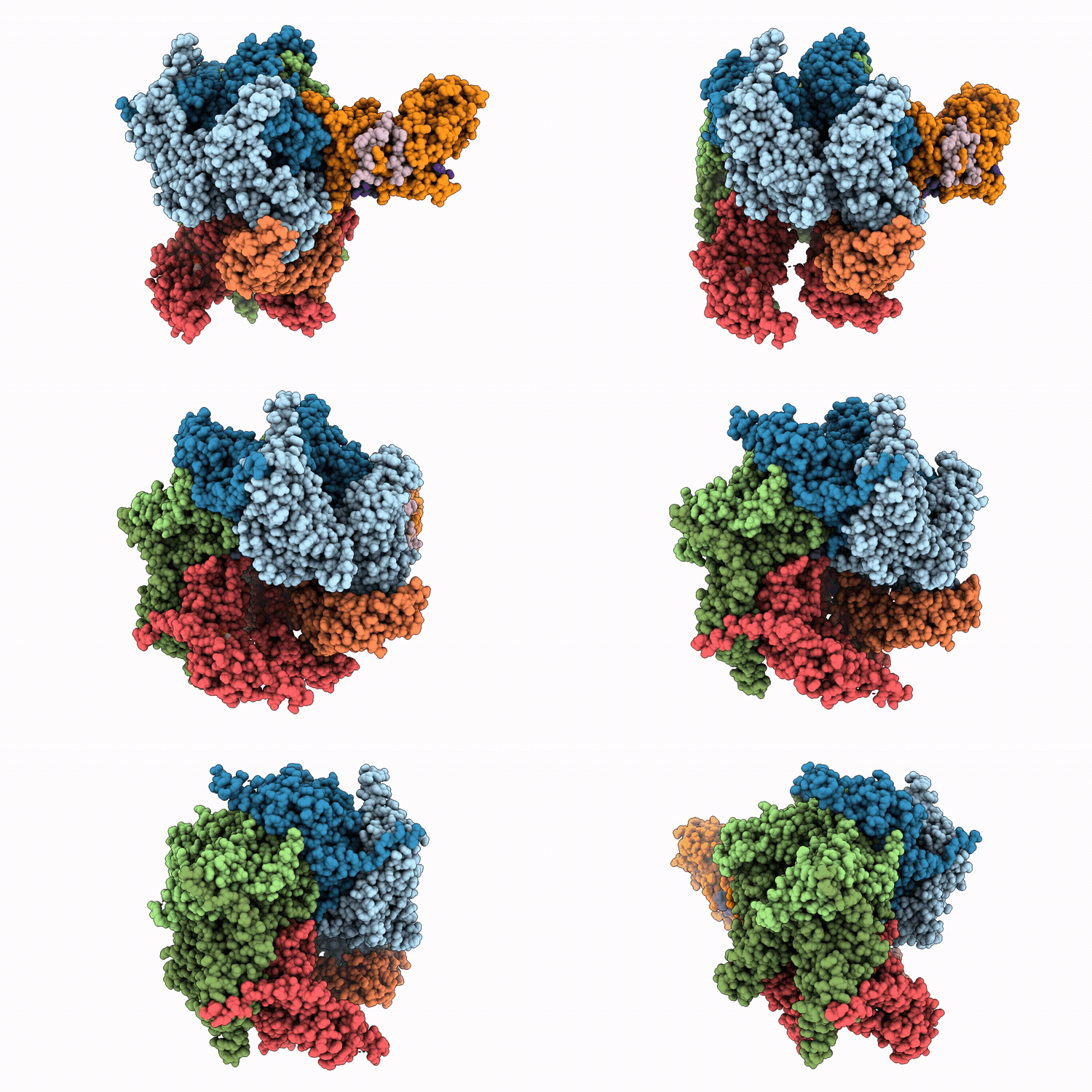
9YRC image
Deposition Date 2025-10-16
Release Date 2026-03-25
Last Version Date 2026-04-29
Entry Detail
PDB ID:
9YRC
Keywords:
Title:
p97Ufd1-Npl4 complex processing poly-ubiquitinated substrate in the presence of ATP
Biological Source:
Source Organism(s):
Expression System(s):
Method Details:
Experimental Method:
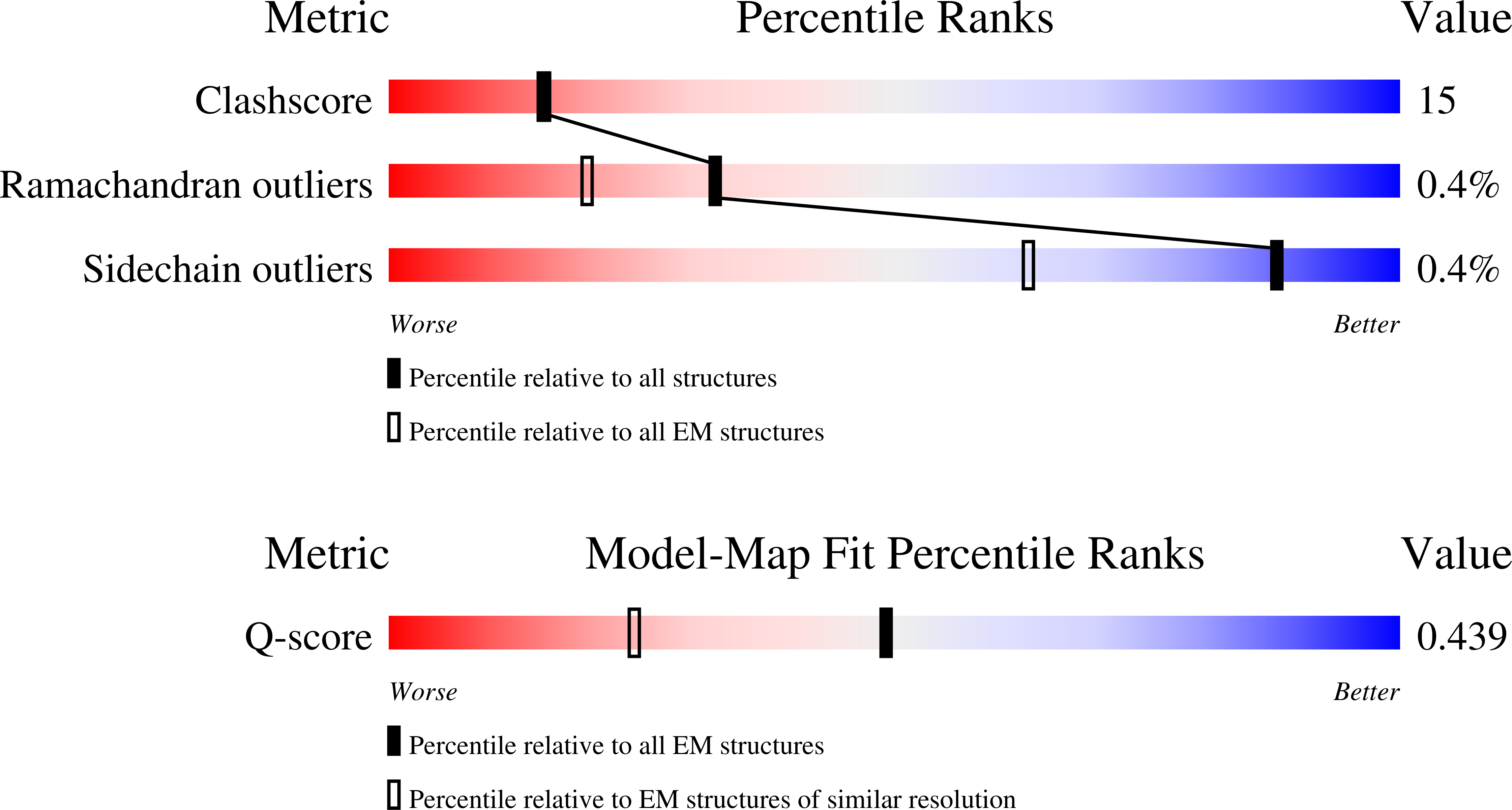
Resolution:
2.97 Å
Aggregation State:
PARTICLE
Reconstruction Method:
SINGLE PARTICLE
Macromolecular Entities
Structures with similar UniProt ID
Protein Blast
Polymer Type:polypeptide(L)
Molecule:Transitional endoplasmic reti
Gene (Uniprot):VCP
Chain IDs:A, B, C, D, E, F
Chain Length:806
Number of Molecules:6
Biological Source:Homo sapiens
Structures with similar UniProt ID
Protein Blast
Polymer Type:polypeptide(L)
Molecule:Nuclear protein localization
Gene (Uniprot):NPLOC4
Chain IDs:G
Chain Length:608
Number of Molecules:1
Biological Source:Homo sapiens
Structures with similar UniProt ID
Protein Blast
Polymer Type:polypeptide(L)
Molecule:Ubiquitin recognition factor
Gene (Uniprot):UFD1
Chain IDs:H
Chain Length:307
Number of Molecules:1
Biological Source:Homo sapiens
Structures with similar UniProt ID
Protein Blast
Polymer Type:polypeptide(L)
Molecule:Ubiquitin
Gene (Uniprot):RPL40A
Chain IDs:I
Chain Length:76
Number of Molecules:1
Biological Source:Saccharomyces cerevisiae
Primary Citation
The deubiquitinating enzyme Otu1 releases substrates from the conserved initiation complex of the Cdc48/p97 ATPase for proteasomal degradation.
Sci Rep 16 ? ? (2026)
PMID: 41795027 DOI: 10.1038/s41598-026-42811-6

Abstact

Many eukaryotic proteins are modified with a polyubiquitin chain and then recruited to either the Cdc48 ATPase (p97 or VCP in mammals) or the 26S proteasome by conserved cofactors. They can then shuttle between the Cdc48 ATPase and the 26S proteasome before being degraded. How substrates avoid being trapped on the Cdc48 ATPase complex is incompletely understood, as they can undergo repeated cycles of translocation through the ATPase pore. Here, we show that the deubiquitinating enzyme (DUB) Otu1 (Yod1 in mammals) can break this futile cycle. Otu1 trims the ubiquitin chain of the substrate before its translocation through the Cdc48 pore is initiated, allowing transfer to the proteasome and subsequent degradation. A cryo-EM structure shows that the mammalian homolog Yod1 binds to p97 simultaneously with other Cdc48/p97 cofactors. As in the yeast system, polypeptide translocation through the ATPase pore is initiated by the unfolding of a ubiquitin molecule, suggesting that the mechanism of substrate processing is conserved in all eukaryotes. SUPPLEMENTARY INFORMATION: The online version contains supplementary material available at 10.1038/s41598-026-42811-6.

Legend

Protein

Chemical

Disease

Primary Citation of related structures
Feedback Form
Name
Email
Institute
Feedback