

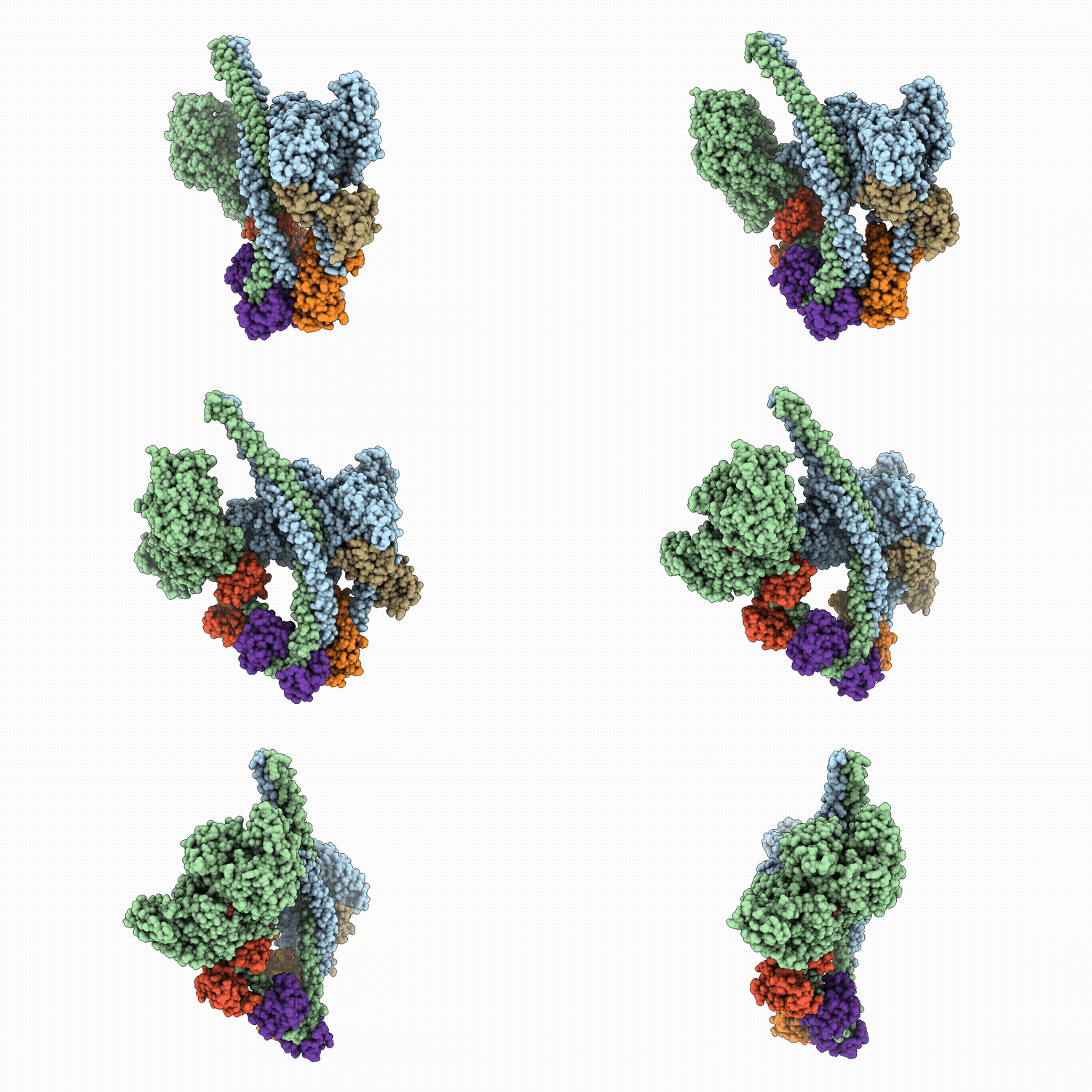
9YP4 image
Deposition Date 2025-10-13
Release Date 2026-04-08
Last Version Date 2026-05-20
Entry Detail
PDB ID:
9YP4
Title:
Cryo-EM structure of human beta-cardiac myosin bound to omecamtiv mecarbil in the interacting-heads motif and S2-FH docked state
Biological Source:
Source Organism(s):
Expression System(s):
Method Details:
Experimental Method:
Resolution:
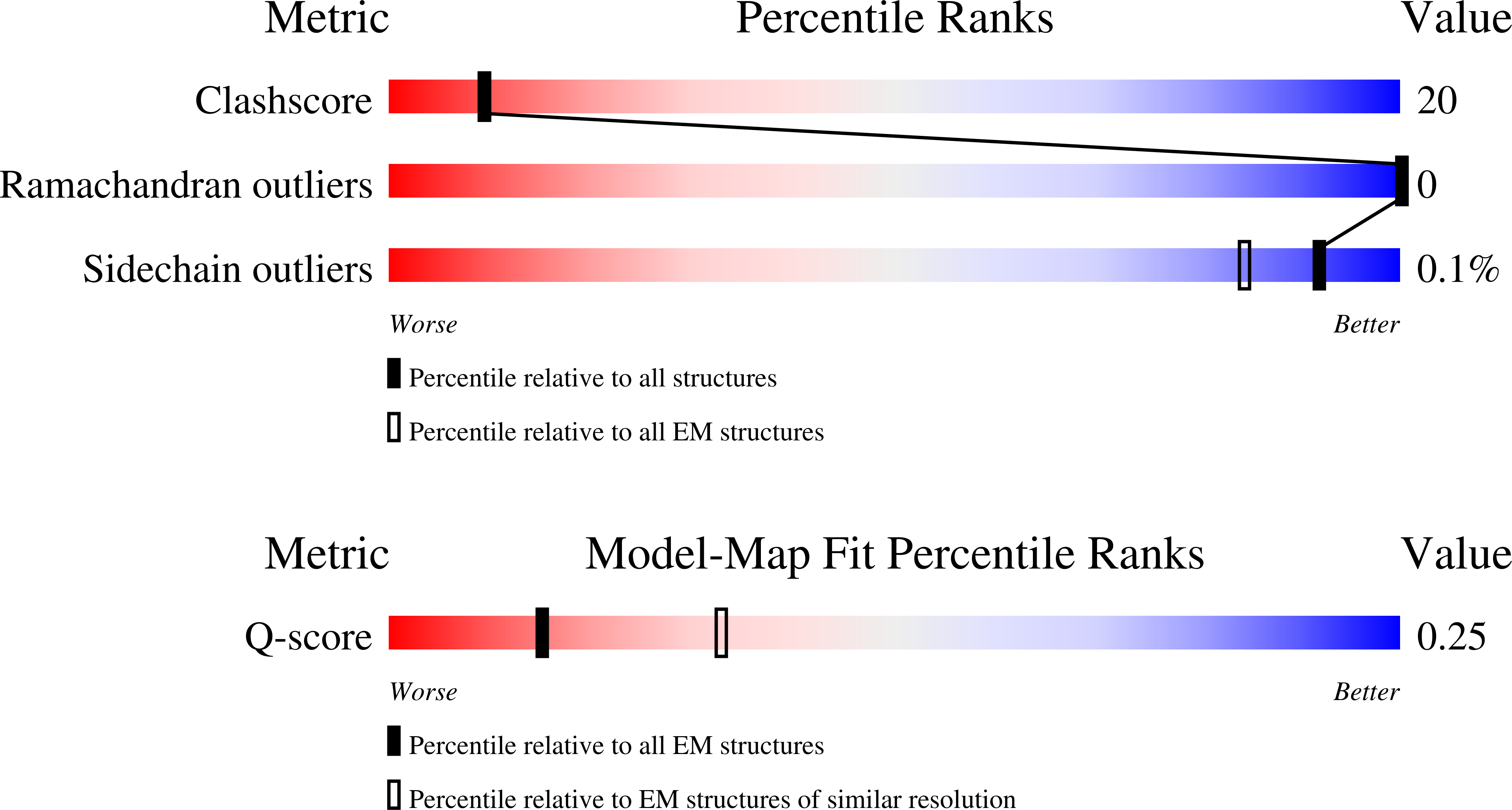
4.50 Å
Aggregation State:
PARTICLE
Reconstruction Method:
SINGLE PARTICLE
Macromolecular Entities
Protein Blast
Polymer Type:polypeptide(L)
Molecule:Myosin-7,General control tran
Gene (Uniprot):GCN4, MYH7, GFP
Chain IDs:A, B
Chain Length:1315
Number of Molecules:2
Biological Source:Homo sapiens, Saccharomyces cerevisiae, Aequorea victoria
Structures with similar UniProt ID
Protein Blast
Polymer Type:polypeptide(L)
Molecule:Myosin light chain 1/3, skele
Gene (Uniprot):Myl1
Chain IDs:C, D
Chain Length:188
Number of Molecules:2
Biological Source:Mus musculus
Structures with similar UniProt ID
Protein Blast
Polymer Type:polypeptide(L)
Molecule:Myosin regulatory light chain
Gene (Uniprot):Myl11
Chain IDs:E, F
Chain Length:169
Number of Molecules:2
Biological Source:Mus musculus
Primary Citation
Cryo-EM reveals how cardiomyopathy therapeutic drugs modulate the myosin motors of the heart.
Sci Adv 12 eaed6472 eaed6472 (2026)
PMID: 42054467 DOI: 10.1126/sciadv.aed6472

Abstact

Genetic mutations in myosin, the motor protein that powers the heartbeat, are linked to inherited hypertrophic and dilated cardiomyopathies. Mavacamten and omecamtiv mecarbil are therapeutic, myosin-targeted drugs designed to treat these myopathies, but their mechanism of action has remained unclear. Using single-particle cryo-EM, we determined near-atomic resolution structures of wild-type, mavacamten-bound, and omecamtiv mecarbil-bound myosin molecules. Across all conditions, we observe two distinct, alternate conformations of myosin, not previously reported. We show how mavacamten stabilizes one conformation by reinforcing key electrostatic interfaces in the molecule, whereas omecamtiv mecarbil weakens these interfaces, favoring the second structure. This remodeling elucidates previously unclear allosteric mechanisms through which these drugs either inhibit or enhance myosin activity, countering the deleterious impacts of disease. These findings reveal how drugs modulate myosin structure to control cardiac contractility.

Legend

Protein

Chemical

Disease

Primary Citation of related structures
Feedback Form
Name
Email
Institute
Feedback