

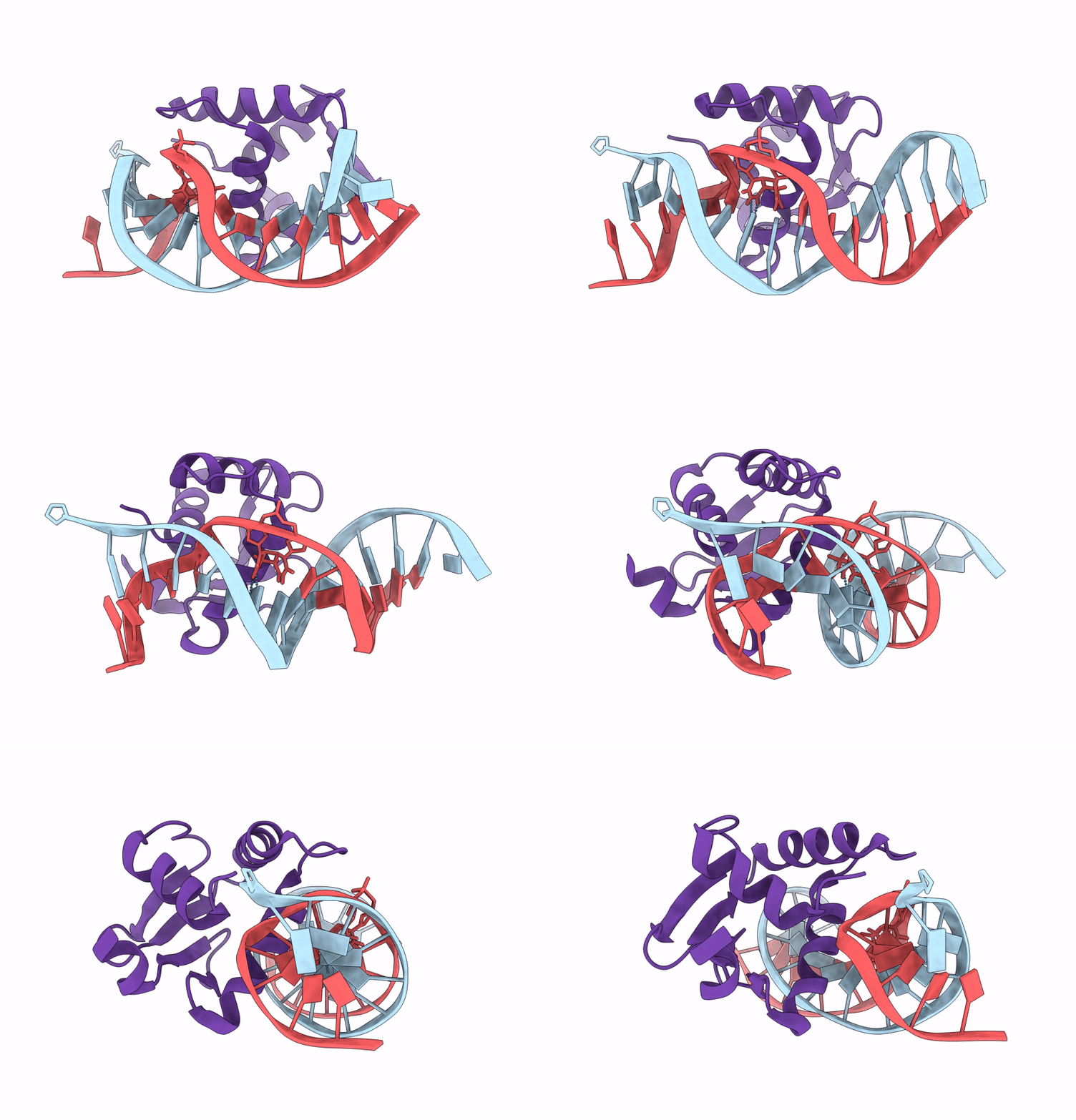
9YNZ image
Deposition Date 2025-10-13
Release Date 2025-10-22
Last Version Date 2026-08-05
Entry Detail
PDB ID:
9YNZ
Keywords:
Title:
Human PU.1 ETS-Domain (165-270) Bound to d(5'-AATAAGCGGAAGTGGG-3') d(5'-TCCCACT*CPD*CGCTTAT-3')
Biological Source:
Source Organism(s):
Expression System(s):
Method Details:
Experimental Method:
Resolution:
2.05 Å
R-Value Free:
0.24
R-Value Work:
0.20
R-Value Observed:
0.21
Space Group:
P 1 21 1

Macromolecular Entities
Polymer Type:polydeoxyribonucleotide
Molecule:DNA (5'-D(*AP*AP*TP*AP*AP*GP*
Chain IDs:A (auth: C)
Chain Length:16
Number of Molecules:1
Biological Source:synthetic construct
Polymer Type:polydeoxyribonucleotide
Molecule:DNA (5'-D(P*CP*CP*CP*AP*CP*T*
Chain IDs:B (auth: D)
Chain Length:15
Number of Molecules:1
Biological Source:synthetic construct
Polymer Type:polypeptide(L)
Molecule:Transcription factor PU.1
Gene (Uniprot):SPI1
Chain IDs:C (auth: F)
Chain Length:106
Number of Molecules:1
Biological Source:Homo sapiens
Primary Citation
Molecular basis of UV lesion binding and repair inhibition by ETS-family transcription factors.
Nucleic Acids Res. 54 ? ? (2026)
PMID: 42500821 DOI: 10.1093/nar/gkag711

Abstact

Mutation hotspots in melanoma frequently occur at DNA binding sites of E26 transformation-specific (ETS)-family transcription factors, as ETS factors stimulate the formation of UV-induced cyclobutane pyrimidine dimers (CPDs) while suppressing repair at ETS-bound DNA sites. To elucidate the molecular mechanism by which ETS factors bind to damaged DNA sites and inhibit repair, we investigated the binding of members from the three major classes of the ETS superfamily (Ets1, ELF1, and PU.1) to cognate DNA containing a cis-syn TpT CPD. These site-specific CPDs modulated ETS recognition and repair by a model repair enzyme in a position-dependent manner. Specifically, a deaminated CPD located in a damage hotspot in the ETS binding motif consistently stimulated binding and inhibited T4 PDG (a CPD repair enzyme) by all three paralogs. Co-crystal structures of PU.1 reveal that CPDs and mismatches are recognized within the framework of canonical ETS/DNA complexes. Molecular dynamics simulations in explicit solvent show that CPD introduces compensatory structural dynamics to both the free and ETS-bound states that strongly modify the underlying thermodynamics of recognition. The results offer a molecular basis for how ETS factors induce mutation hotspots in skin cancers and other UV-exposed tissues by binding to CPD-containing sites and inhibiting their repair.

Legend

Protein

Chemical

Disease

Primary Citation of related structures
Feedback Form
Name
Email
Institute
Feedback