

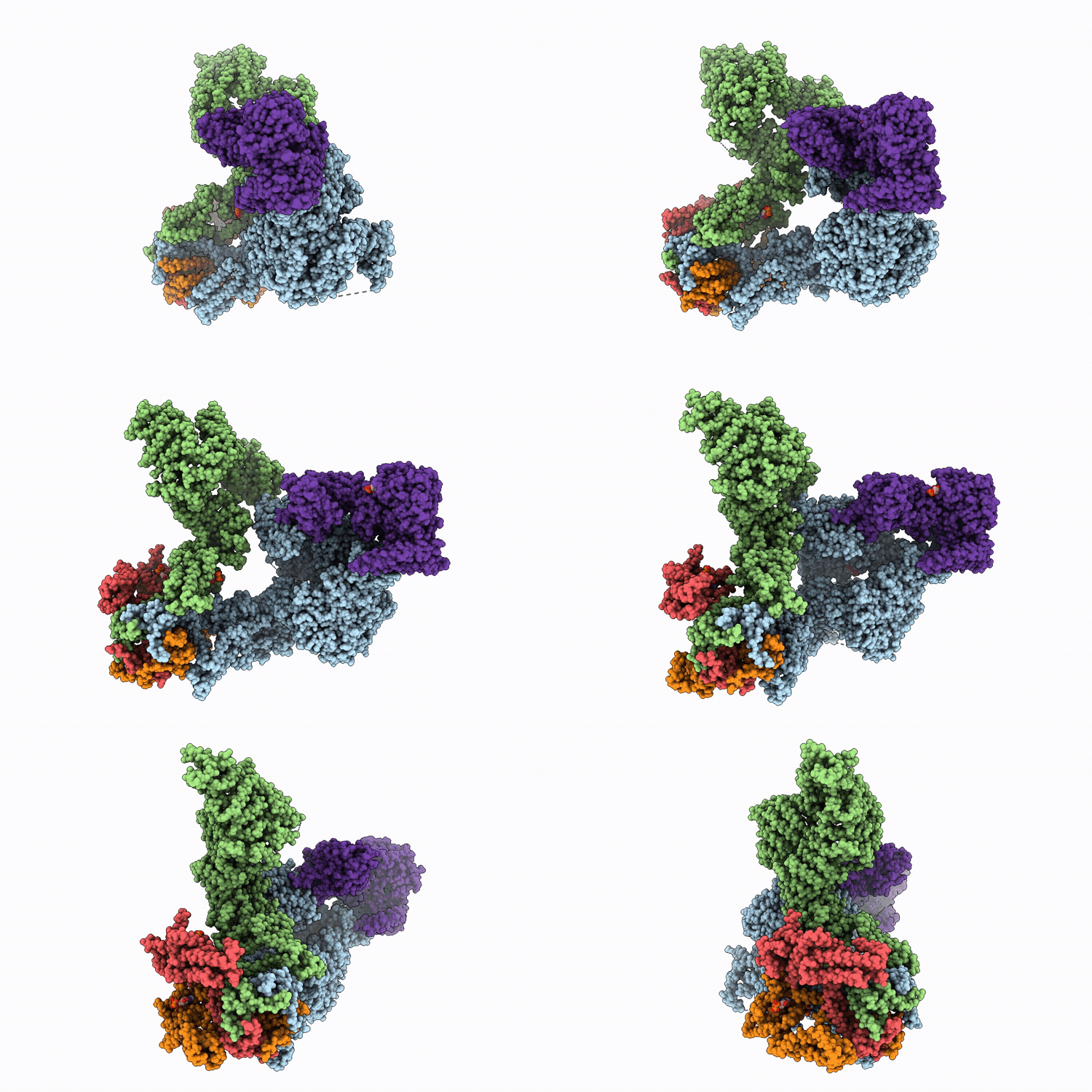
9YNO image
Deposition Date 2025-10-11
Release Date 2026-07-01
Last Version Date 2026-07-01
Entry Detail
PDB ID:
9YNO
Title:
Human type 2 IP3 receptor dimer (IP3/ATP/Ca2+)
Biological Source:
Source Organism(s):
Homo sapiens (Taxon ID: 9606)
Expression System(s):
Method Details:
Experimental Method:
Resolution:
4.06 Å
Aggregation State:
PARTICLE
Reconstruction Method:
SINGLE PARTICLE
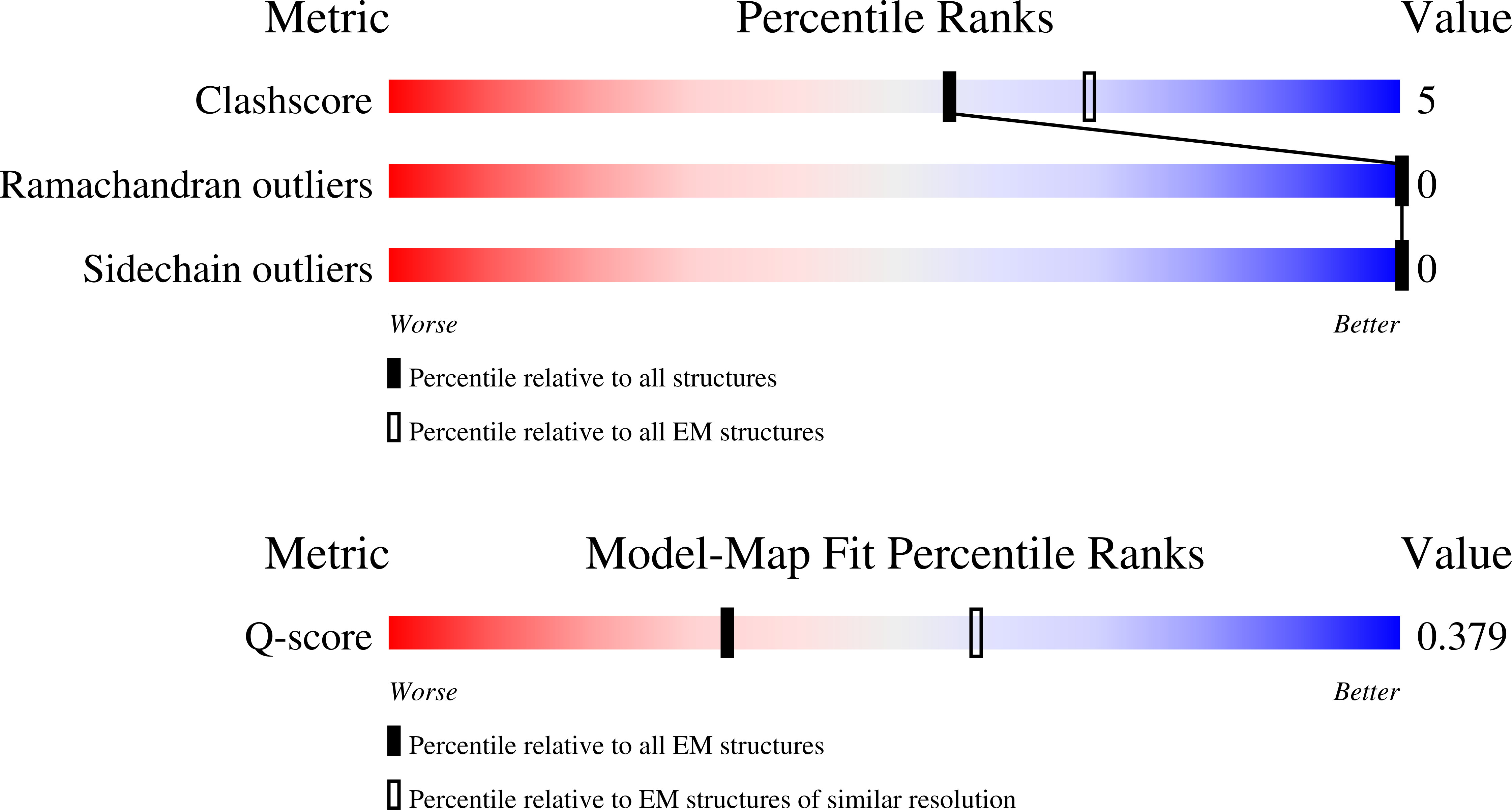
Macromolecular Entities
Polymer Type:polypeptide(L)
Molecule:Inositol 1,4,5-trisphosphate-
Gene (Uniprot):ITPR2
Chain IDs:A, B, C, D, E
Chain Length:2745
Number of Molecules:5
Biological Source:Homo sapiens
Primary Citation
Conformational landscape and ligand-dependent clustering of the human type 2 IP 3 receptor.
Nat Commun ? ? ? (2026)
PMID: 42315508 DOI: 10.1038/s41467-026-74494-y

Abstact

Inositol 1,4,5-trisphosphate (IP(3)) receptors (IP(3)Rs) are tetrameric ER Ca(2+) channels that shape intracellular Ca(2+) signaling in response to IP(3), regulating diverse physiological processes. The structural basis for subtype-specific regulation among the three subtypes (IP(3)R-1-3) remains incompletely understood due to the lack of IP(3)R-2 structures. Here, we report cryo-electron microscopy (cryo-EM) structures of human IP(3)R-2 in distinct conformations in the presence and absence of IP(3), Ca(2+), and ATP. These structures define the conformational landscape of IP(3)R-2, delineate ligand-binding interactions, and reveal shared architectural features alongside isoform-specific differences. We also resolve ligand-dependent IP(3)R-2 assemblies, identifying a conformation-dependent inter-channel interface. Live-cell imaging demonstrates that IP(3)R-2 undergoes clustering following ligand-induced Ca(2+) release, and disruption of this interface selectively abolishes clustering without impairing channel activity. Together, these findings provide a structural framework for human IP(3)R-2 and establish a mechanism linking ligand-dependent conformational changes to inter-channel interactions and post-activation cellular clustering.

Legend

Protein

Chemical

Disease

Primary Citation of related structures
Feedback Form
Name
Email
Institute
Feedback