

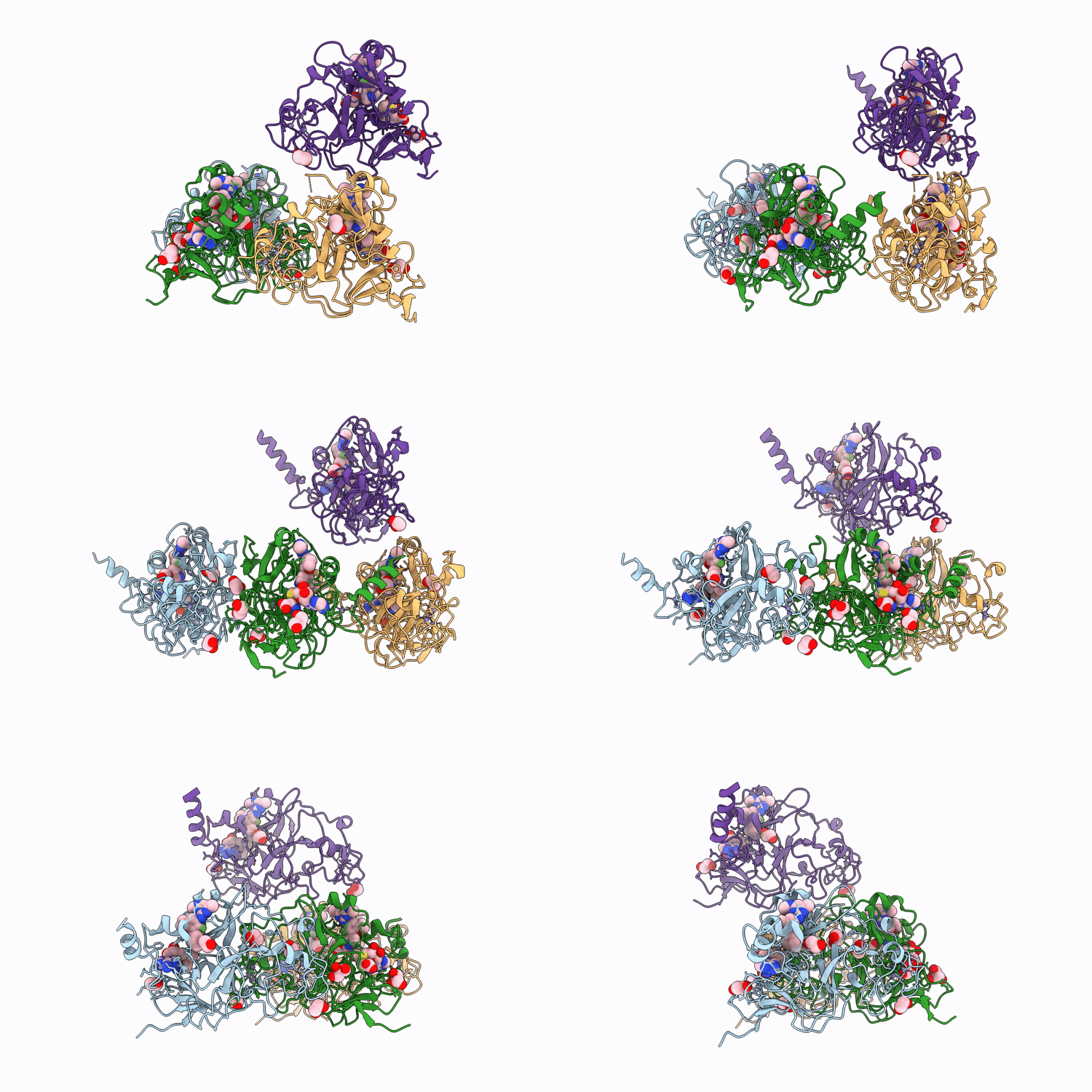
9YKS image
Deposition Date 2025-10-07
Release Date 2026-05-13
Last Version Date 2026-06-24
Entry Detail
PDB ID:
9YKS
Keywords:
Title:
Crystal structure of the G9a (EHMT2) SET domain in complex with SAM and TNG917
Biological Source:
Source Organism(s):
Homo sapiens (Taxon ID: 9606)
Expression System(s):
Method Details:
Experimental Method:
Resolution:
1.79 Å
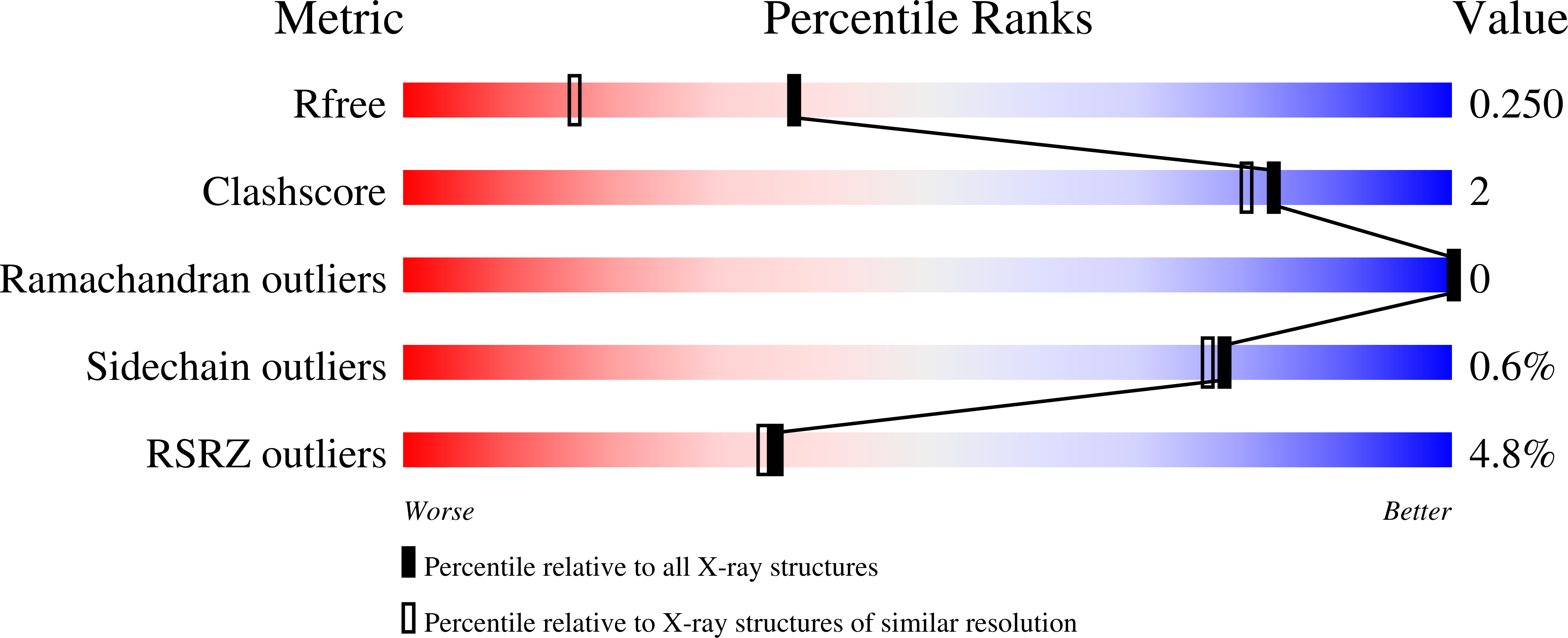
R-Value Free:
0.25
R-Value Work:
0.19
R-Value Observed:
0.19
Space Group:
P 1 21 1
Macromolecular Entities
Structures with similar UniProt ID
Protein Blast
Polymer Type:polypeptide(L)
Molecule:Histone-lysine N-methyltransf
Gene (Uniprot):EHMT2
Chain IDs:A, B, C, D
Chain Length:282
Number of Molecules:4
Biological Source:Homo sapiens
Primary Citation
TNG917 is a Potent and Selective Inhibitor of Histone Lysine Methyltransferases EHMT1/2 that Enhances Anti-Tumor Immunity and Immunotherapy Efficacy.
Cancer Res. ? ? ? (2026)
PMID: 42268285 DOI: 10.1158/0008-5472.CAN-25-4720

Abstact

Epigenetic silencing of interferon (IFN) signaling contributes to the resistance of tumors to PD-1/PD-L1 immune checkpoint blockade. In this study, we conducted a fluorescence-activated cell sorting (FACS)-based CRISPR-Cas9 screen to identify tumor-intrinsic regulators of PD-L1 surface expression and identified the histone-lysine methyltransferases EHMT1 and EHMT2 as key suppressors of interferon signaling. TNG917 was developed as a histone substrate-competitive dual inhibitor of EHMT1/2 with low-nanomolar potency in cells and high selectivity over other methyltransferases. In cancer cell lines, TNG917 relieved H3K9-mediated repression, restored interferon-stimulated gene expression, and triggered secretion of T-cell chemoattractant cytokines, including CXCL10. When dosed orally in both syngeneic and humanized mouse models, TNG917 monotherapy led to marked tumor growth inhibition, while combination with anti-PD1 therapy produced complete, durable regressions and established protective immune memory. Early pharmacokinetic and toxicology assessments revealed favorable exposure profiles and a wide safety margin. These findings establish EHMT1/2 inhibition by TNG917 as a strategy to convert immune-cold tumors into T-cell-inflamed lesions and potentiate checkpoint blockade efficacy, supporting its advancement into clinical development in combination with immunotherapy.

Legend

Protein

Chemical

Disease

Primary Citation of related structures
Feedback Form
Name
Email
Institute
Feedback