

9YKO image
Deposition Date 2025-10-07
Release Date 2026-06-17
Last Version Date 2026-06-24
Entry Detail
PDB ID:
9YKO
Keywords:
Title:
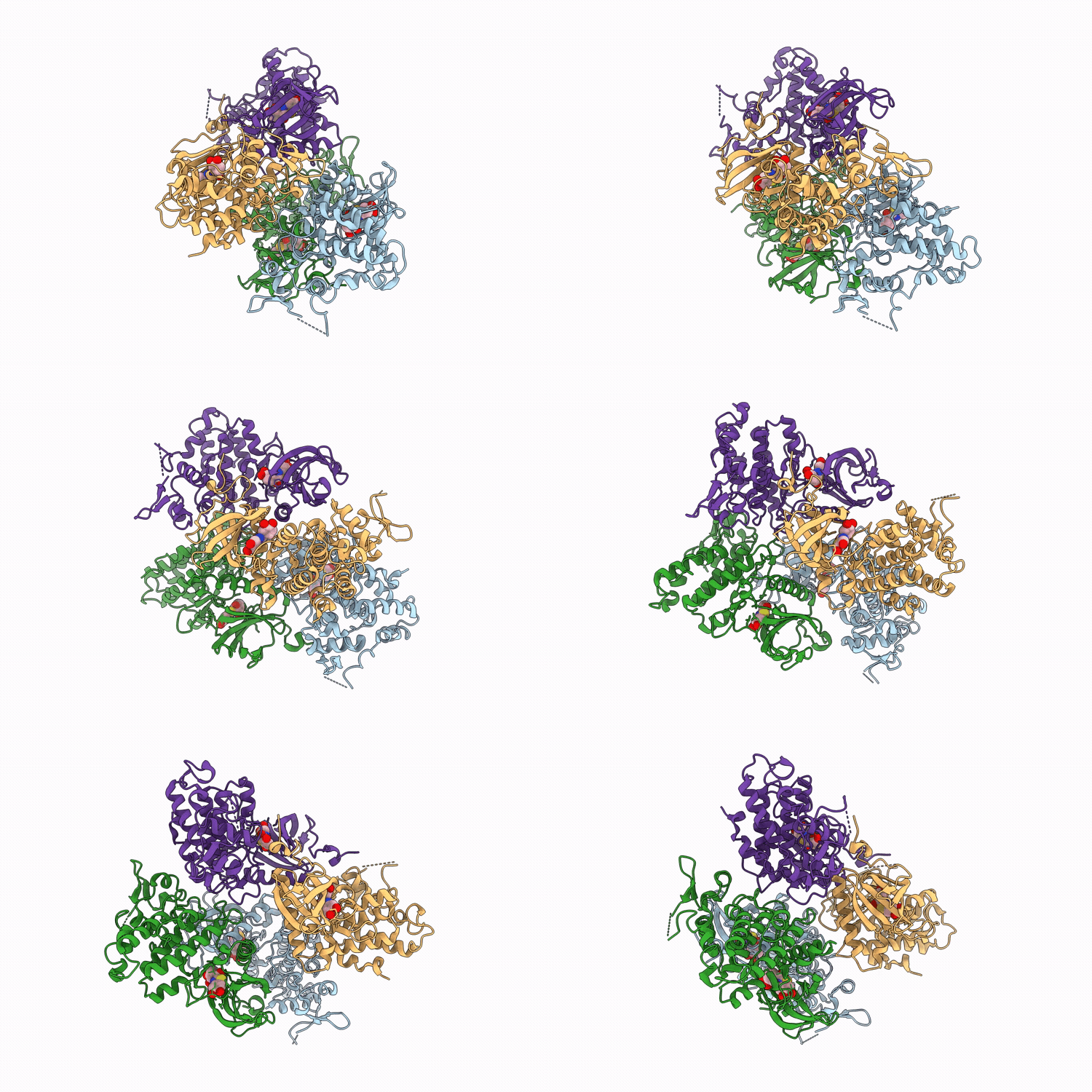
Crystal structure of human DYRK1A kinase bound with inhibitor FC3
Biological Source:
Source Organism(s):
Homo sapiens (Taxon ID: 9606)
Expression System(s):
Method Details:
Experimental Method:
Resolution:
2.77 Å
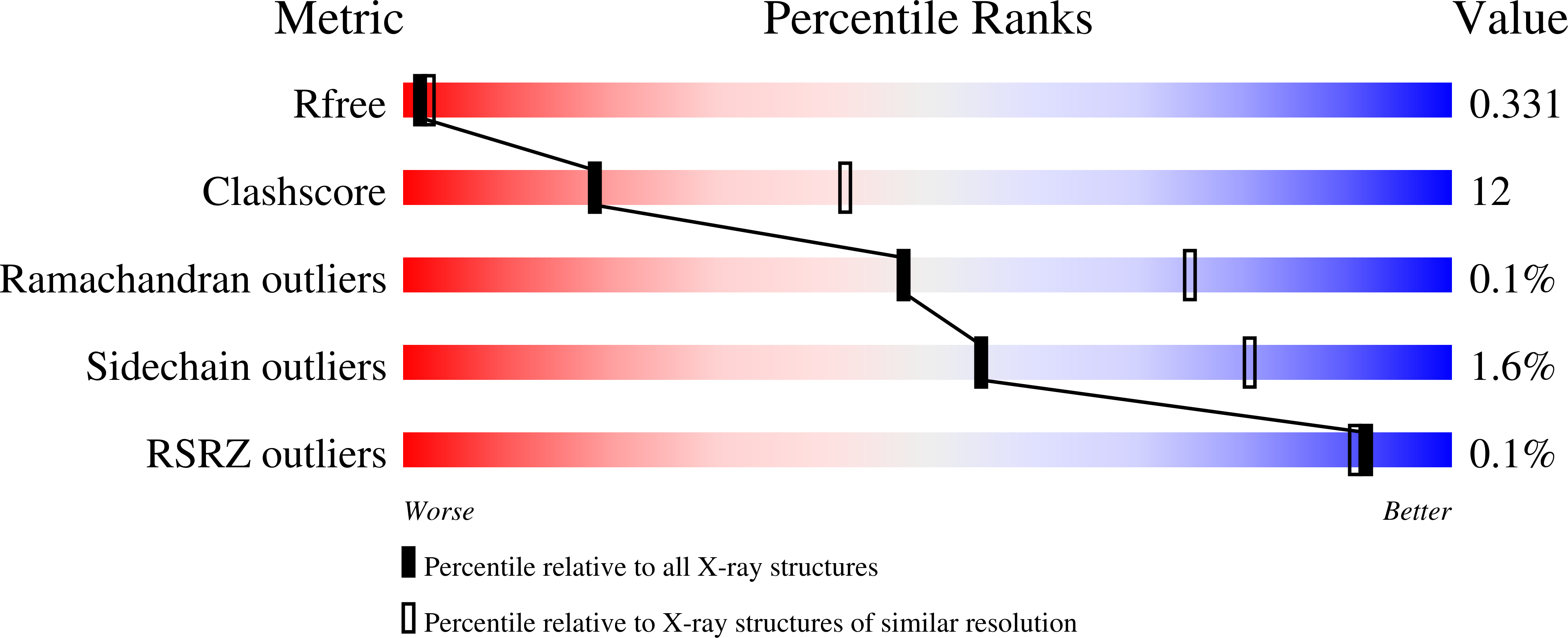
R-Value Free:
0.33
R-Value Work:
0.28
R-Value Observed:
0.28
Space Group:
P 21 21 21
Macromolecular Entities
Structures with similar UniProt ID
Protein Blast
Polymer Type:polypeptide(L)
Molecule:Dual specificity tyrosine-pho
Gene (Uniprot):DYRK1A
Chain IDs:A, B, C, D
Chain Length:359
Number of Molecules:4
Biological Source:Homo sapiens
Modified Residue
Compound ID Chain ID Parent Comp ID Details 2D Image
PTR A TYR modified residue
Ligand Molecules
Primary Citation
Small-molecule inhibitors of the protein kinase DYRK as potential therapeutic candidates in cancer.
Cell Chem Biol ? 810 822.e7 (2026)
PMID: 42269611 DOI: 10.1016/j.chembiol.2026.05.005

Abstact

Dual-specificity tyrosine-regulated kinase 1A (DYRK1A) is crucial for normal brain development, and its disruption is linked to various cancers. DYRK1A drives glioblastoma (GBM) progression via stabilization of epidermal growth factor receptor (EGFR). Here, we describe two benzothiazole-derived DYRK inhibitors, FC-2 and FC-3, obtained by structure-activity optimization of a natural product lead. Both compounds inhibited DYRK1A with nanomolar potency and displayed selectivity across a kinase panel. The co-crystal structure of FC-3 with DYRK1A revealed ATP-competitive binding, with interactions at the hinge region. The DYRK-specific phenylalanine gatekeeper residue contributed to target selectivity. Generation of inhibitor-resistant mutants confirmed DYRK1A as the primary cellular target. In GBM cell-based models, FC-2 and FC-3 impaired neurosphere self-renewal, cell invasion, and EGFR stability, phenocopying DYRK1A loss. FC-2 crossed the blood-brain barrier and suppressed tumor growth, prolonging survival in intracranial xenografts. These findings identify FC-2 and FC-3 as small-molecule nanomolar inhibitors of DYRK1A, with potential therapeutic utility in GBM.

Legend

Protein

Chemical

Disease

Primary Citation of related structures
Feedback Form
Name
Email
Institute
Feedback