

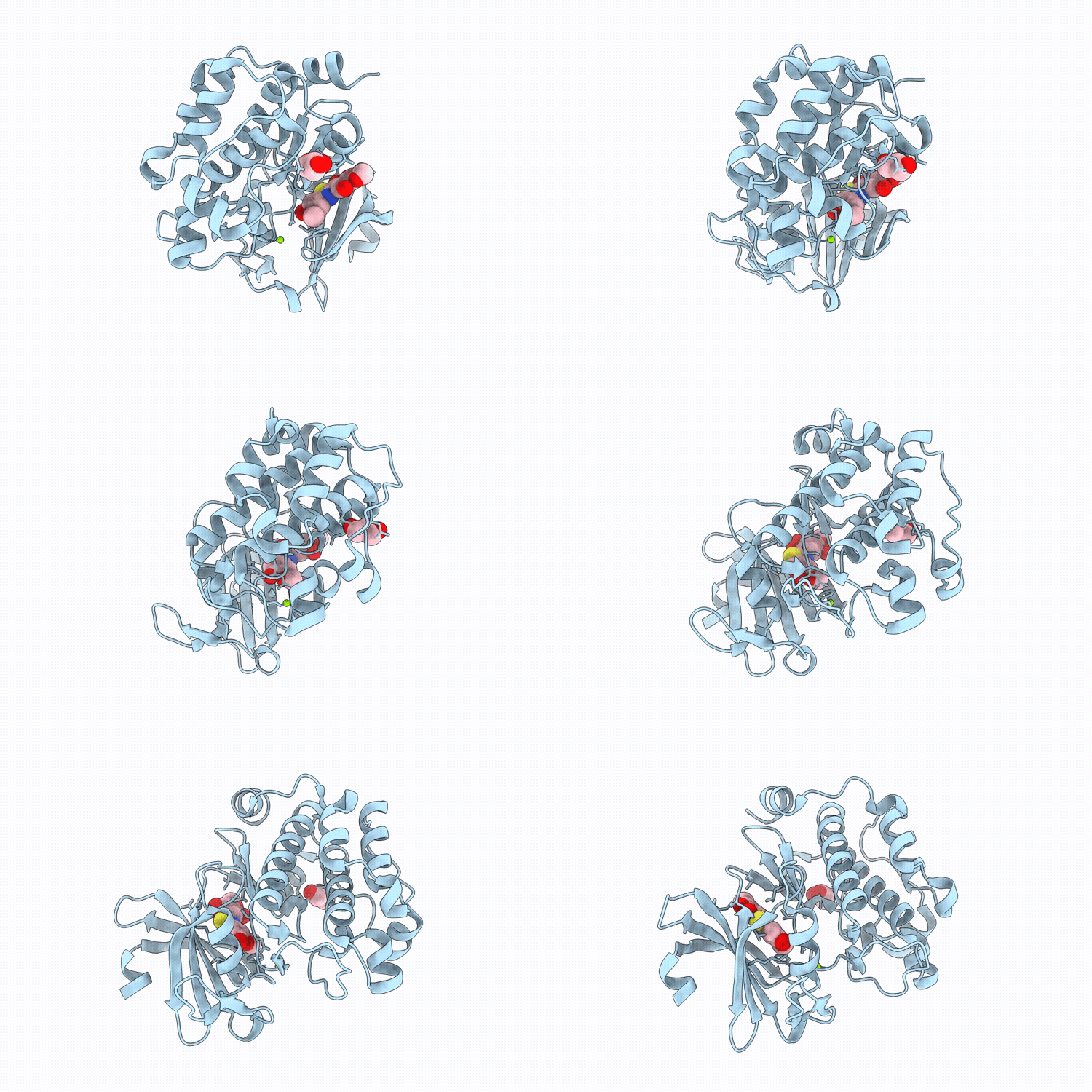
9YKI image
Deposition Date 2025-10-07
Release Date 2026-03-25
Last Version Date 2026-04-22
Entry Detail
PDB ID:
9YKI
Keywords:
Title:
Crystal structure of human PIM1 kinase bound with CSH-4044 inhibitor
Biological Source:
Source Organism(s):
Homo sapiens (Taxon ID: 9606)
Expression System(s):
Method Details:
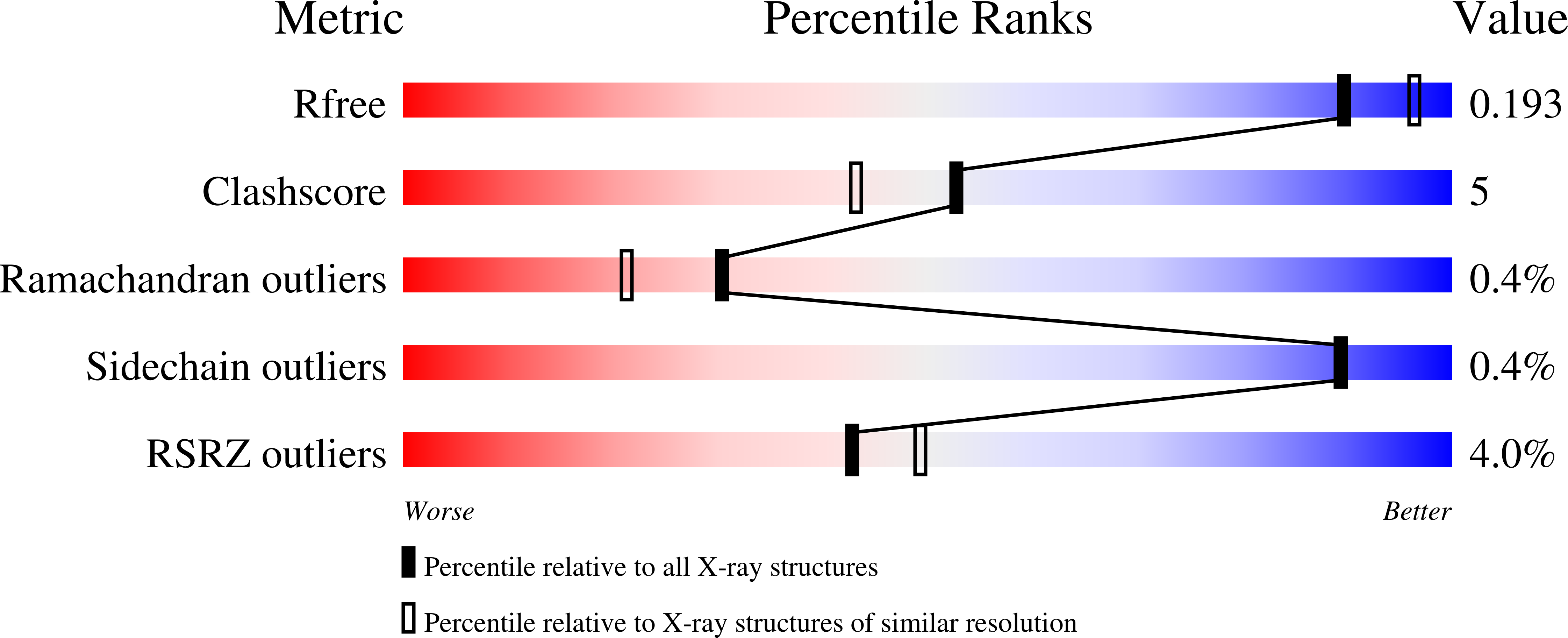
Experimental Method:
Resolution:
1.95 Å
R-Value Free:
0.19
R-Value Work:
0.16
R-Value Observed:
0.16
Space Group:
P 65
Macromolecular Entities
Polymer Type:polypeptide(L)
Molecule:Serine/threonine-protein kina
Gene (Uniprot):PIM1
Chain IDs:A
Chain Length:313
Number of Molecules:1
Biological Source:Homo sapiens
Modified Residue
Compound ID Chain ID Parent Comp ID Details 2D Image
SEP A SER modified residue
Primary Citation
Identification and Validation of an Inhibitor of the Protein Kinases PIM and DYRK.
J. Med. Chem. 69 7920 7932 (2026)
PMID: 41849779 DOI: 10.1021/acs.jmedchem.5c03226

Abstact

Fermented wheat germ extract (FWGE), a nutraceutical with reported anticancer properties, contains numerous biologically active molecules, but its therapeutic constituents remain unclear. In this study, we identify and characterize a novel small-molecule protein kinase inhibitor isolated from FWGE, designated F10V6W0. Through preparative high-performance liquid chromatography and structural elucidation via X-ray crystallography, this compound was revealed to be a unique benzothiazole. Kinase profiling demonstrated its selectivity toward PIM and DYRK protein kinase families. A chemically synthesized version (CSH-4044), mirrored the activity of the natural product, confirming structural integrity and biological equivalence. We determined the cocrystal structure of CSH-4044 bound to PIM1, revealing ATP-competitive binding and critical hydrophobic and hydrogen-bonding interactions. Functionally, CSH-4044 suppressed PIM3-driven BAD phosphorylation in pancreatic cancer cells and reduced DYRK1A-mediated Tau phosphorylation in neuronal cells. Our findings position CSH-4044 as a promising lead for targeting PIM and DYRK kinase families and highlight FWGE as a potential therapeutic compounds.

Legend

Protein

Chemical

Disease

Primary Citation of related structures
Feedback Form
Name
Email
Institute
Feedback