

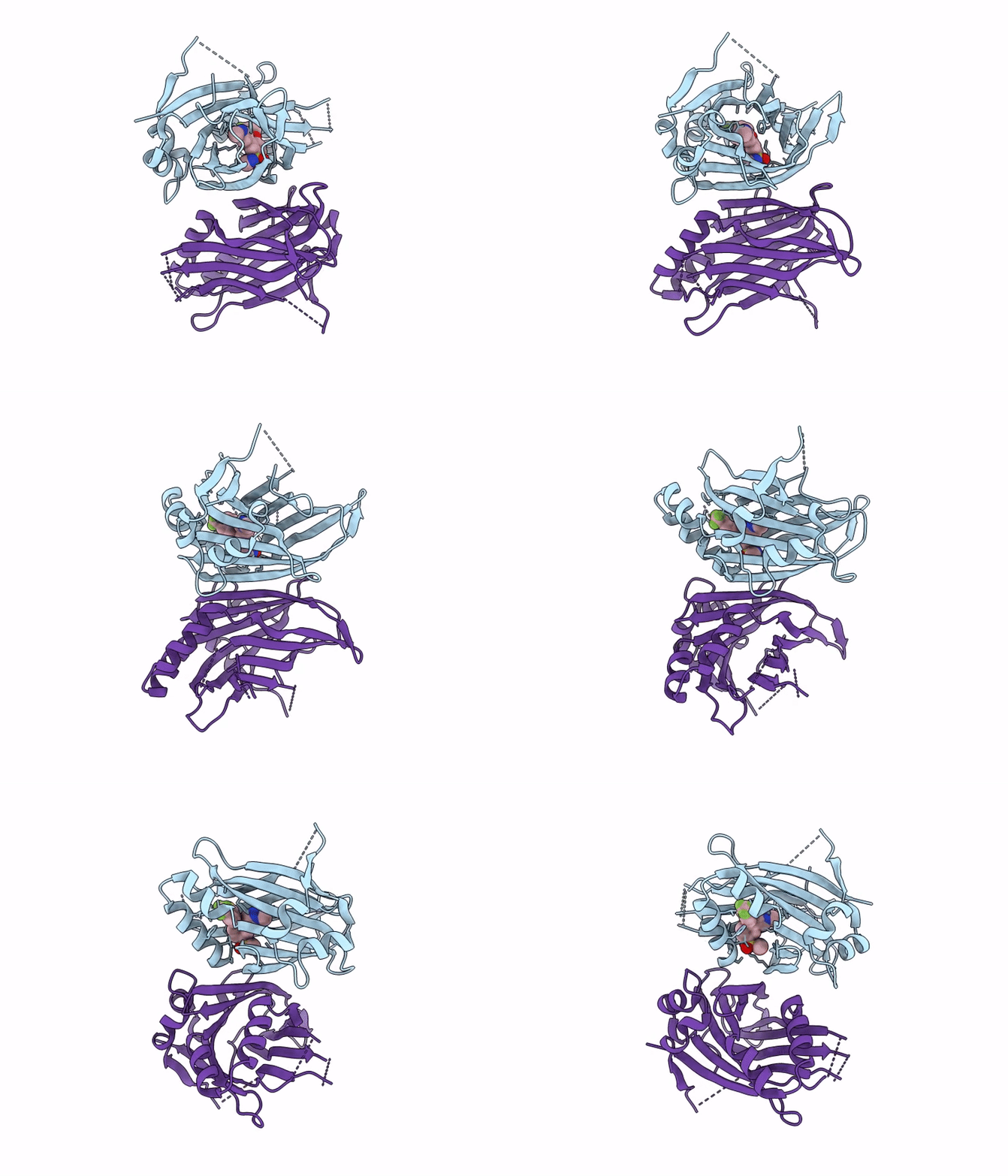
9YK2 image
Deposition Date 2025-10-06
Release Date 2026-02-25
Last Version Date 2026-03-11
Entry Detail
PDB ID:
9YK2
Keywords:
Title:
Crystal structure of TEAD2 with non-covalent aryl ether inhibitor.
Biological Source:
Source Organism(s):
Homo sapiens (Taxon ID: 9606)
Expression System(s):
Method Details:
Experimental Method:
Resolution:
2.16 Å
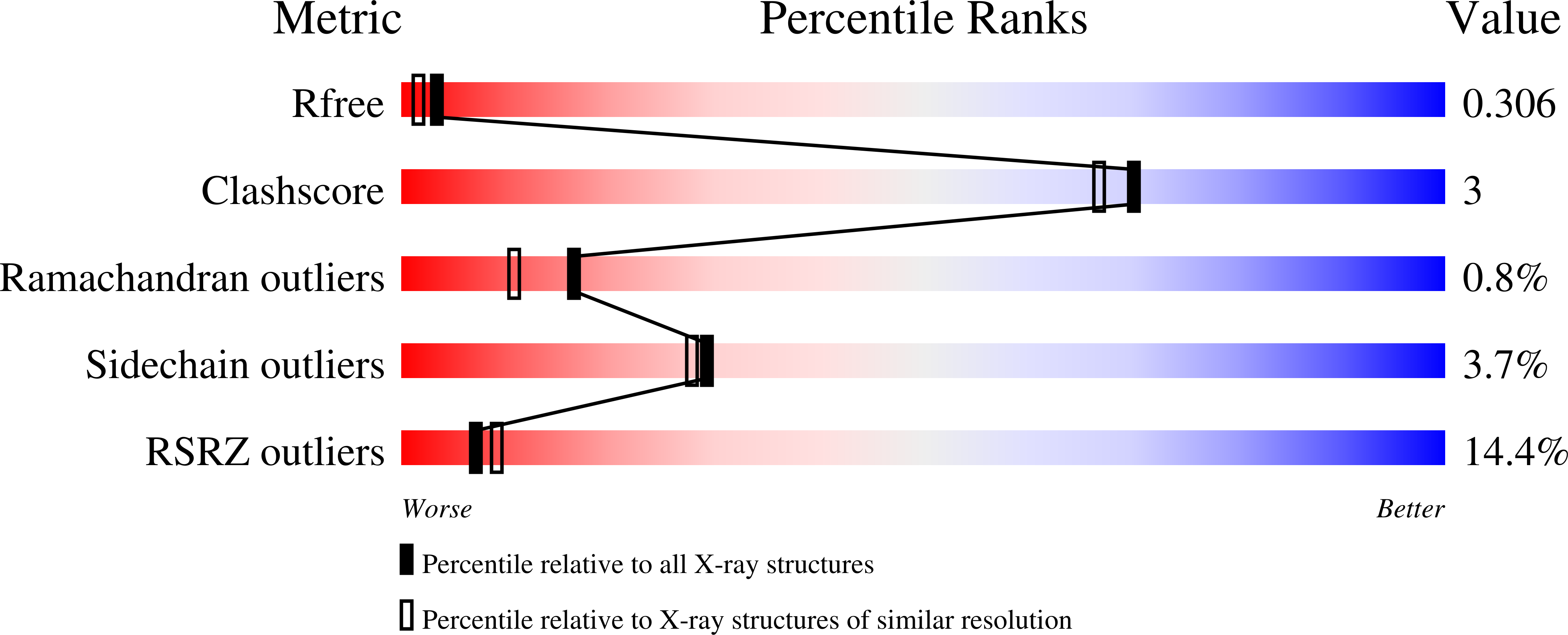
R-Value Free:
0.28
R-Value Work:
0.22
R-Value Observed:
0.22
Space Group:
C 1 2 1
Macromolecular Entities
Structures with similar UniProt ID
Protein Blast
Polymer Type:polypeptide(L)
Molecule:Transcriptional enhancer fact
Gene (Uniprot):TEAD2
Chain IDs:A, B
Chain Length:233
Number of Molecules:2
Biological Source:Homo sapiens
Ligand Molecules
Primary Citation
Discovery and In Vivo Evaluation of Aryl Ether YAP1/TEAD Inhibitors for the Treatment of Hippo-Driven Malignancies.
J. Med. Chem. 69 4303 4316 (2026)
PMID: 41678808 DOI: 10.1021/acs.jmedchem.5c02997

Abstact

Targeting the YAP1/TEAD interaction, a critical Hippo pathway signaling complex involved in transcriptional aberrations in cancer, represents a novel approach for treating Hippo-driven malignancies including mesothelioma. Our discovery campaign relied on virtual screening, X-ray crystallography and structure-activity relationship (SAR) studies were carried out to invent a novel aryl ether sulfonamide series with promising inhibitory activity. Leveraging synthetic modularity, we applied high-throughput experimentation for reaction optimization to enable key bond disconnections and SAR elucidation via library synthesis, followed by discrete FEP-guided designs, resulting in improved potency and pharmacokinetic profiles. These efforts identified MRK-A, a highly potent and selective lead compound with significantly improved cross-species pharmacokinetics and solubility compared to early leads. MRK-A demonstrated a robust PKPD relationship via selective, dose-dependent modulation of TEAD-driven genes and achieved complete tumor growth inhibition in the mesothelioma NCI-H226 xenograft mouse model with no observed adverse events.

Legend

Protein

Chemical

Disease

Primary Citation of related structures
Feedback Form
Name
Email
Institute
Feedback