

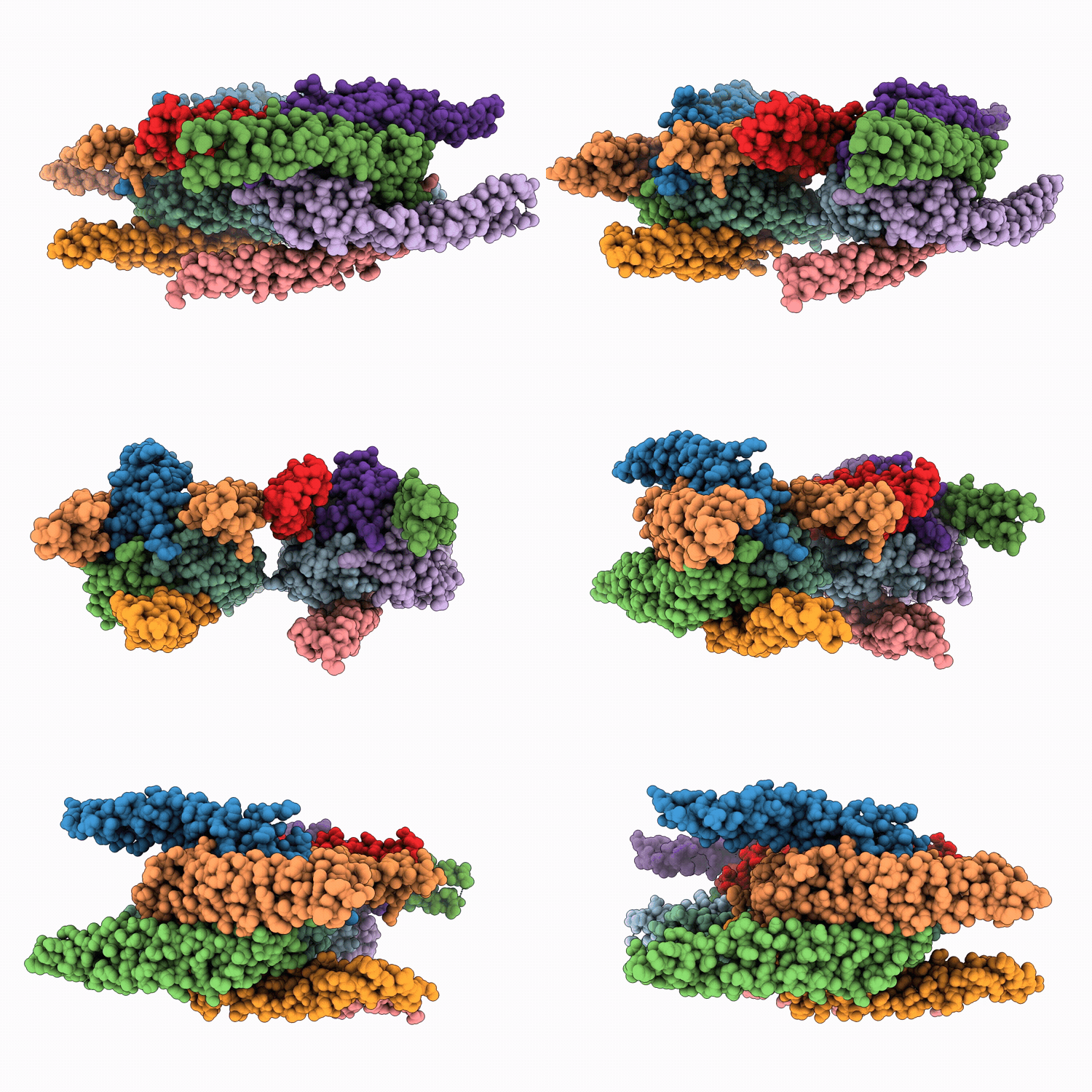
9YJT image
Deposition Date 2025-10-04
Release Date 2026-08-05
Last Version Date 2026-09-16
Entry Detail
PDB ID:
9YJT
Keywords:
Title:
The structure of the periplasmic chaperone Skp from Neisseria meningitidis in space group P21
Biological Source:
Source Organism(s):
Expression System(s):
Method Details:
Experimental Method:
Resolution:
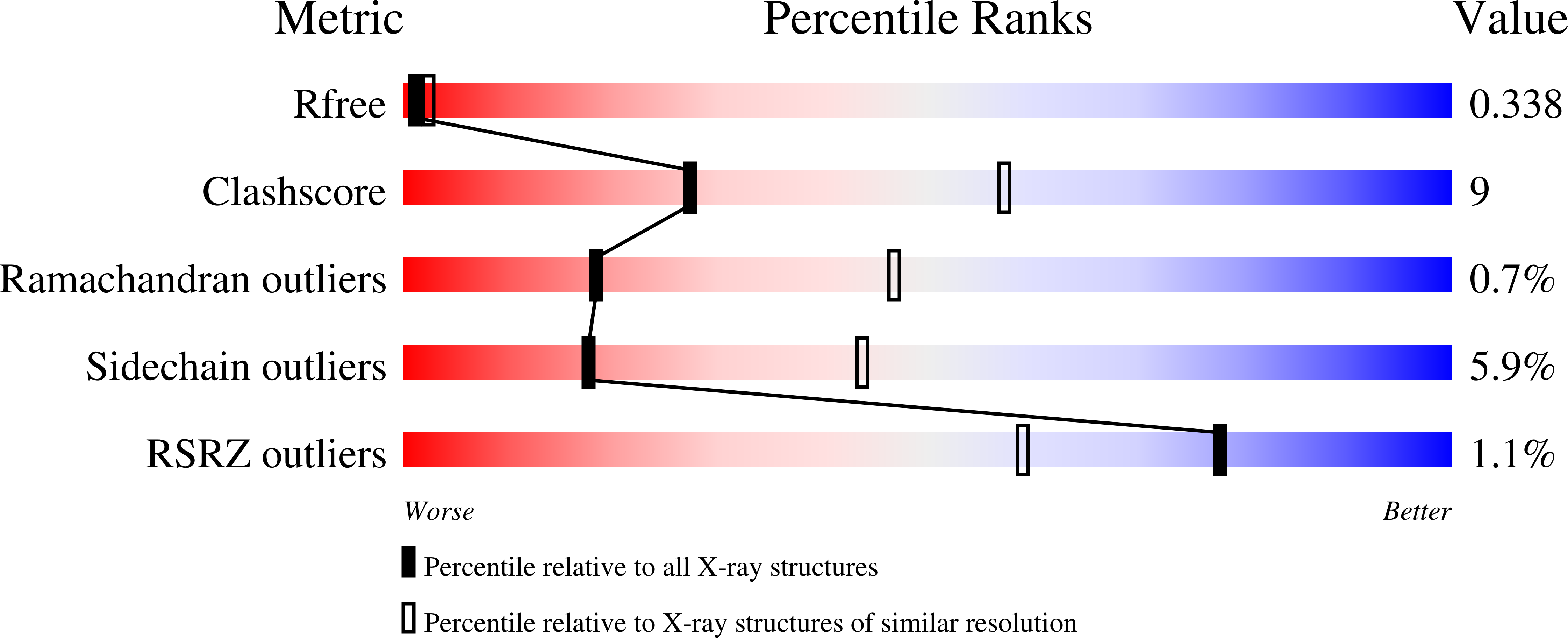
3.14 Å
R-Value Free:
0.33
R-Value Work:
0.27
R-Value Observed:
0.28
Space Group:
P 1 21 1
Macromolecular Entities
Polymer Type:polypeptide(L)
Molecule:Outer membrane protein H
Chain IDs:A (auth: K), B (auth: A), C (auth: B), D (auth: C), E (auth: D), F (auth: E), G (auth: F), H (auth: G), I (auth: H), J (auth: I), K (auth: J), L
Chain Length:146
Number of Molecules:12
Biological Source:Neisseria meningitidis serogroup B
Ligand Molecules
Primary Citation
Structural insight into the role of the periplasmic chaperone Skp in pathogenic Neisseria.
Structure 34 1250 ? (2026)
PMID: 42480540 DOI: 10.1016/j.str.2026.06.010

Abstact

Periplasmic chaperones prevent misfolding and aggregation of proteins in the periplasm and those destined for the outer membranes of Gram-negative bacteria. SurA and Skp are two major periplasmic chaperones, with Skp being the most critical in pathogenic Neisseria since its deletion resulted in drastically reduced levels of the porins PorA and PorB and the surface lipoprotein TbpB. Much of what is known about Skp originates from studies in E. coli, where it was observed as a trimer. In our structural studies, however, Skp from N. meningitidis is a hexamer consisting of a dimer of closely packed interdigitated trimers. Constricted and expanded conformations are observed, indicating the arms of the hexamer are flexible and dynamic. We postulate that Skp in Neisseria must utilize a different mechanism than in E. coli to stabilize substrates by expanding and contracting along its long axis to accommodate substrates of differing sizes.

Legend

Protein

Chemical

Disease

Primary Citation of related structures
Feedback Form
Name
Email
Institute
Feedback