

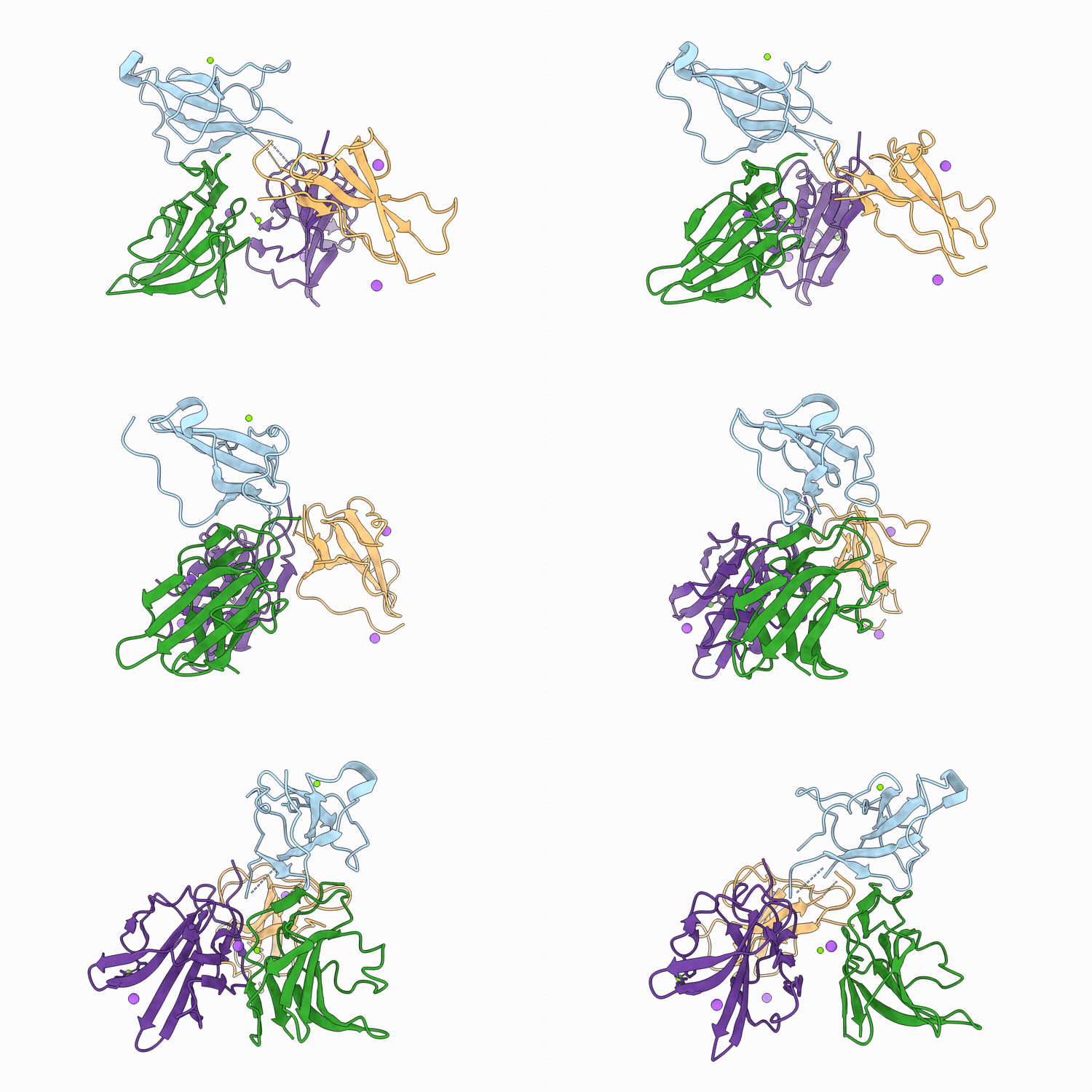
9YJ4 image
Deposition Date 2025-10-03
Release Date 2026-05-20
Last Version Date 2026-05-20
Entry Detail
PDB ID:
9YJ4
Title:
TGM6-D3 bound to mouse TBRII
Biological Source:
Source Organism(s):
Expression System(s):
Method Details:
Experimental Method:
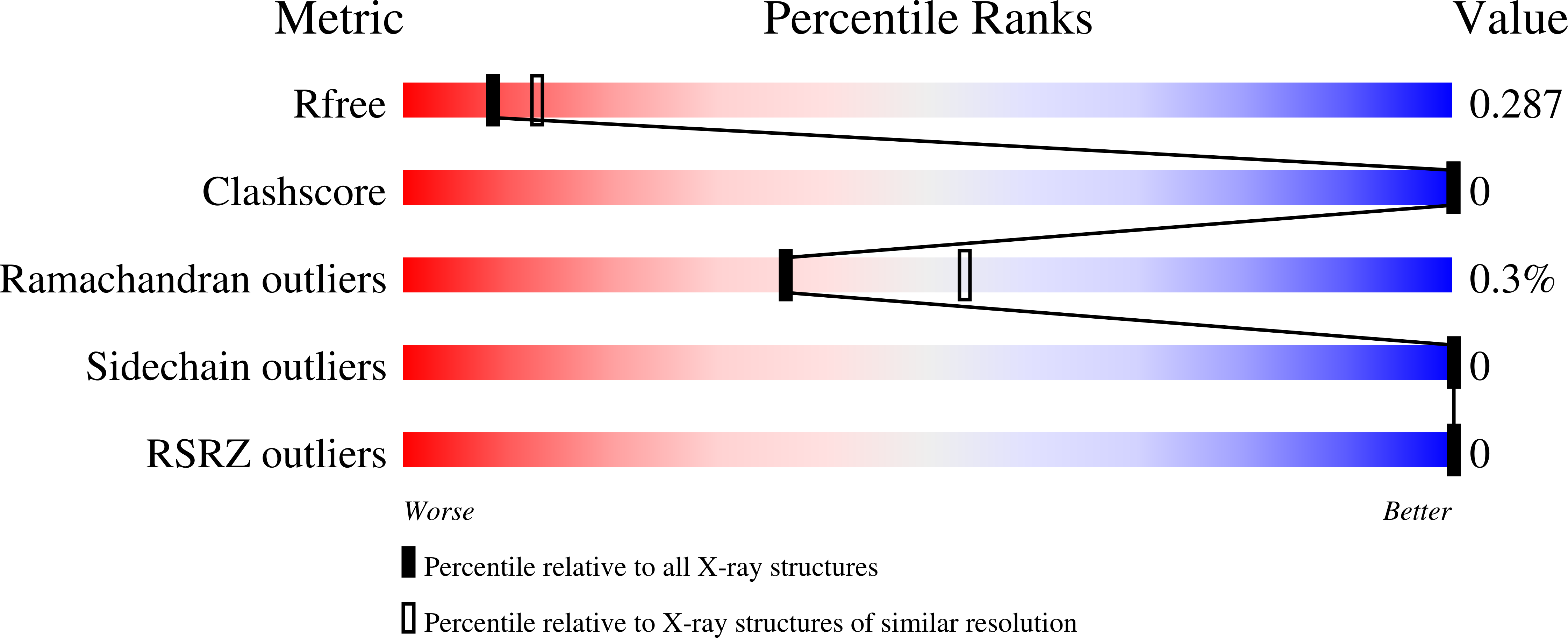
Resolution:
2.52 Å
R-Value Free:
0.28
R-Value Work:
0.25
R-Value Observed:
0.25
Space Group:
P 21 21 21
Macromolecular Entities
Structures with similar UniProt ID
Protein Blast
Polymer Type:polypeptide(L)
Molecule:Transforming growth factor be
Chain IDs:A, C
Chain Length:89
Number of Molecules:2
Biological Source:Heligmosomoides polygyrus
Structures with similar UniProt ID
Protein Blast
Polymer Type:polypeptide(L)
Molecule:TGF-beta receptor type-2
Chain IDs:B, D
Chain Length:105
Number of Molecules:2
Biological Source:Mus musculus
Primary Citation
Decoding the Mechanism of Action of a Parasite TGF beta Antagonist Inspires the Creation of Cell-Type-Specific TGF beta Modulators.
Adv Sci ? e75322 e75322 (2026)
PMID: 42003773 DOI: 10.1002/advs.75322

Abstact

Heligmosomoides polygyrus, a mouse parasite, modulates host immunity by secreting modular transforming growth factor-beta (TGFbeta) mimics (TGMs). The agonist TGM1 interacts with TGFBR1, TGFBR2, and the co-receptor CD44 through domains D1/2, D3, and D4/5, respectively. In contrast, the antagonist TGM6, which lacks D1/2, but retains TGFBR2 binding through D3, targets different cells compared to TGM1. The TGM6 co-receptor is unknown. Using X-ray crystallography and binding studies, we show that TGM6 preferentially binds mouse TGFBR2 over human TGFBR2, and that this is essential for its antagonistic function. We identified low-density lipoprotein receptor-related protein 1 (LRP1) and betaglycan (TGFBR3) as co-receptors for TGM6. LRP1 enhances TGM6 efficacy and is required for its antagonistic effect by promoting TGFBR2 lysosomal degradation, whereas betaglycan counteracts TGM6 in a TGFBR2-dependent manner. The modular organization of TGMs enabled us to design TGM1/6 chimeras or TGM-D3 fusion with an affibody that recognizes a specific cell-surface receptor, thereby altering cell-type specificity and functionality. Furthermore, we developed a TGFBR2 nanobody that, on its own, has no inhibitory effect but, when fused to a receptor antibody, antagonizes TGFbeta by blocking TGFbeta receptor interaction in a cell-selective manner. Thus, we designed programmable agents that modulate TGFbeta signaling only in co-receptor-expressing cells.

Legend

Protein

Chemical

Disease

Primary Citation of related structures
Feedback Form
Name
Email
Institute
Feedback