

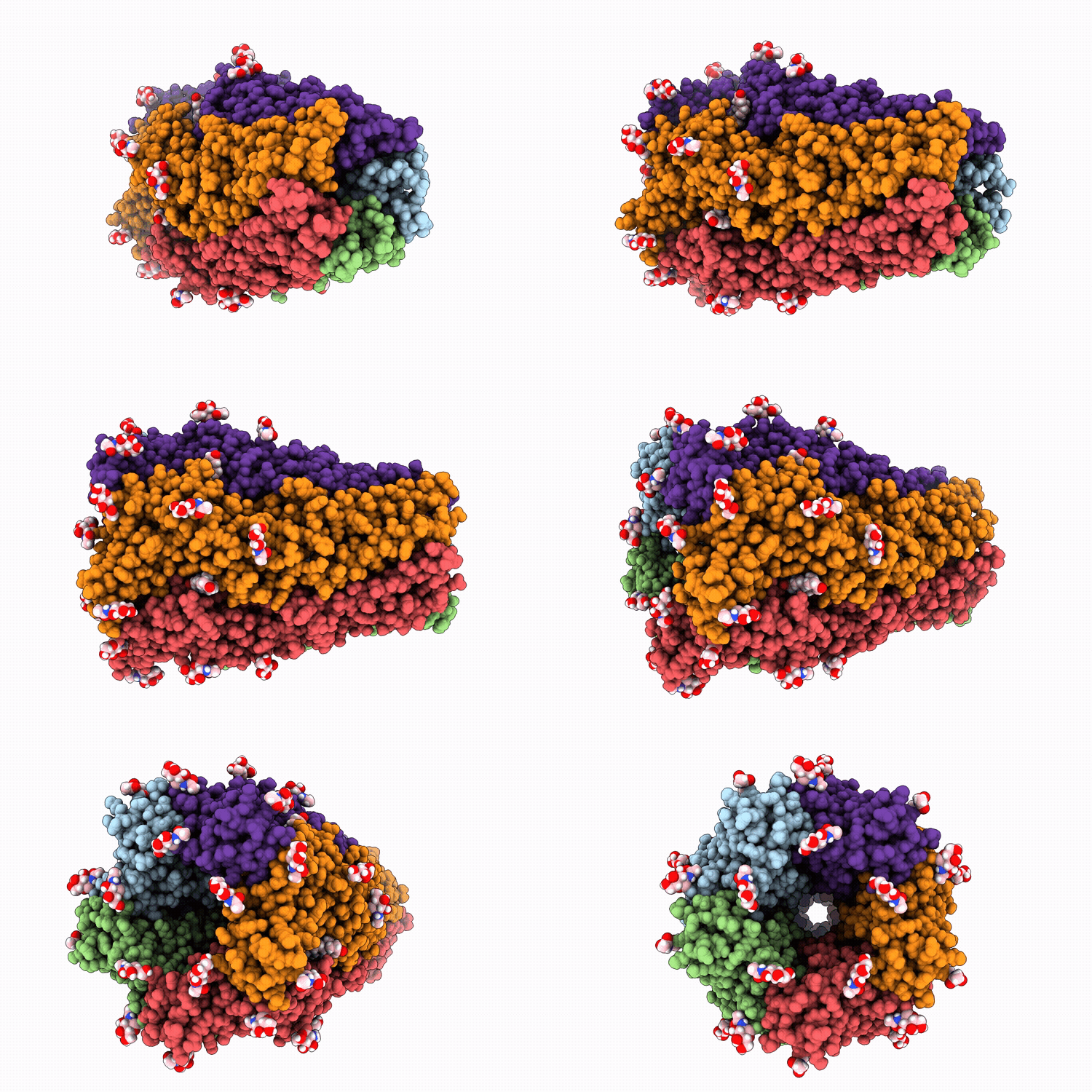
9YI4 image
Deposition Date 2025-10-01
Release Date 2026-04-01
Last Version Date 2026-05-06
Entry Detail
PDB ID:
9YI4
Title:
Octopus sensory receptor CRT1 bound to Progesterone
Biological Source:
Source Organism(s):
Expression System(s):
Method Details:
Experimental Method:
Resolution:
2.80 Å
Aggregation State:
PARTICLE
Reconstruction Method:
SINGLE PARTICLE

Macromolecular Entities
Structures with similar UniProt ID
Protein Blast
Polymer Type:polypeptide(L)
Molecule:Chemotactile receptor CRT1
Gene (Uniprot):OCBIM_22006518mg
Chain IDs:A, B, C, D, E
Chain Length:410
Number of Molecules:5
Biological Source:Octopus bimaculoides
Primary Citation
A sensory system for mating in octopus.
Science 392 96 101 (2026)
PMID: 42012846 DOI: 10.1126/science.aec9652

Abstact

Sensory systems for mate recognition maintain species boundaries and influence diversification. Thus, uncovering how molecules and receptors evolve to mediate this critical function is essential to understanding biodiversity. Male octopuses use a specialized arm called the hectocotylus to identify females and navigate their internal organs to reach the oviduct and deliver sperm. Here, we discovered that the hectocotylus is a dual sensory and mating organ that uses contact-dependent chemosensation of progesterone, a conserved ovarian hormone. We identified chemotactile receptors for progesterone and resolved the structural basis for their evolution from ancestral neurotransmitter receptors and subsequent expansion and tuning across cephalopods. These findings reveal principles by which sensory innovations shape reproductive behavior and suggest mechanisms for how sensory evolution contributes to the diversification of life.

Legend

Protein

Chemical

Disease

Primary Citation of related structures
Feedback Form
Name
Email
Institute
Feedback