

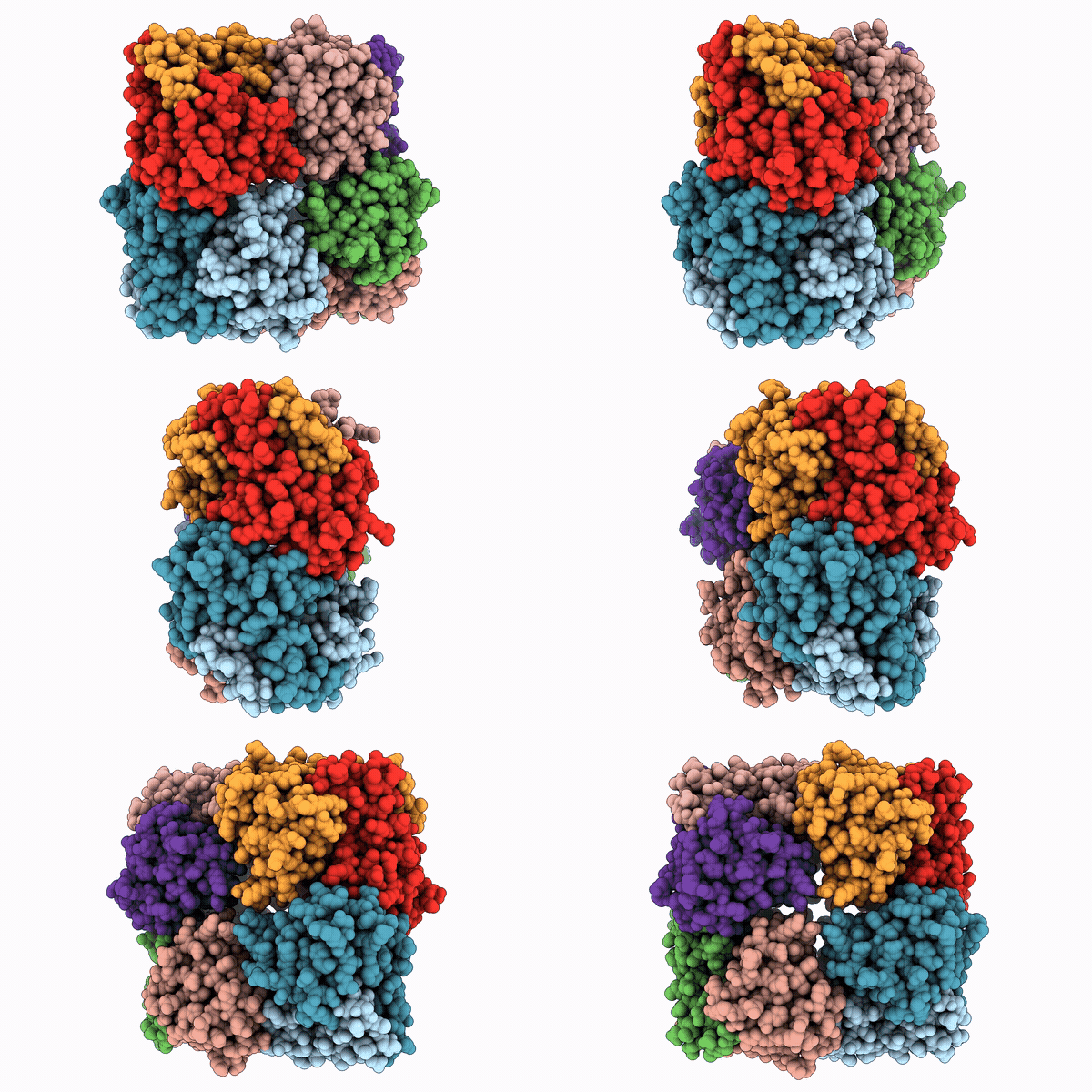
9YGL image
Deposition Date 2025-09-29
Release Date 2026-09-30
Last Version Date 2026-09-30
Entry Detail
PDB ID:
9YGL
Title:
RCK Gating Ring from Kch in the closed conformation
Biological Source:
Source Organism(s):
Expression System(s):
Method Details:
Experimental Method:
Resolution:
2.88 Å
Aggregation State:
PARTICLE
Reconstruction Method:
SINGLE PARTICLE
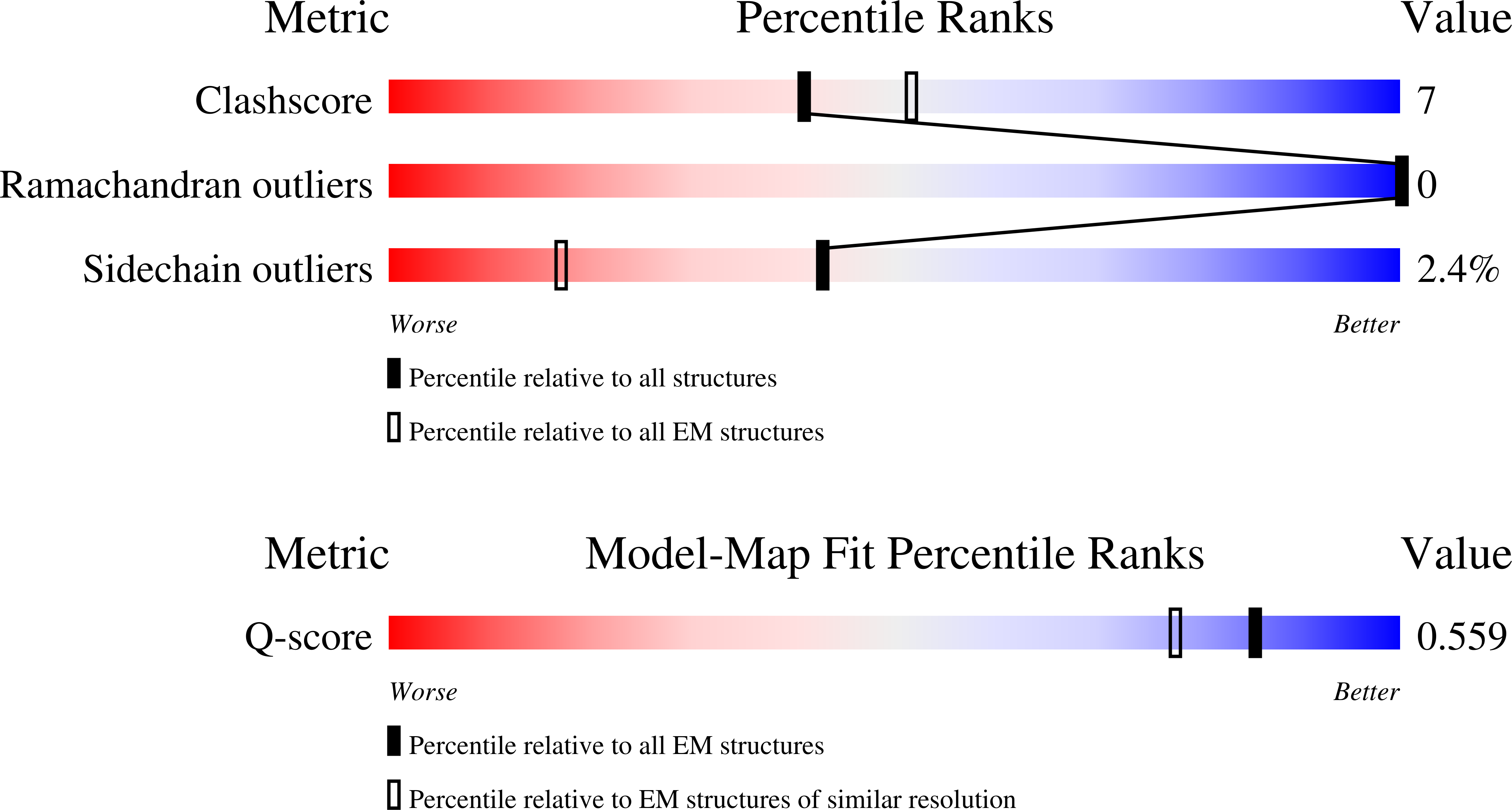
Macromolecular Entities
Polymer Type:polypeptide(L)
Molecule:Voltage-gated potassium chann
Gene (Uniprot):kch
Chain IDs:A (auth: E), D (auth: A), G (auth: C), H (auth: G)
Chain Length:178
Number of Molecules:4
Biological Source:Escherichia coli
Polymer Type:polypeptide(L)
Molecule:Voltage-gated potassium chann
Gene (Uniprot):kch
Chain IDs:B (auth: F), C (auth: H), E (auth: B), F (auth: D)
Chain Length:417
Number of Molecules:4
Biological Source:Escherichia coli
Ligand Molecules
Primary Citation
Mechanism of Kch activation by Zn 2.
Pnas Nexus 5 pgag284 pgag284 (2026)
PMID: 42729885 DOI: 10.1093/pnasnexus/pgag284

Abstact

Escherichia coli has a single K(+) channel gene, kch, that produces a K(+) channel with six transmembrane segments and a cytosolic Regulate Conductance of K(+) channels (RCK) domain. RCK domains are present in both eukaryotic and prokaryotic organisms and known to regulate ion channel activity upon binding of an ion or a nucleotide, however, how Kch is regulated remains unknown. Here, we show that Zn(2+) or Cu(2+) activates Kch via the RCK domain. Structural studies reveal that eight RCK domains assemble into a gating ring that can assume three conformations, closed, intermediate, and open, and that Zn(2+) promotes the open conformation by stabilizing the assembly interface. These results expand our knowledge on Kch and on RCK-mediated regulation of ion channels.

Legend

Protein

Chemical

Disease

Primary Citation of related structures
Feedback Form
Name
Email
Institute
Feedback