

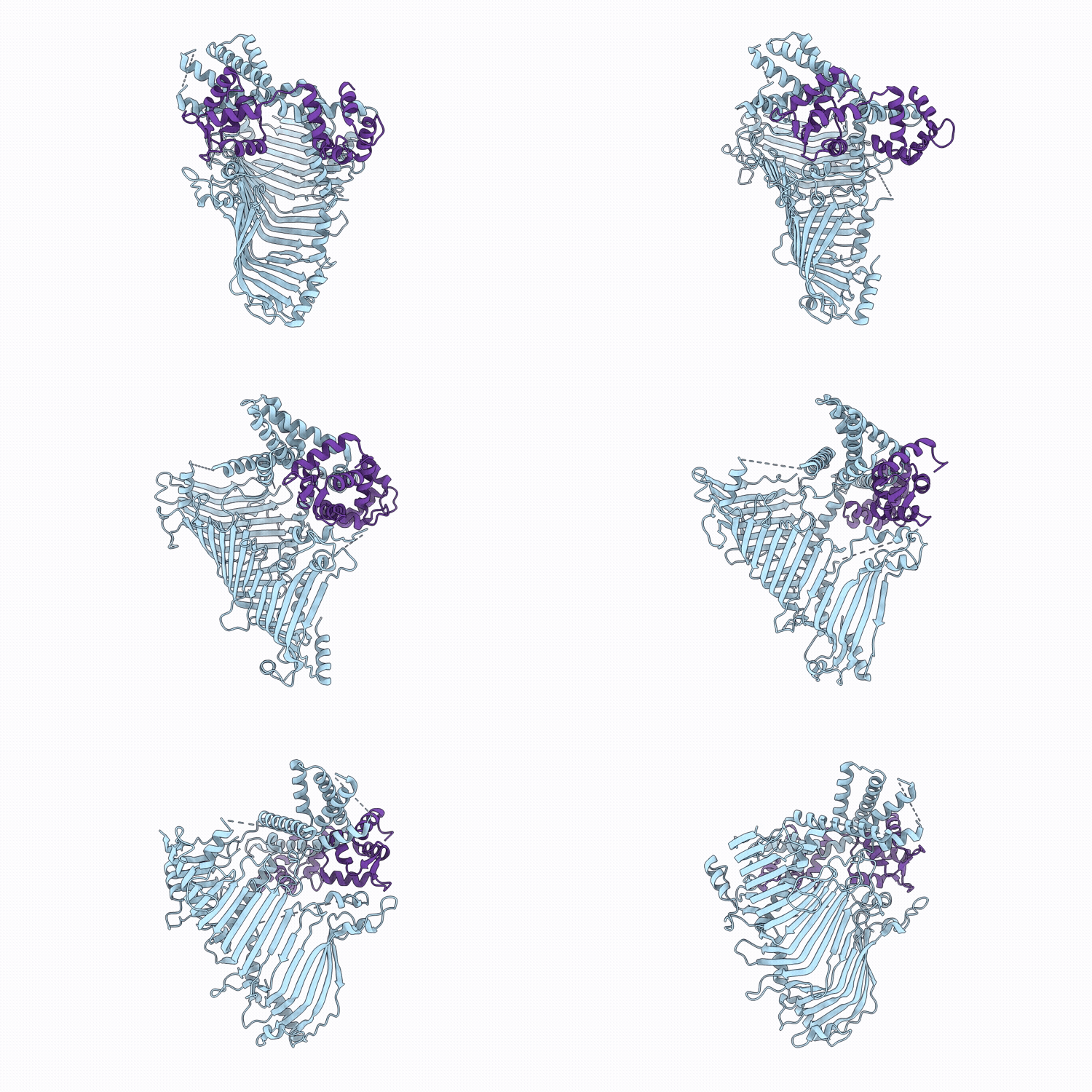
9YG4 image
Deposition Date 2025-09-27
Release Date 2026-06-10
Last Version Date 2026-07-01
Entry Detail
PDB ID:
9YG4
Keywords:
Title:
VPS13A/Nt-CaM
Biological Source:
Source Organism(s):
Homo sapiens (Taxon ID: 9606)
Expression System(s):
Method Details:
Experimental Method:
Resolution:
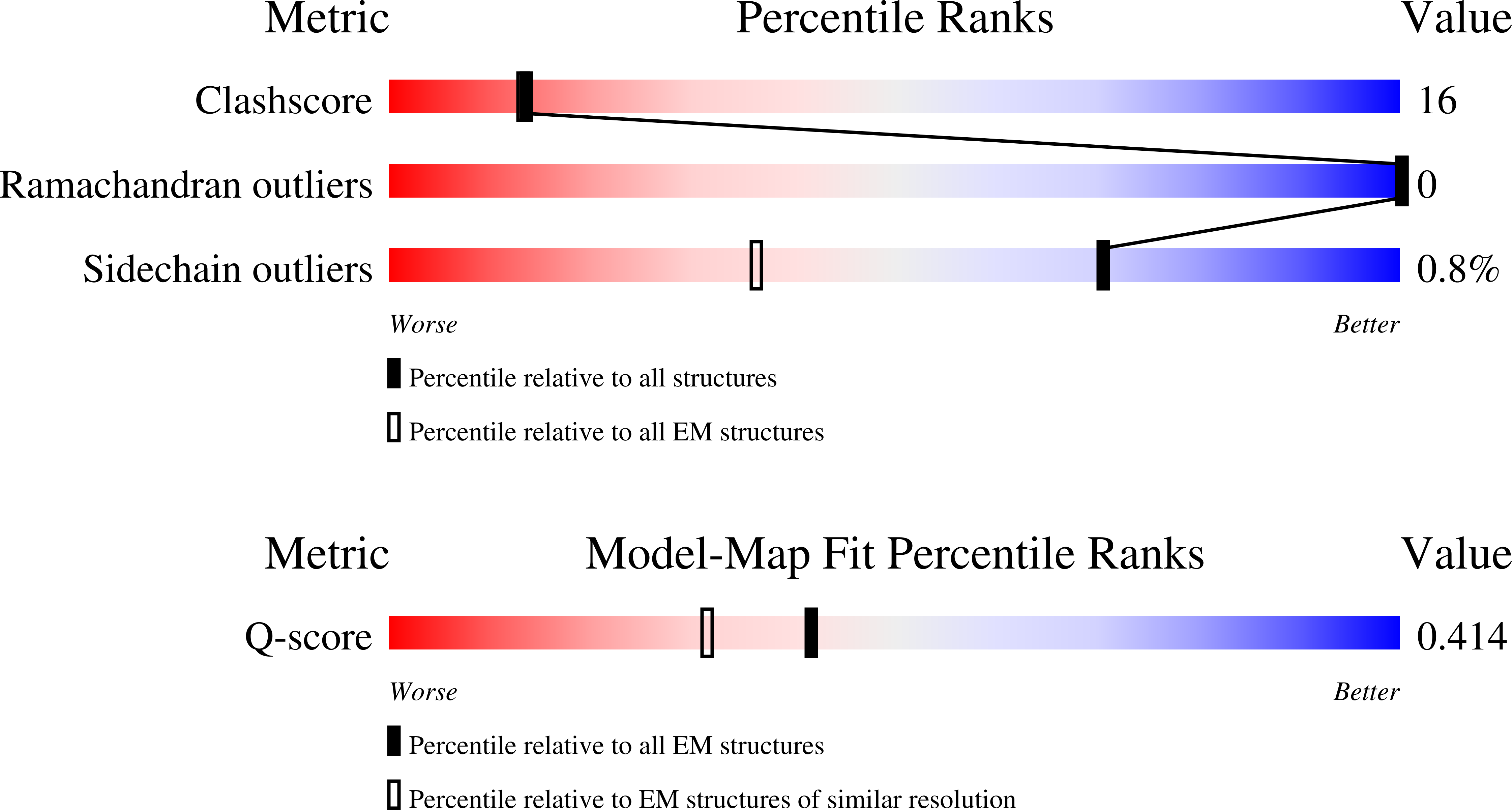
3.38 Å
Aggregation State:
PARTICLE
Reconstruction Method:
SINGLE PARTICLE
Macromolecular Entities
Structures with similar UniProt ID
Protein Blast
Polymer Type:polypeptide(L)
Molecule:Intermembrane lipid transfer
Gene (Uniprot):VPS13A
Chain IDs:B
Chain Length:793
Number of Molecules:1
Biological Source:Homo sapiens
Structures with similar UniProt ID
Protein Blast
Polymer Type:polypeptide(L)
Molecule:Calmodulin-1
Gene (Uniprot):CALM1
Chain IDs:A (auth: C)
Chain Length:149
Number of Molecules:1
Biological Source:Homo sapiens
Ligand Molecules
Primary Citation
Mechanism of lipid transfer by bridge-like protein VPS13A and the scramblase XK.
Cell ? ? ? (2026)
PMID: 42285089 DOI: 10.1016/j.cell.2026.05.027

Abstact

In eukaryotes, bridge-like lipid-transfer proteins (BLTPs) are central in mediating vesicle-independent lipid transfer between organelles. BLTPs span the cytosolic space between organelles at contact sites, featuring hydrophobic channels for lipids to travel between membranes. How BLTPs cooperate with partner proteins to orchestrate lipid delivery remains a mystery. Here, we used cryo-electron microscopy to visualize a complex comprising the prototypical BLTP VPS13A and the plasma membrane-localized scramblase XK at near-atomic resolution. VPS13A interacts with XK via its pleckstrin homology domain, priming VPS13A's bridge-like lipid-transfer domain to deliver lipids directly to the cytosolic leaflet of the acceptor membrane. In molecular dynamics simulations, this arrangement allows for robust lipid transfer. Newly delivered lipids can then be equilibrated between leaflets of the membrane bilayer by the scramblase, allowing for membrane growth. Mechanistic insights regarding lipid delivery by VPS13A are directly applicable to all VPS13 proteins and, more broadly, to all BLTP family members.

Legend

Protein

Chemical

Disease

Primary Citation of related structures
Feedback Form
Name
Email
Institute
Feedback