

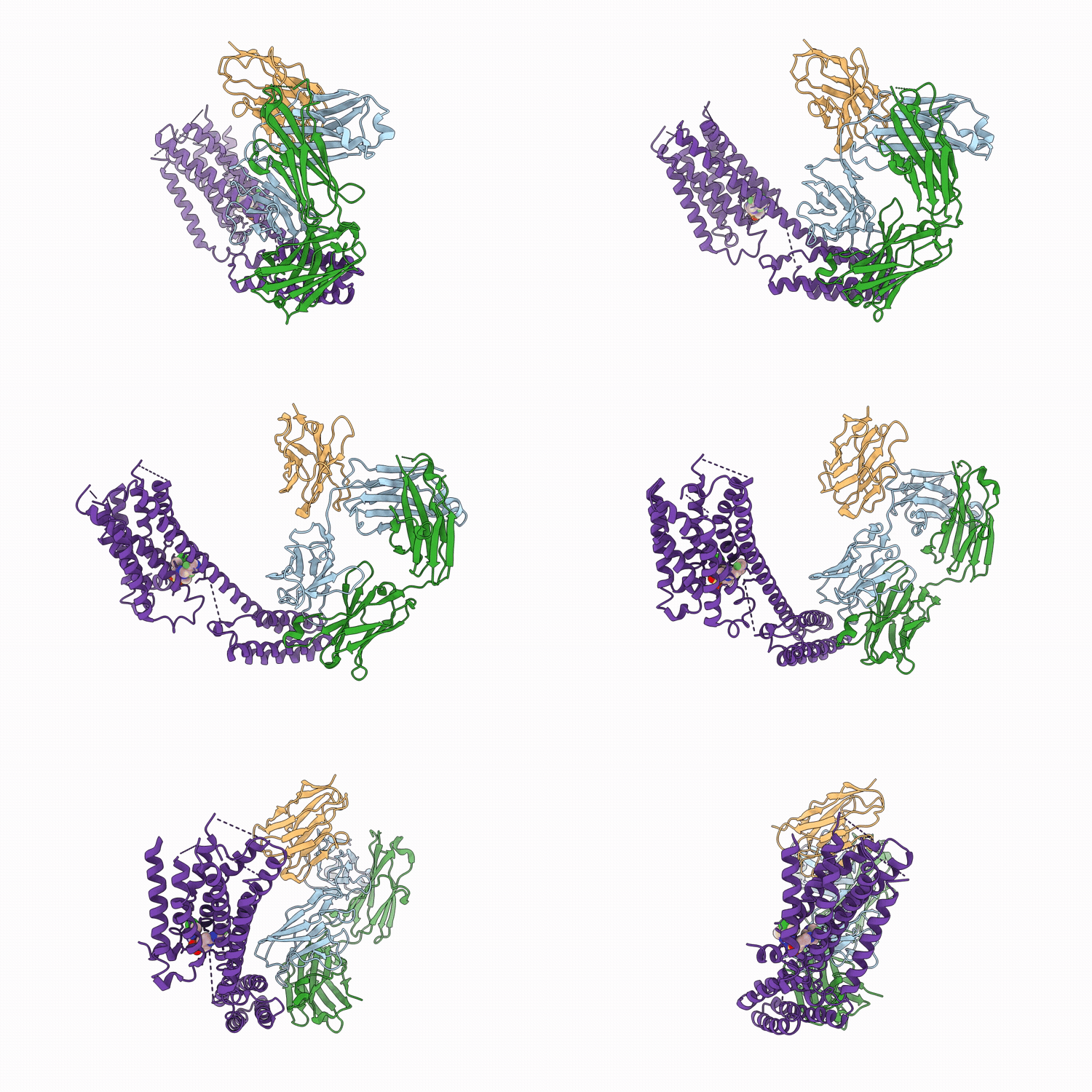
9YFU image
Deposition Date 2025-09-26
Release Date 2026-03-25
Last Version Date 2026-04-01
Entry Detail
PDB ID:
9YFU
Title:
Structure of GPR61 bound to inverse agonist compound 15
Biological Source:
Source Organism(s):
Homo sapiens (Taxon ID: 9606)
Lama glama (Taxon ID: 9844)
Expression System(s):
Method Details:
Experimental Method:
Resolution:
3.08 Å
Aggregation State:
PARTICLE
Reconstruction Method:
SINGLE PARTICLE
Macromolecular Entities
Protein Blast
Polymer Type:polypeptide(L)
Molecule:Fab24 BAK5 light chain
Chain IDs:D (auth: C)
Chain Length:264
Number of Molecules:1
Biological Source:Homo sapiens
Protein Blast
Polymer Type:polypeptide(L)
Molecule:Fab24 BAK5 heavy chain
Chain IDs:B (auth: H)
Chain Length:226
Number of Molecules:1
Biological Source:Homo sapiens
Protein Blast
Polymer Type:polypeptide(L)
Molecule:Hinge-binding nanobody
Chain IDs:C (auth: N)
Chain Length:135
Number of Molecules:1
Biological Source:Lama glama
Protein Blast
Polymer Type:polypeptide(L)
Molecule:G-protein coupled receptor 61
Gene (Uniprot):cybC, GPR61
Chain IDs:A (auth: R)
Chain Length:542
Number of Molecules:1
Biological Source:Homo sapiens
Ligand Molecules
Primary Citation

Abstact

GPR61 is a class A orphan G protein-coupled receptor (GPCR) that is predominantly expressed in the pituitary gland and appetite-regulating centers of the brain. Genome-wide association analysis, epigenetic analysis, and animal model data have suggested that GPR61 could be a potential therapeutic target for appetite and body weight modulation. Herein, we describe our medicinal chemistry efforts in discovering a class of potent, selective, and brain-penetrant GPR61 inverse agonists. The cryogenic electron microscopy structure of GPR61 bound to compound 15 shows that this class of inverse agonists binds to an induced, intracellular, allosteric pocket and abolishes GPR61 constitutive activity by disrupting its interactions with G protein, representing a novel mode of action of GPCR inverse agonism.

Legend

Protein

Chemical

Disease

Primary Citation of related structures
Feedback Form
Name
Email
Institute
Feedback