

9YFD image
Deposition Date 2025-09-25
Release Date 2026-06-03
Last Version Date 2026-07-01
Entry Detail
PDB ID:
9YFD
Title:
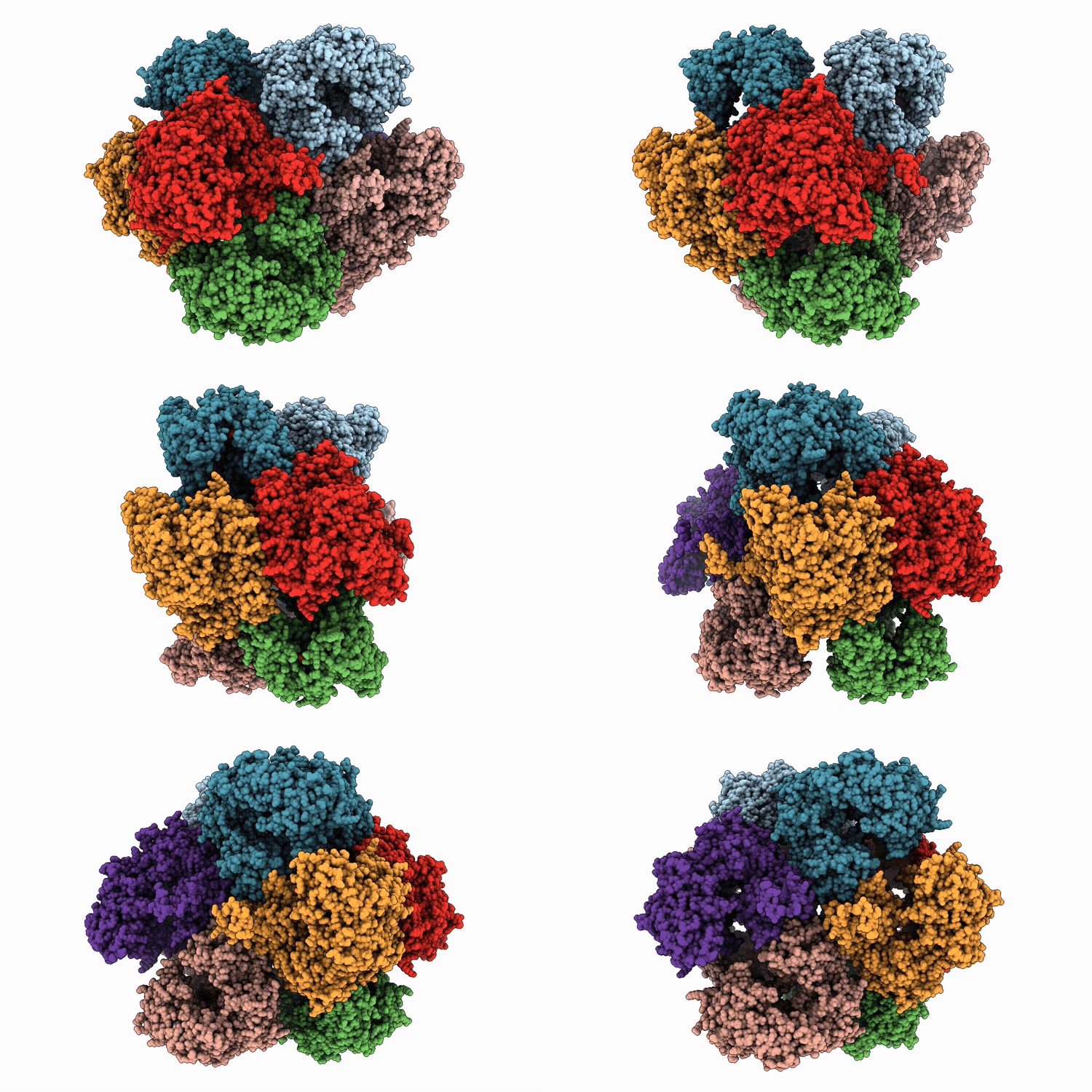
Defense-associated reverse transcriptase 1 (DRT1) filament
Biological Source:
Source Organism(s):
Escherichia coli (Taxon ID: 562)
Expression System(s):
Method Details:
Experimental Method:
Resolution:
2.60 Å
Aggregation State:
FILAMENT
Reconstruction Method:
SINGLE PARTICLE
Macromolecular Entities
Polymer Type:polypeptide(L)
Molecule:Defense-associated reverse tr
Chain IDs:A, B, C, D, E, F, G, H
Chain Length:1229
Number of Molecules:8
Biological Source:Escherichia coli
Primary Citation
Semirandom DNA adducts regulate a filamentous defense-associated reverse transcriptase.
Nat.Struct.Mol.Biol. 33 953 961 (2026)
PMID: 42271041 DOI: 10.1038/s41594-026-01813-8

Abstact

Retrons and several defense-associated reverse transcriptases (DRTs) synthesize non-genomic DNA for bacteriophage immunity. In some instances, this non-genomic DNA is of undefined, semirandom sequence. How undefined DNA sequences impart antiphage defense is not known. Herewe report the cryo-EM structure and functional characterization of the DRT1 antiphage defense system. We show that DRT1 performs template-free, protein-primed DNA synthesis to generate semirandom DNA adducts. DNA synthesis activates the nitrilase domain of DRT1, while DNA adducts drive the assembly of quiescent DRT1 filaments. Filamentous DRT1 is composed of domain-swapped C termini that are entwined, forming pseudoknots between tetrameric stacks. This configuration occludes conserved active-site residues, resulting in a dormant state. Bacteriophage escape mutants identify a T4 single-stranded DNA helicase required for DRT1 activity. Functionally, DRT1 resembles a minimal retron where a single gene produces a reverse transcriptase, effector and non-genomic antitoxin DNA.

Legend

Protein

Chemical

Disease

Primary Citation of related structures
Feedback Form
Name
Email
Institute
Feedback