

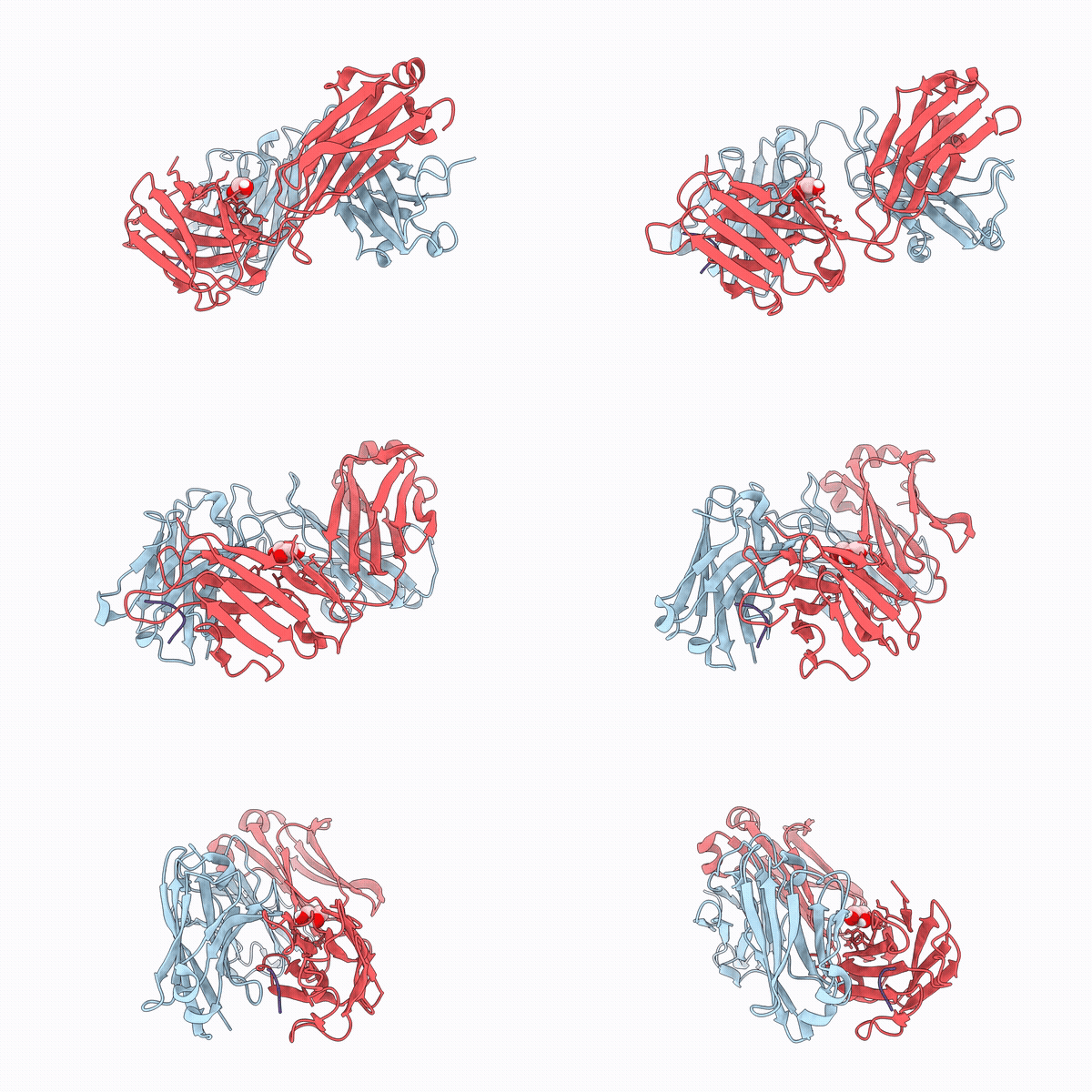
9YE2 image
Deposition Date 2025-09-23
Release Date 2026-10-07
Last Version Date 2026-10-07
Entry Detail
PDB ID:
9YE2
Keywords:
Title:
Crystal Structure of the GRAM-4 antibody fragment in complex with NAGG peptide
Biological Source:
Source Organism(s):
Homo sapiens (Taxon ID: 9606)
Plasmodium vivax (Taxon ID: 5855)
Expression System(s):
Method Details:
Experimental Method:
Resolution:
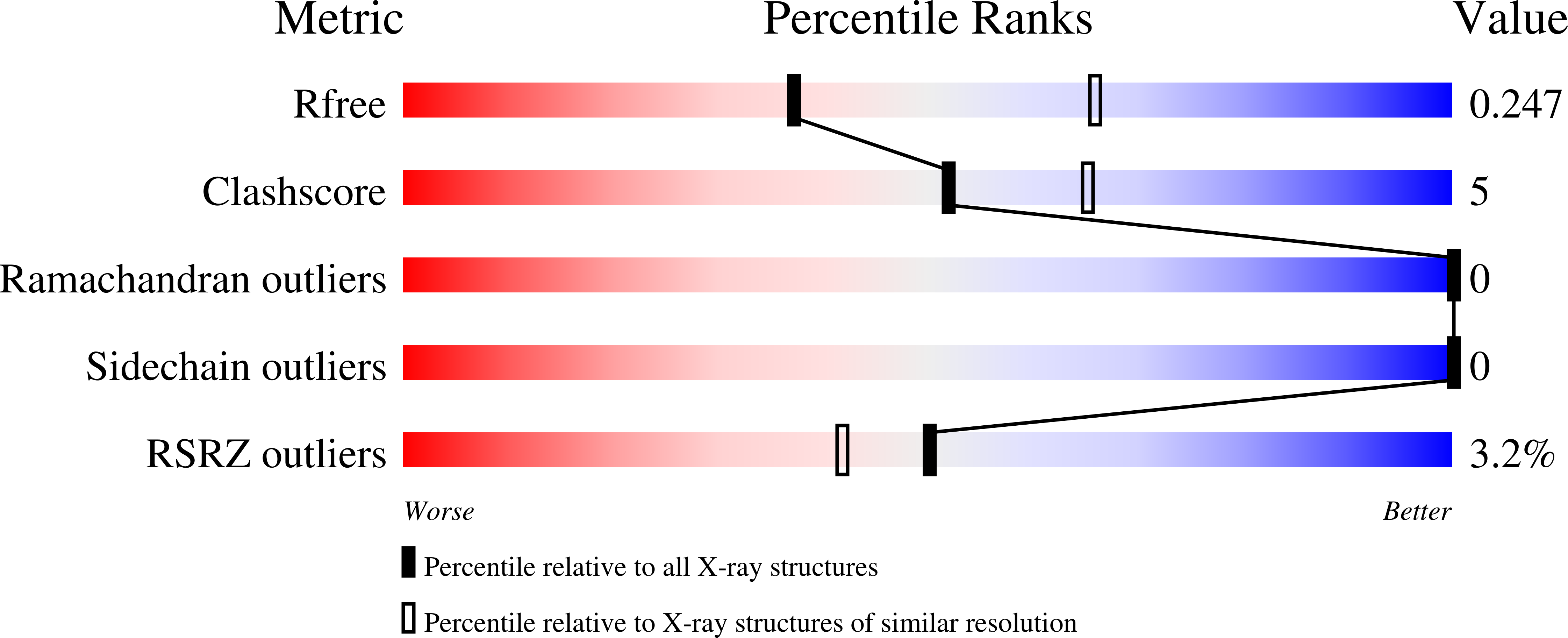
2.65 Å
R-Value Free:
0.24
R-Value Work:
0.21
R-Value Observed:
0.21
Space Group:
C 1 2 1
Macromolecular Entities
Structural Superimposition Protein Blast
Polymer Type:polypeptide(L)
Molecule:GRAM-4 Fab Heavy Chain
Chain IDs:A
Chain Length:224
Number of Molecules:1
Biological Source:Homo sapiens
Structural Superimposition Protein Blast
Polymer Type:polypeptide(L)
Molecule:GRAM-4 Fab Light Chain
Chain IDs:B
Chain Length:219
Number of Molecules:1
Biological Source:Homo sapiens
Structural Superimposition Protein Blast
Polymer Type:polypeptide(L)
Molecule:GLY-ASN-ALA-GLY
Chain IDs:C
Chain Length:16
Number of Molecules:1
Biological Source:Plasmodium vivax
Ligand Molecules
Primary Citation

Abstact

Circumsporozoite protein (CSP) is the most abundant Plasmodium sporozoite surface antigen. It is the major component of licensed Plasmodium falciparum vaccines and, hence, is the logical lead candidate for Plasmodium vivax (P. vivax) vaccines. However, our limited knowledge of protective B cell epitopes on P. vivax CSP remains a major roadblock. Here we identified two Plasmodium vivax CSP (PvCSP) B cell epitopes, PvCSP-A and PvCSP-B/NAGG, by screening inhibitory plasma from P. vivax-infected individuals. The epitopes were located in the N- and C-terminal regions of PvCSP, respectively, and were distinct from the canonical central repeat region epitope. We isolated a monoclonal antibody, GRAM-4, that recognized the PvCSP-B/NAGG epitope and mediated potent inhibition of traversal, hepatocyte invasion, and liver-stage development in vitro, confirming PvCSP-B/NAGG as a genuine neutralization target. Structural resolution of the GRAM-4:PvCSP-B/NAGG interaction at 2.65 A revealed the molecular basis of epitope recognition, providing a blueprint for PvCSP vaccine development.

Legend

Protein

Chemical

Disease

Primary Citation of related structures
Feedback Form
Name
Email
Institute
Feedback