

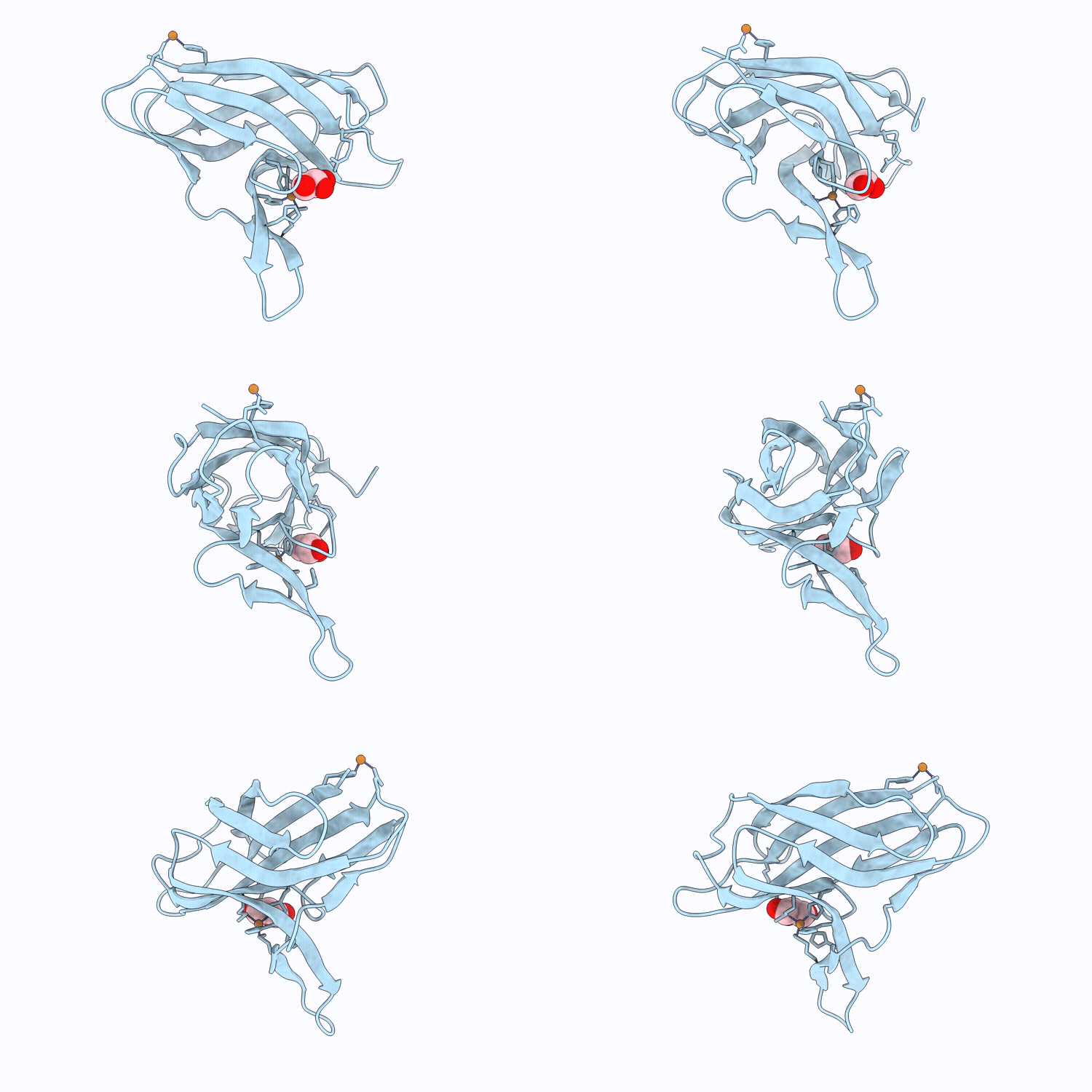
9YAH image
Deposition Date 2025-09-15
Release Date 2026-03-25
Last Version Date 2026-05-20
Entry Detail
PDB ID:
9YAH
Title:
Crystal structure of metallochaperone AccA from Neisseria gonorrhoeae
Biological Source:
Source Organism(s):
Method Details:
Experimental Method:
Resolution:
2.90 Å
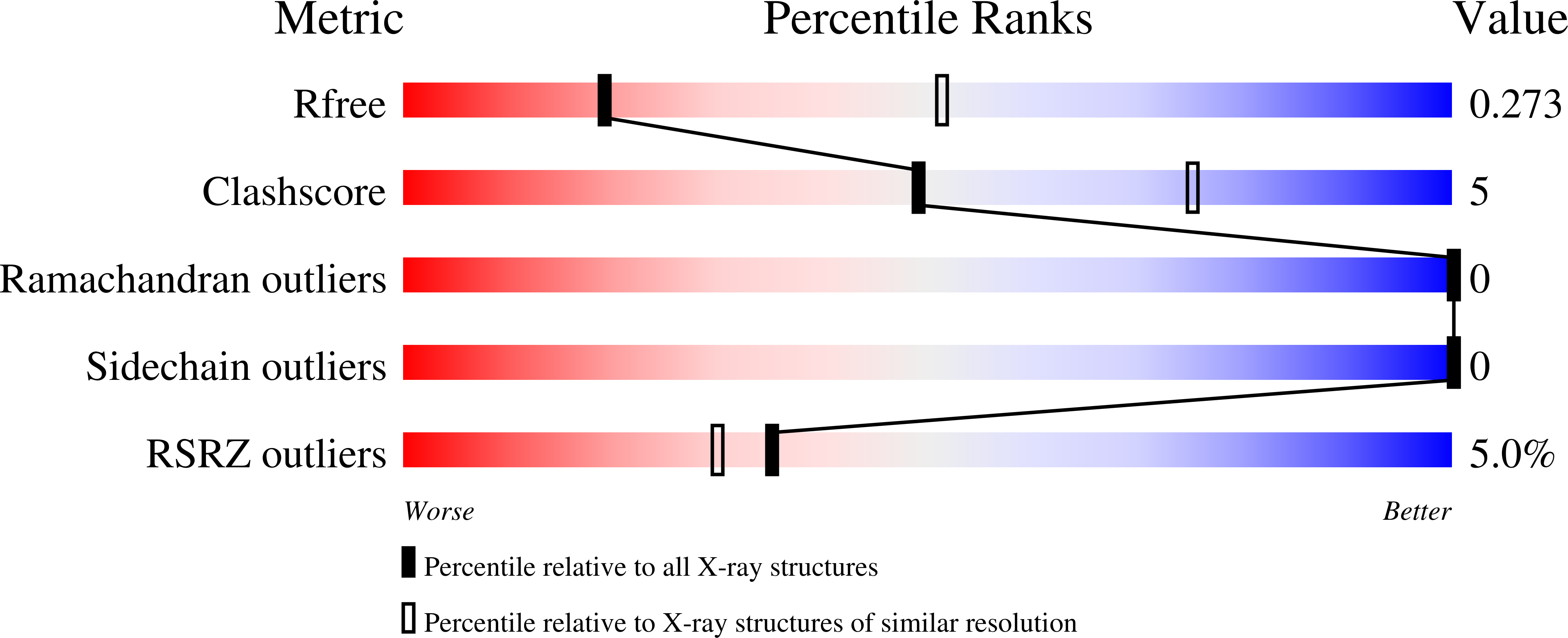
R-Value Free:
0.27
R-Value Work:
0.21
R-Value Observed:
0.22
Space Group:
P 32 2 1
Macromolecular Entities
Structures with similar UniProt ID
Protein Blast
Polymer Type:polypeptide(L)
Molecule:Copper chaperone PCu(A)C
Chain IDs:A
Chain Length:157
Number of Molecules:1
Biological Source:Neisseria meningitidis serogroup A
Primary Citation
AccA from Neisseria gonorrhoeae provides a new framework for understanding periplasmic copper metallochaperones.
Chem Sci 17 9270 9284 (2026)
PMID: 41877990 DOI: 10.1039/d5sc08738d

Abstact

Many bacteria use copper (Cu) to drive key redox reactions and energy metabolism, and they often rely on metallochaperones to deliver Cu to Cu-dependent enzymes. However, why delivery by metallochaperones is needed, and why Cu cannot transfer directly from cellular pools to the target enzymes, is not well understood. Here, we show that the PCu(A)C-family metallochaperone AccA from the periplasm of Neisseria gonorrhoeae delivers Cu to the Cu-dependent nitrite reductase AniA, enabling growth and nitrite respiration in O(2)-limiting conditions. Although purified AccA binds both Cu(i) and Cu(ii) ions, only the Cu(i)-binding site is essential for activating AniA in N. gonorrhoeae cells. Unexpectedly, the Cu(i)-binding affinity of AniA is >50 times weaker than that of AccA, suggesting that Cu delivery occurs against a favourable affinity gradient. We propose that AccA is needed because AniA cannot compete with the periplasmic milieu for binding Cu, providing a new framework to understand why some Cu-dependent enzymes need metallochaperones to deliver Cu.

Legend

Protein

Chemical

Disease

Primary Citation of related structures
Feedback Form
Name
Email
Institute
Feedback