

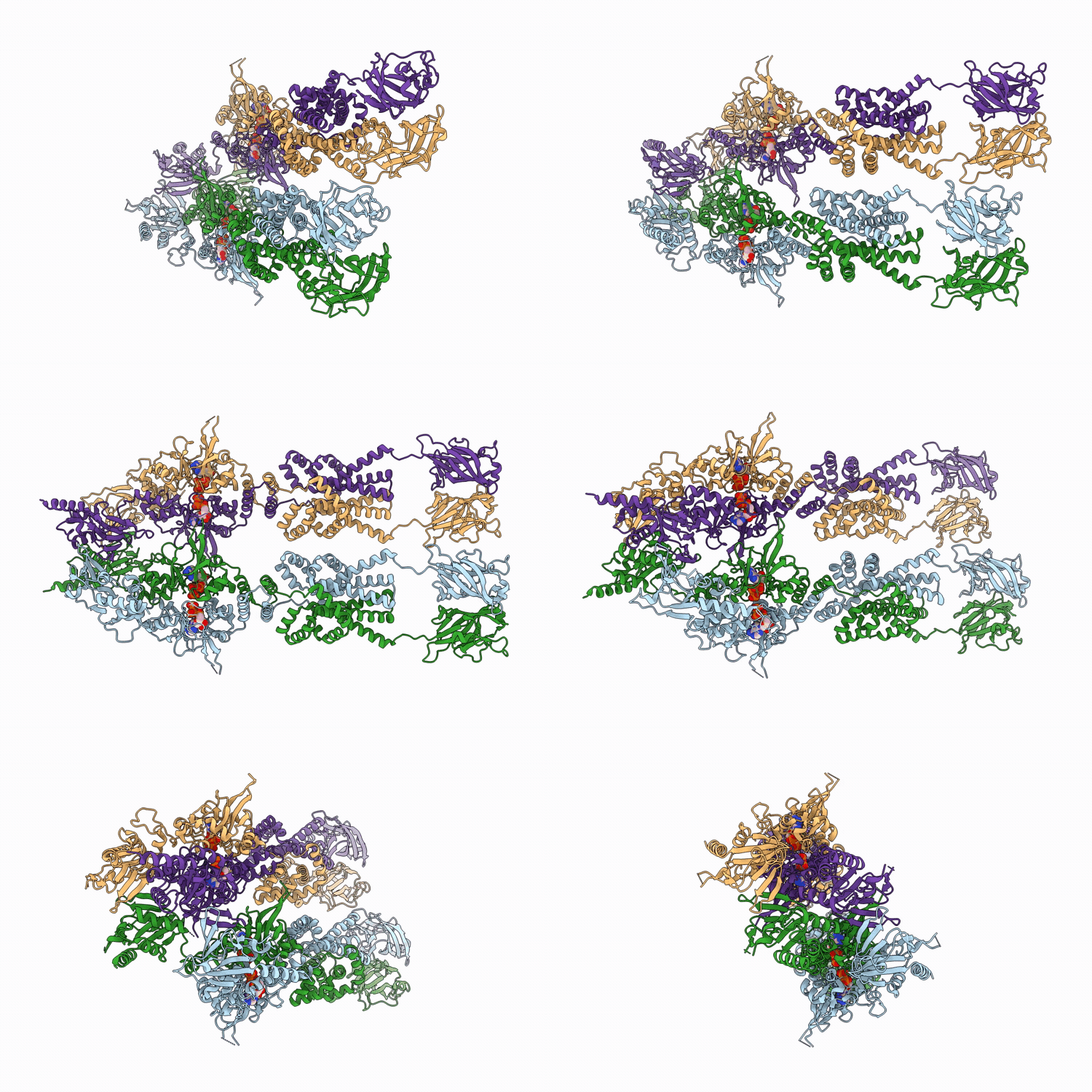
9Y9G image
Deposition Date 2025-09-14
Release Date 2026-07-29
Last Version Date 2026-09-30
Entry Detail
PDB ID:
9Y9G
Title:
Cryo-EM structure of human CNNM4(K113A/R140A/R141A) tetramer with Magnesium and MgATP in outward-facing state
Biological Source:
Source Organism(s):
Homo sapiens (Taxon ID: 9606)
Expression System(s):
Method Details:
Experimental Method:
Resolution:
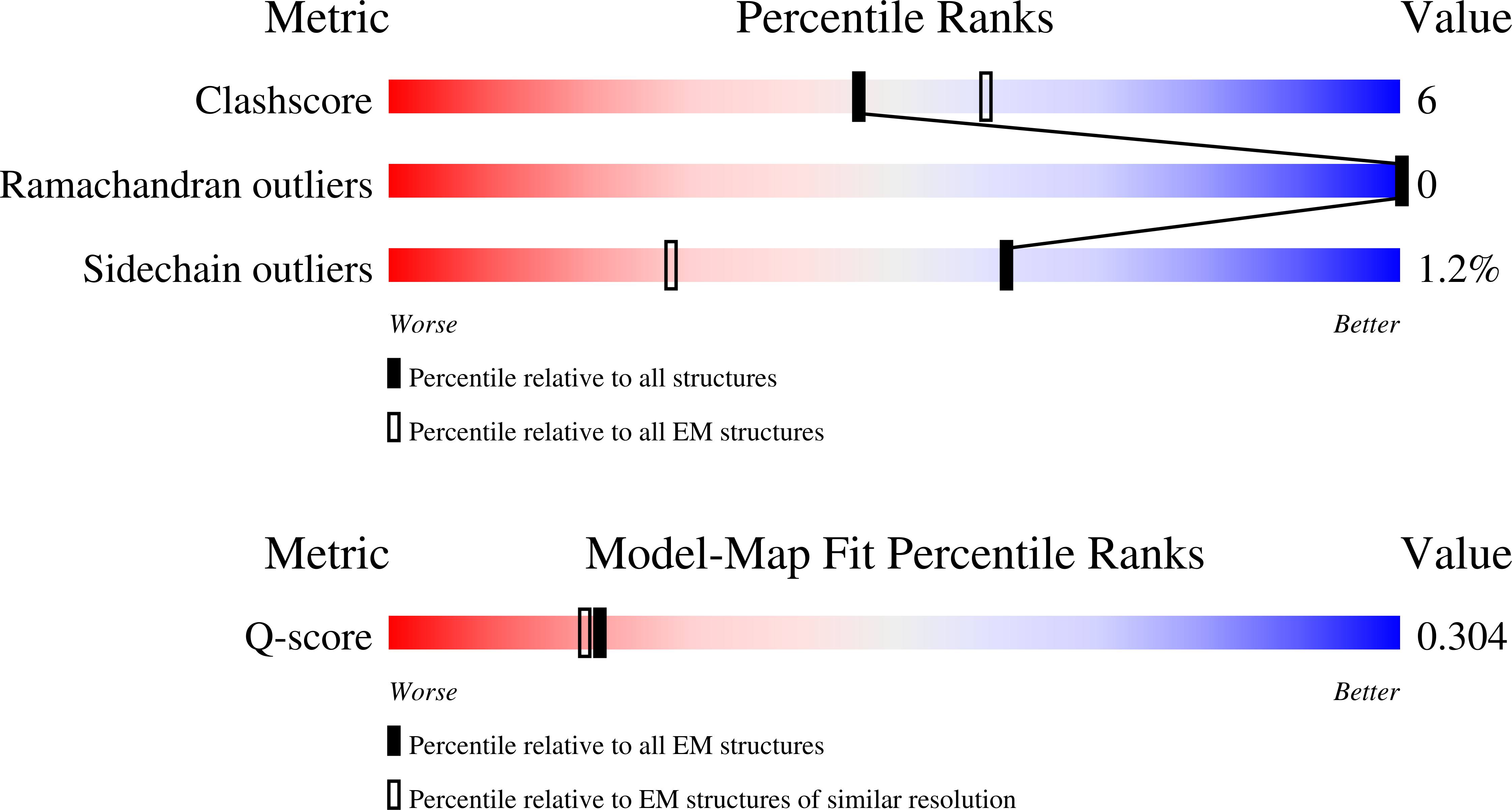
3.89 Å
Aggregation State:
PARTICLE
Reconstruction Method:
SINGLE PARTICLE
Macromolecular Entities
Polymer Type:polypeptide(L)
Molecule:Metal transporter CNNM4
Gene (Uniprot):CNNM4
Mutagens:K113A, R140A, R141A
Chain IDs:A, B, C, D
Chain Length:0
Number of Molecules:4
Biological Source:Homo sapiens
Primary Citation
Dynamic dimer-of-dimers architecture defines Mg 2+ transport in human CNNM4.
Cell 189 6097 ? (2026)
PMID: 42497866 DOI: 10.1016/j.cell.2026.06.039

Abstact

Mg(2+) is essential for all living organisms, yet its transport across mammalian membranes remains poorly understood. Here, we present cryoelectron microscopy (cryo-EM) structures of a full-length mammalian Mg(2+) transporter on the plasma membrane, human CNNM4, in outward-facing and occluded states, revealing an unexpected tetrameric assembly organized as a dimer of asymmetric dimers-distinct from the symmetric dimers in prokaryotic homologs and long assumed for eukaryotic CNNMs. We show that Mg(2+)/ATP binding stabilizes the dynamic intracellular domains and promotes tetramerization, while an acidic patch binds additional Mg(2+), potentially acting as a sensor to couple cytoplasmic Mg(2+) levels to transport activity. Within the transmembrane domain, a key glutamate flips upon Na(+) binding and destabilizes the Mg(2+)-binding site in the outward-facing state, thereby promoting Mg(2+)/Na(+) exchange. Together, these findings establish a mechanistic framework for CNNM transport and regulation that diverges from prokaryotic models and links CNNM function to human physiology and disease.

Legend

Protein

Chemical

Disease

Primary Citation of related structures
Feedback Form
Name
Email
Institute
Feedback