

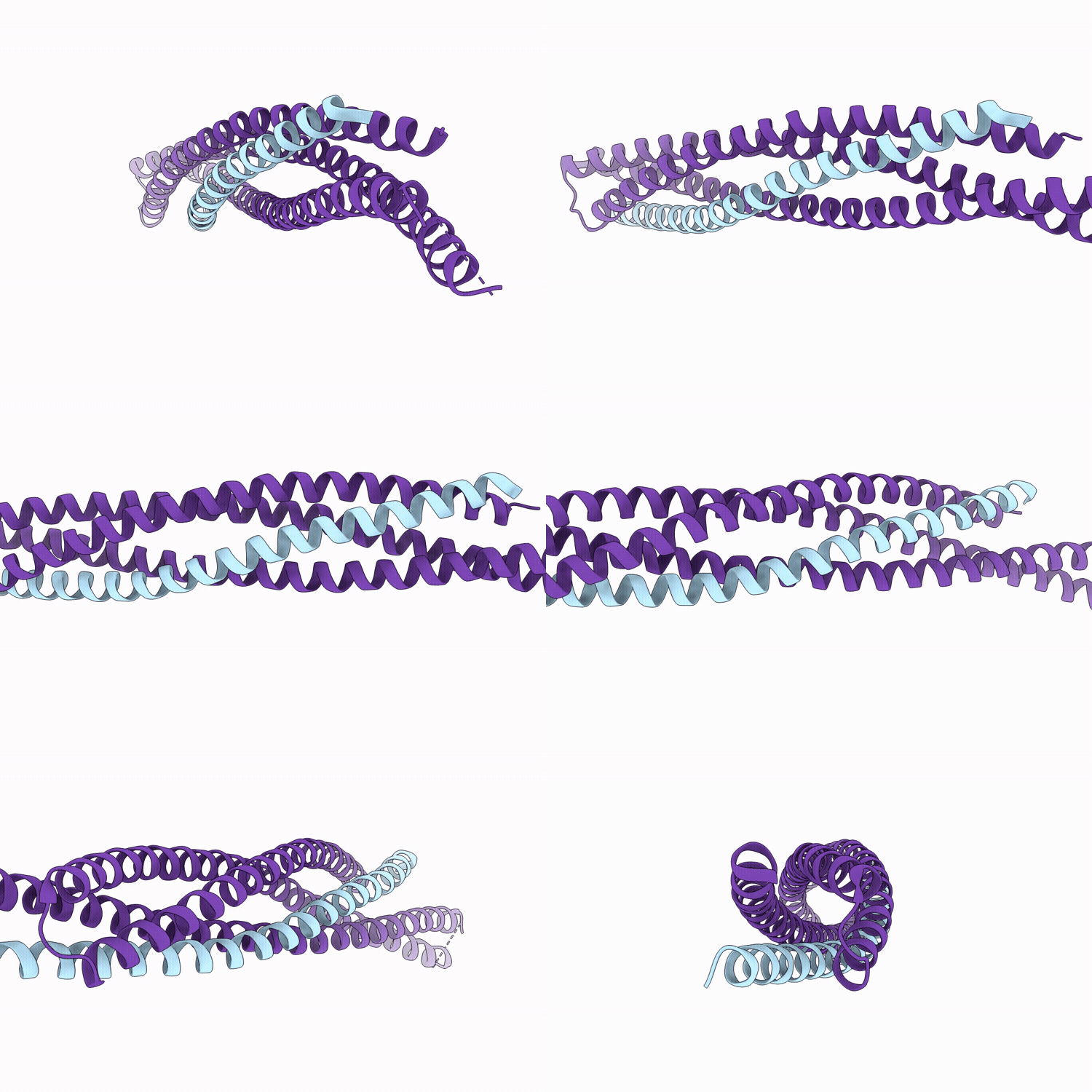
9Y5H image
Deposition Date 2025-09-04
Release Date 2026-05-13
Last Version Date 2026-06-03
Entry Detail
PDB ID:
9Y5H
Title:
Crystal structure of rv-SNARE/sc-t-SNARE-diff-#3.3 complex
Biological Source:
Source Organism(s):
Expression System(s):
Method Details:
Experimental Method:
Resolution:
2.52 Å
R-Value Free:
0.29
R-Value Work:
0.23
R-Value Observed:
0.24
Space Group:
P 21 21 21
Macromolecular Entities
Structural Superimposition Protein Blast
Polymer Type:polypeptide(L)
Molecule:rv-SNARE/sc-t
Chain IDs:A
Chain Length:71
Number of Molecules:1
Biological Source:synthetic construct
Structural Superimposition Protein Blast
Polymer Type:polypeptide(L)
Molecule:sc-t-SNARE-diff-#3.3
Chain IDs:B
Chain Length:260
Number of Molecules:1
Biological Source:synthetic construct
Primary Citation
Computational design of membrane fusion proteins.
Biorxiv ? ? ? (2026)
PMID: 42146438 DOI: 10.64898/2026.05.04.722779

Abstact

The fusion of two distinct biological membranes is an evolutionarily conserved process essential to cellular organization and physiology. Membrane fusion is driven by the refolding of fusogenic proteins into low-energy postfusion states that overcome the energetic barrier to bilayer merger. Here we report a computational method for the design of synthetic fusogens inspired by the architecture of the soluble N-ethylmaleimide-sensitive factor attachment protein receptor (SNARE) complex. Using machine learning-guided protein design to extensively remodel backbone geometry and sequence, we generated heterodimeric SNARE-like assemblies that efficiently catalyze cell-cell membrane fusion. These minimal two-component fusogens exhibit substantially higher fusion activity than native multisubunit SNARE complexes. Structural and functional analyses identify the key determinants required for fusogenic activity and reveal a modularity that enables control of fusion through chemically induced heterodimerization. In addition to cell-cell fusion, the synthetic fusogens drive fusion between endoplasmic reticulum and mitochondrial membranes from human cells, demonstrating their potential as tools for programmable manipulation of intracellular membranes. Together, these results establish a general framework for the rational design of synthetic fusogens and expand the toolkit for engineering membrane dynamics in living systems.

Legend

Protein

Chemical

Disease

Primary Citation of related structures
Feedback Form
Name
Email
Institute
Feedback