

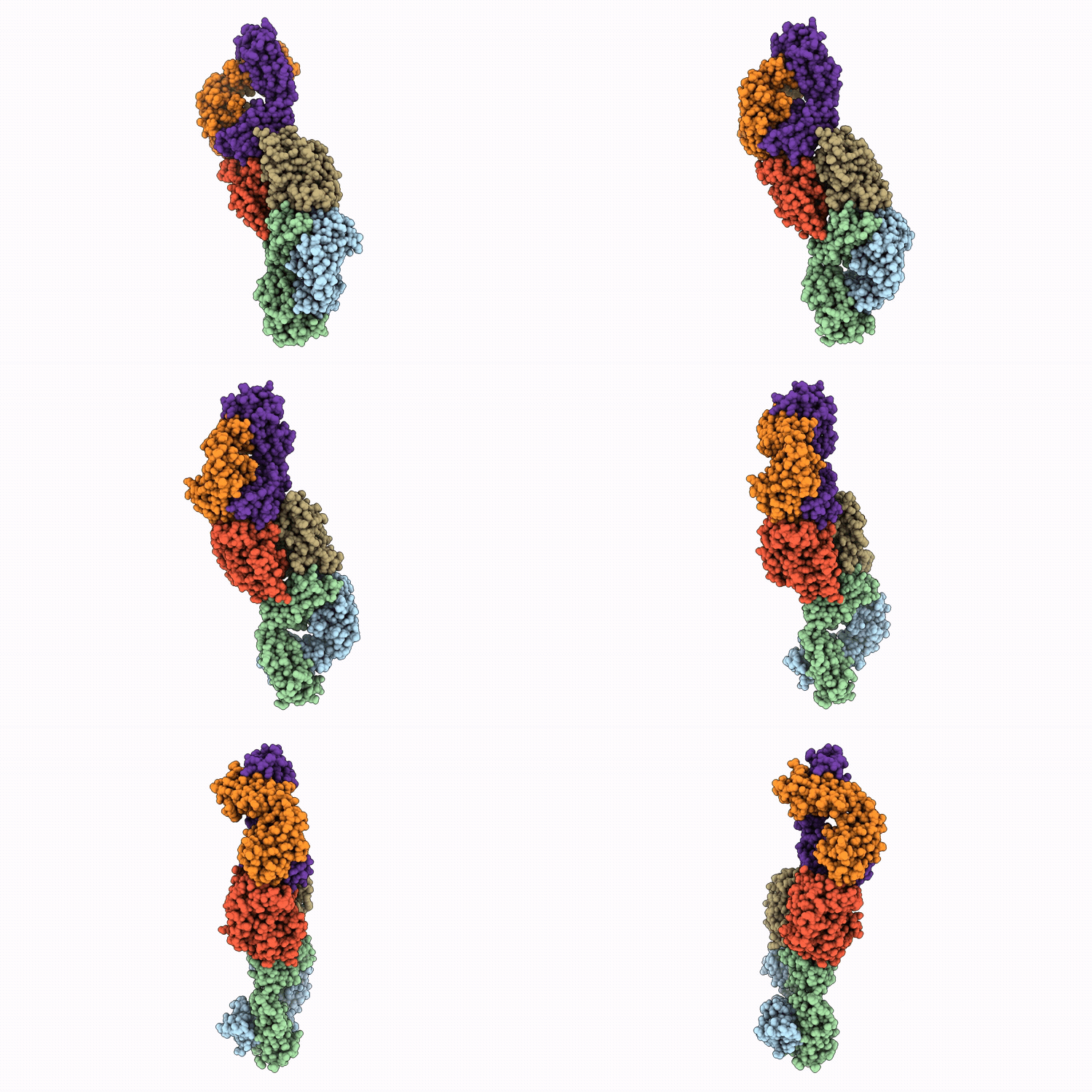
9Y41 image
Deposition Date 2025-09-02
Release Date 2026-05-06
Last Version Date 2026-05-20
Entry Detail
PDB ID:
9Y41
Title:
Crystal structure of hemagglutinin head domain from H1N1 Influenza A virus A/Victoria/2570/2019 bound to the 49_C09 antibody
Biological Source:
Source Organism(s):
Influenza A virus (Taxon ID: 11320)
Homo sapiens (Taxon ID: 9606)
Expression System(s):
Method Details:
Experimental Method:
Resolution:
2.89 Å
R-Value Free:
0.28
R-Value Work:
0.23
R-Value Observed:
0.23
Space Group:
P 1 21 1
Macromolecular Entities
Structures with similar UniProt ID
Protein Blast
Polymer Type:polypeptide(L)
Molecule:Hemagglutinin
Gene (Uniprot):HA
Chain IDs:A (auth: G), B (auth: C)
Chain Length:223
Number of Molecules:2
Biological Source:Influenza A virus
Protein Blast
Polymer Type:polypeptide(L)
Molecule:Antibody 49_C09 heavy chain
Chain IDs:C (auth: H), E (auth: A)
Chain Length:228
Number of Molecules:2
Biological Source:Homo sapiens
Protein Blast
Polymer Type:polypeptide(L)
Molecule:Antibody 49_C09 light chain
Chain IDs:D (auth: L), F (auth: B)
Chain Length:214
Number of Molecules:2
Biological Source:Homo sapiens
Ligand Molecules
Primary Citation
Childhood immunological imprinting of cross-subtype antibodies targeting the hemagglutinin head domain of influenza viruses.
Cell Host Microbe 34 873 887.e11 (2026)
PMID: 42049037 DOI: 10.1016/j.chom.2026.04.004

Abstact

Influenza virus cross-subtype antibodies targeting epitopes in the hemagglutinin (HA) head are rare because these epitopes are variable between influenza virus subtypes. We found that a large proportion of monoclonal antibodies (mAbs) isolated from individuals immunized with the 2021-22 seasonal influenza vaccine bound to an epitope on the HA head of both the H1N1 vaccine strain and H3N2 strains from the mid-1990s. The unmutated common ancestors of many of these mAbs reacted to both the 1990s H3s and the 2021-22 H1 vaccine strain. These cross-subtype antibodies were also found in polyclonal sera, but only among individuals born in the 1990s. Ferrets sequentially exposed to a 1990s H3N2 virus and contemporary influenza vaccine also produced H1/H3 cross-reactive antibodies. Recently, H1N1 viruses have acquired a substitution that abrogates the binding of these antibodies. Together, our study demonstrates how prior influenza virus exposures can influence the specificity of antibodies elicited by entirely different influenza virus subtypes.

Legend

Protein

Chemical

Disease

Primary Citation of related structures
Feedback Form
Name
Email
Institute
Feedback