

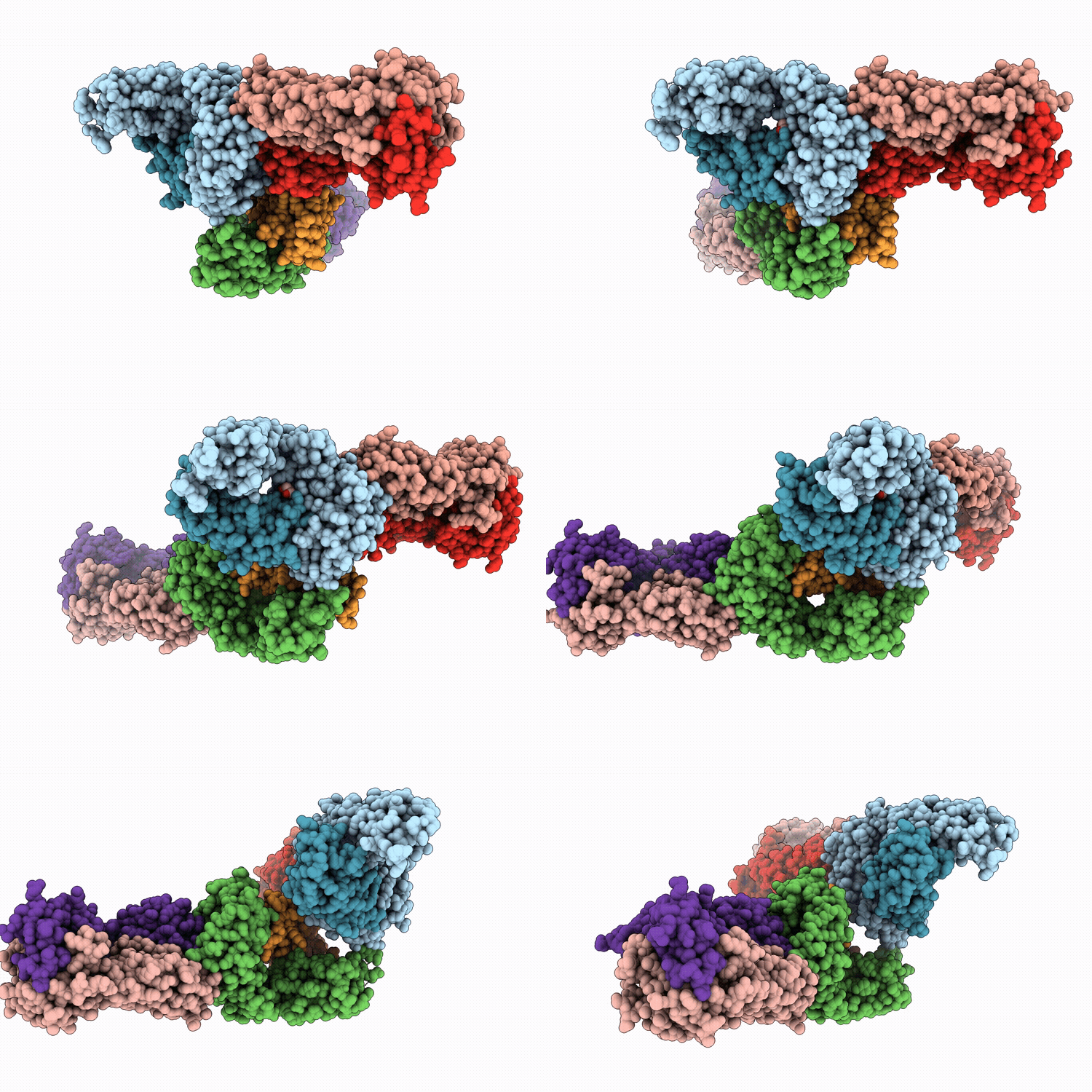
9Y0V image
Deposition Date 2025-08-29
Release Date 2026-05-13
Last Version Date 2026-06-03
Entry Detail
PDB ID:
9Y0V
Keywords:
Title:
Crystal Structure of human MAIT A-F7 TCR-MR1*04 complex
Biological Source:
Source Organism(s):
Homo sapiens (Taxon ID: 9606)
Expression System(s):
Method Details:
Experimental Method:
Resolution:
3.00 Å
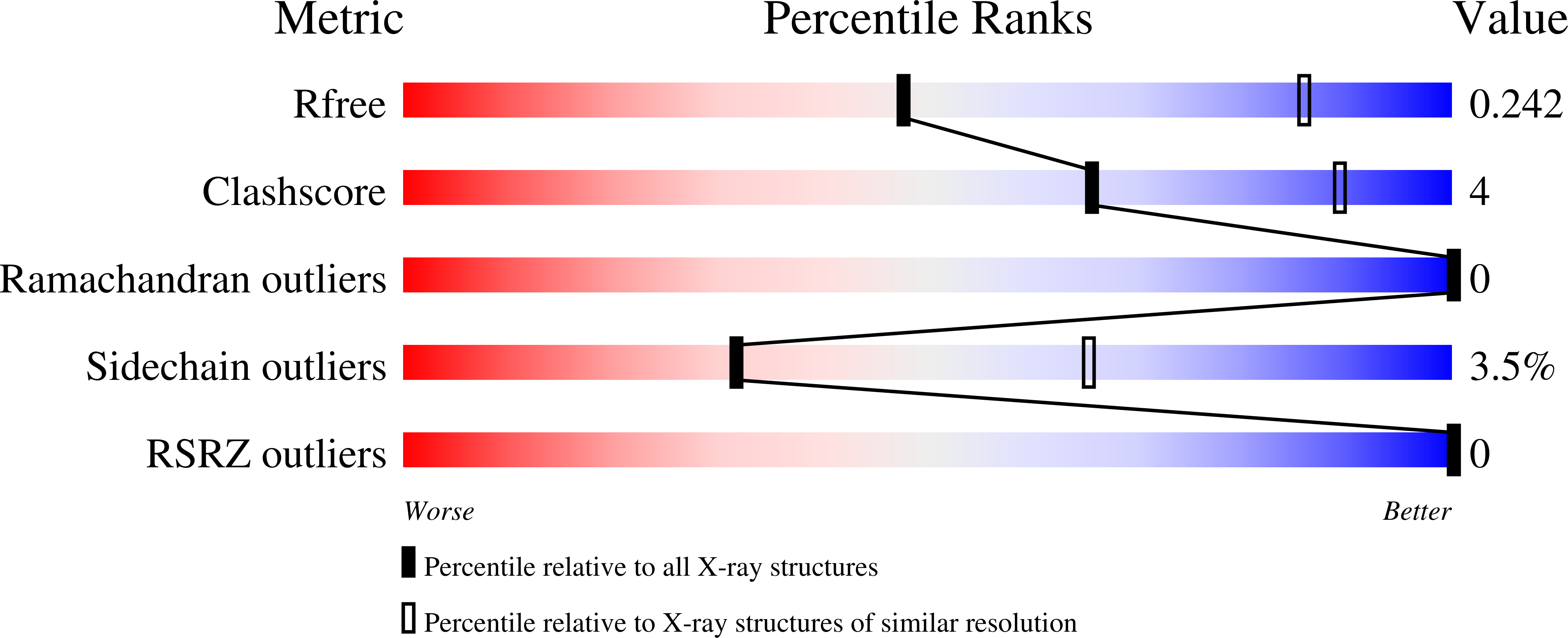
R-Value Free:
0.24
R-Value Work:
0.19
R-Value Observed:
0.19
Space Group:
P 1 21 1
Macromolecular Entities
Structures with similar UniProt ID
Protein Blast
Polymer Type:polypeptide(L)
Molecule:Major histocompatibility comp
Gene (Uniprot):MR1
Chain IDs:A, C
Chain Length:271
Number of Molecules:2
Biological Source:Homo sapiens
Structures with similar UniProt ID
Protein Blast
Polymer Type:polypeptide(L)
Molecule:Beta-2-microglobulin
Gene (Uniprot):B2M
Chain IDs:B, F
Chain Length:100
Number of Molecules:2
Biological Source:Homo sapiens
Protein Blast
Polymer Type:polypeptide(L)
Molecule:TCR alpha chain
Chain IDs:D, G
Chain Length:204
Number of Molecules:2
Biological Source:Homo sapiens
Protein Blast
Polymer Type:polypeptide(L)
Molecule:TCR beta chain
Chain IDs:E, H
Chain Length:246
Number of Molecules:2
Biological Source:Homo sapiens
Ligand Molecules
Primary Citation
Allelic variation alters expression and antigen presentation of MR1 allomorphs.
J.Biol.Chem. 302 111470 111470 (2026)
PMID: 42001947 DOI: 10.1016/j.jbc.2026.111470

Abstact

The major histocompatibility complex (MHC) class I-related protein 1 (MR1) presents vitamin B- derived metabolites to mucosal-associated invariant T (MAIT) and other T cells. There is limited polymorphism of MR1, the functional impact of which is not understood. We examined the impact of allelic variation of MR1 on the expression, structure and function of the known MR1 allomorphs. The expression and function of MR1*02, MR1*03 and MR1*06 were similar to the canonical MR1*01. Crystal structures of four MR1 allomorphs show that their polymorphisms do not impact the three-dimensional fold of MR1. Despite the binding of 5-OP-RU to MR1*05 and its cell surface upregulation, this allomorph was severely impaired in its ability to activate primary MAIT cells. This phenotype was controlled by two (His90Gln and Glu52Gly) of its three polymorphisms, which led to the loss of structurally stabilising interactions. When cells expressing the MR1 allomorphs were infected with herpes simplex virus type 1 (HSV-1), the nascent expression of all allomorphs was severely impaired, but surface expression of MR1*04:01 and MR1*04:02 were relatively less impacted. Hence, MR1 allelic variation alters the expression and function of the MR1*04 and MR1*05 allomorphs, with implications for MAIT cell and diverse MR1-reactive T cell immunity.

Legend

Protein

Chemical

Disease

Primary Citation of related structures
Feedback Form
Name
Email
Institute
Feedback