

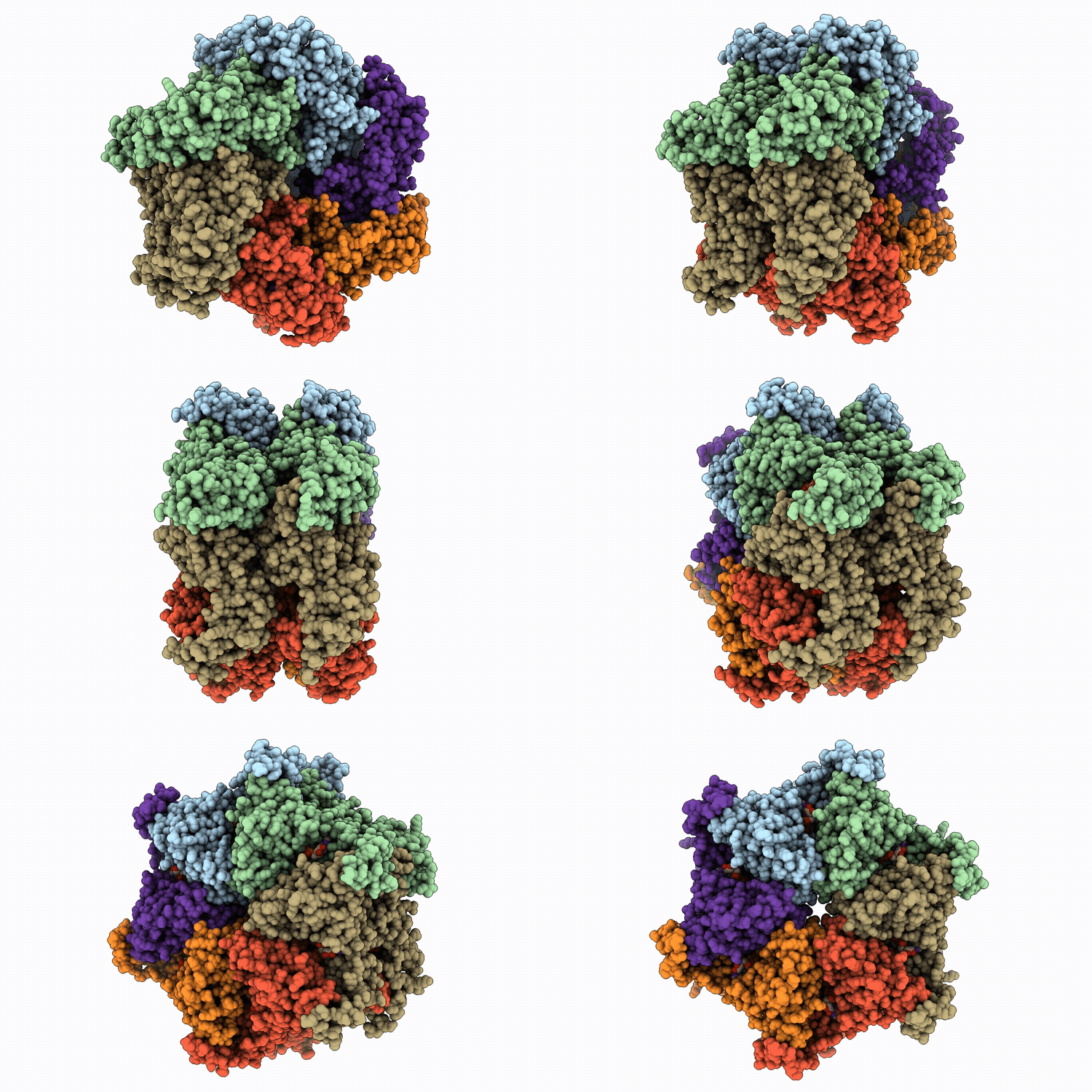
9Y0B image
Deposition Date 2025-08-28
Release Date 2026-04-29
Last Version Date 2026-04-29
Entry Detail
PDB ID:
9Y0B
Keywords:
Title:
Cryo-EM structure of human VCP/p97-G156D mutant bound to ADP
Biological Source:
Source Organism(s):
Homo sapiens (Taxon ID: 9606)
Expression System(s):
Method Details:
Experimental Method:
Resolution:
2.61 Å
Aggregation State:
PARTICLE
Reconstruction Method:
SINGLE PARTICLE
Macromolecular Entities
Structures with similar UniProt ID
Protein Blast
Polymer Type:polypeptide(L)
Molecule:Transitional endoplasmic reti
Gene (Uniprot):VCP
Mutagens:G156D
Chain IDs:A, B, C, D, E, F
Chain Length:822
Number of Molecules:6
Biological Source:Homo sapiens
Ligand Molecules
Primary Citation

Abstact

PURPOSE: Adams-Oliver syndrome (AOS) is a genetically heterogeneous disorder with cardinal features of aplasia cutis congenita and terminal limb reduction defects. A minority of individuals with AOS develop potentially lethal pulmonary hypertension (PH) in infancy, a subgroup that has been refractory to genetic explanation. METHODS: We studied a cohort of individuals with AOS and no genetic diagnosis by genome and exome sequencing. We characterized rare identified substitution variants in valosin containing protein (VCP) in vitro using ATP hydrolysis, cryogenic-electron microscopy, thermal stability, and response to CB-5083, a VCP inhibitor. RESULTS: We report a new genetic etiology for AOS in 6 families with PH and 1 family without it. We show that AOS-related VCP variants are hypermorphic with respect to ATP hydrolysis and cause N-terminal domain hyperflexibility with impairment of interdomain coupling. Additionally, we find that CB-5083 inhibits the overactive ATP hydrolysis. Review of published cases of AOS with PH suggests that pulmonary veno-occlusive disease is the most common mechanism. Clinical risk factors for PH in AOS include CMTC, prominent dilated subcutaneous veins and intra-uterine growth restriction. CONCLUSION: We identify the prevalent genetic cause of pulmonary hypertension in AOS and highlight a potential therapeutic approach.

Legend

Protein

Chemical

Disease

Primary Citation of related structures
Feedback Form
Name
Email
Institute
Feedback