

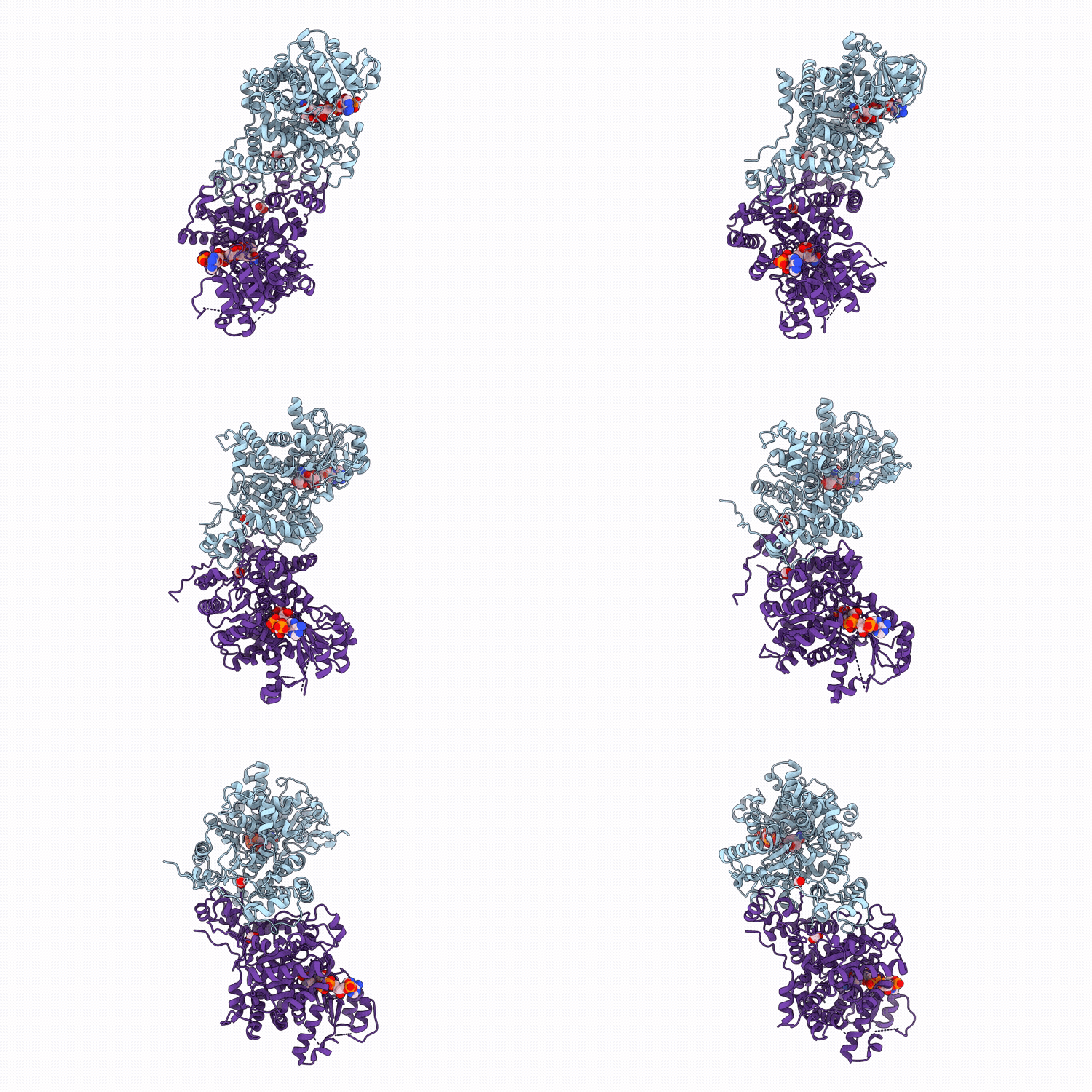
9XYW image
Deposition Date 2025-08-26
Release Date 2026-08-12
Last Version Date 2026-08-12
Entry Detail
PDB ID:
9XYW
Keywords:
Title:
Crystal structure of the maize chloroplastic non-photosynthetic NADP(+)-dependent malic enzyme
Biological Source:
Source Organism(s):
Zea mays (Taxon ID: 4577)
Expression System(s):
Method Details:
Experimental Method:
Resolution:
2.55 Å
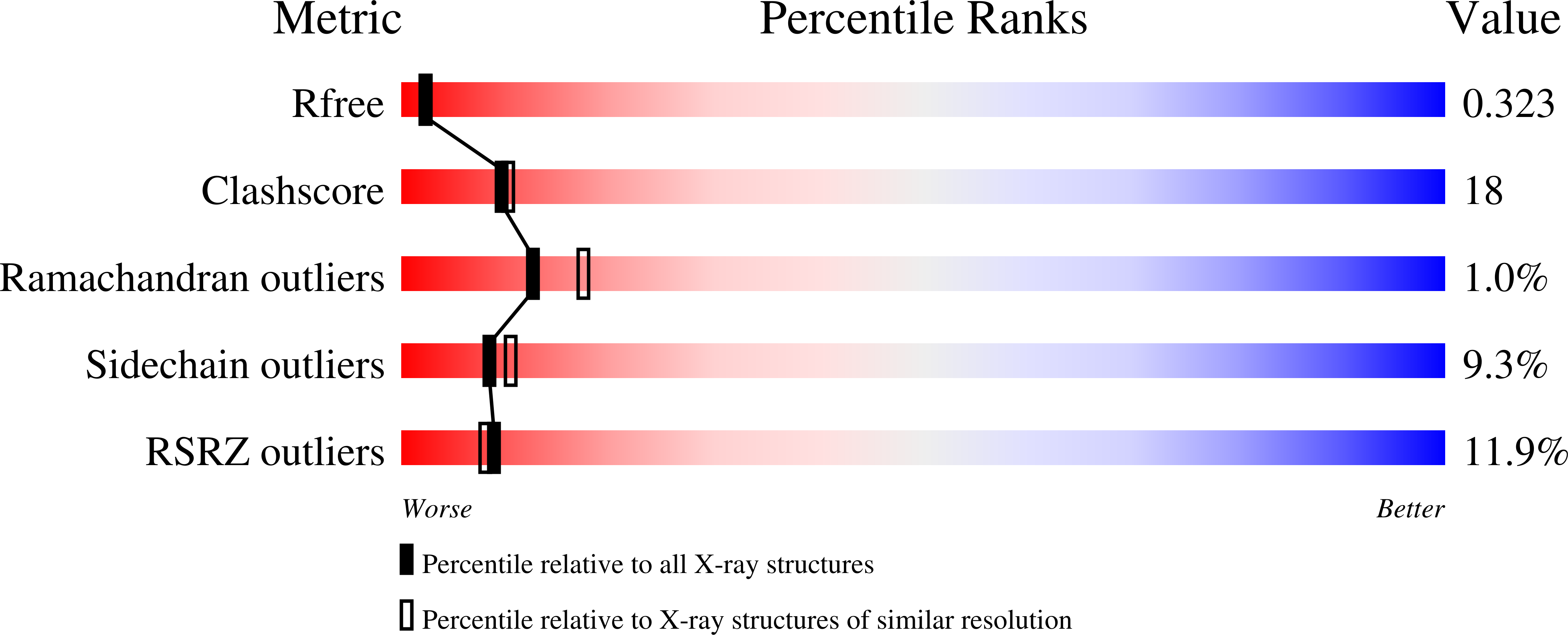
R-Value Free:
0.30
R-Value Work:
0.24
R-Value Observed:
0.24
Space Group:
P 21 2 21
Macromolecular Entities
Polymer Type:polypeptide(L)
Molecule:Malic enzyme
Chain IDs:A (auth: AAA), B (auth: BBB)
Chain Length:586
Number of Molecules:2
Biological Source:Zea mays
Primary Citation
Integrative crystallography and molecular dynamics reveal isoform-specific ligand interaction networks in C4 and nonC4 plant NADP-malic enzyme.
Plant J. 127 e71064 e71064 (2026)
PMID: 42531153 DOI: 10.1111/tpj.71064

Abstact

NADP-dependent malic enzyme (NADP-ME) has been repeatedly co-opted into distinct metabolic roles across plants, most prominently as the decarboxylase of NADP-ME-type C4 photosynthesis. In maize, the plastidic C4- and nonC4-NADP-ME isoforms are closely related in sequence yet display strikingly different catalytic properties, suggesting that small changes in ligand recognition can re-tune reaction chemistry. However, mechanistic interpretation has been hampered by the scarcity of plant NADP-ME structures captured in catalytically informative, ligand-bound states. Here, we integrate X-ray crystallography with structure-guided docking and atomistic molecular dynamics (MD) to resolve ligand-site interaction networks across reaction states. We determined a 2.55 A structure of maize plastidic nonC4-NADP-ME bound to NADP(+), pyruvate, and Mg(2+), revealing a conserved NADP-ME fold with localized active-site flexibility. Comparison with maize C4-NADP-ME uncovers isoform-specific rewiring of NADP(+) and pyruvate contacts, with the nonC4 enzyme forming a denser product-cofactor interaction network. To access substrate-bound states, we reconstructed malate-NADP(+)-Mg(2+) complexes by docking followed by MD, identifying distinct malate-Mg(2+) coordination geometries and alternative NADP(+) positioning between isoforms. Together, these structures and simulations provide a network-level framework for plastidic NADP-ME functional diversification and generate testable hypotheses for how ligand coordination drives isoform-specific catalysis.

Legend

Protein

Chemical

Disease

Primary Citation of related structures
Feedback Form
Name
Email
Institute
Feedback