

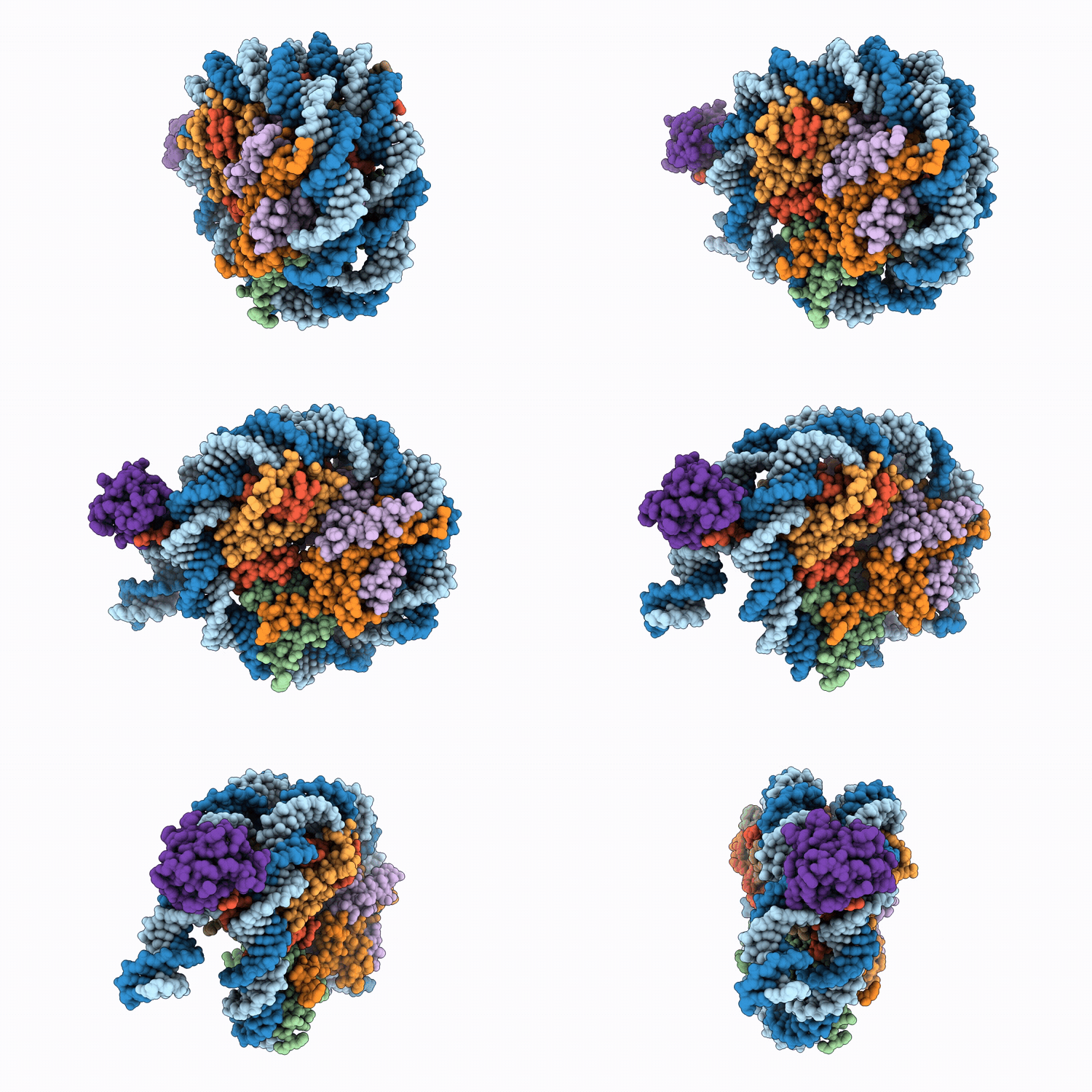
9XYC image
Deposition Date 2025-08-25
Release Date 2026-03-18
Last Version Date 2026-06-03
Entry Detail
PDB ID:
9XYC
Title:
Pol II-DSIF-SPT6-PAF1c-TFIIS-IWS1-ELOF1-LEDGF-nucleosome LEDGF+nucleosome map Q
Biological Source:
Source Organism(s):
Xenopus laevis (Taxon ID: 8355)
Homo sapiens (Taxon ID: 9606)
synthetic construct (Taxon ID: 32630)
Expression System(s):
Method Details:
Experimental Method:
Resolution:
3.50 Å
Aggregation State:
PARTICLE
Reconstruction Method:
SINGLE PARTICLE
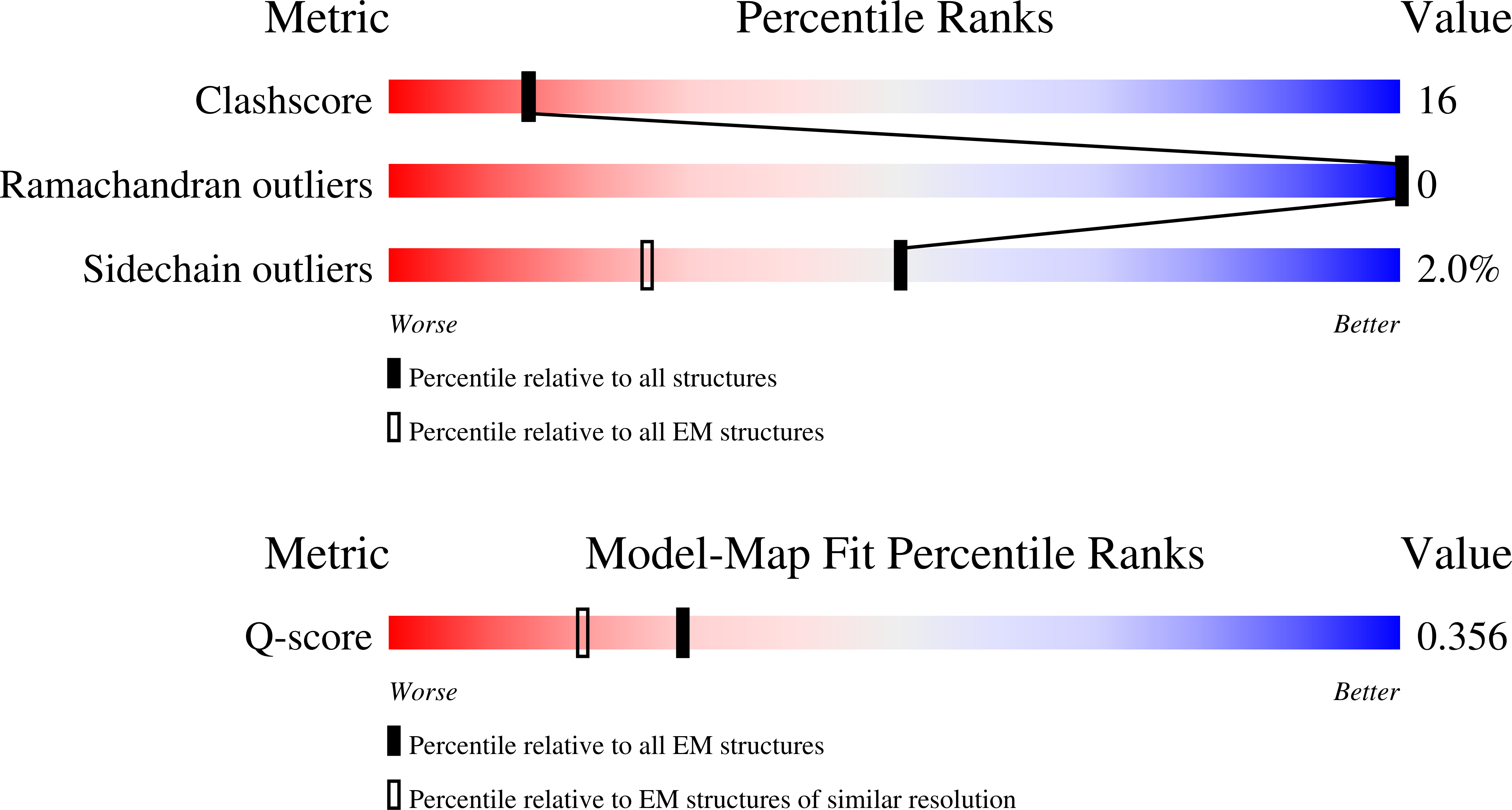
Macromolecular Entities
Polymer Type:polydeoxyribonucleotide
Molecule:DNA (139-MER)
Chain IDs:A (auth: N)
Chain Length:139
Number of Molecules:1
Biological Source:synthetic construct
Polymer Type:polydeoxyribonucleotide
Molecule:DNA (139-MER)
Chain IDs:B (auth: T)
Chain Length:139
Number of Molecules:1
Biological Source:synthetic construct
Polymer Type:polypeptide(L)
Molecule:Histone H3.2
Chain IDs:C (auth: a), G (auth: e)
Chain Length:136
Number of Molecules:2
Biological Source:Xenopus laevis
Polymer Type:polypeptide(L)
Molecule:Histone H4
Chain IDs:D (auth: b), H (auth: f)
Chain Length:103
Number of Molecules:2
Biological Source:Xenopus laevis
Polymer Type:polypeptide(L)
Molecule:Histone H2A type 1
Chain IDs:E (auth: c), I (auth: g)
Chain Length:130
Number of Molecules:2
Biological Source:Xenopus laevis
Polymer Type:polypeptide(L)
Molecule:Histone H2B 1.1
Chain IDs:F (auth: d), J (auth: h)
Chain Length:126
Number of Molecules:2
Biological Source:Xenopus laevis
Polymer Type:polypeptide(L)
Molecule:PC4 and SFRS1-interacting pro
Gene (Uniprot):PSIP1
Chain IDs:K (auth: l)
Chain Length:532
Number of Molecules:1
Biological Source:Homo sapiens
Modified Residue
Compound ID Chain ID Parent Comp ID Details 2D Image
ML3 G LYS modified residue
Ligand Molecules
Primary Citation
Structure and function of IWS1 in transcription elongation.
Nucleic Acids Res. 54 ? ? (2026)
PMID: 42134803 DOI: 10.1093/nar/gkag357

Abstact

Transcription elongation by RNA polymerase II is a tightly regulated process that requires coordinated interactions between transcription elongation factors. IWS1 (Interacts with SPT6) has been implicated as a core elongation factor, but its molecular role remains unclear. We show that the intrinsically disordered C-terminal region of IWS1 contains short linear motifs (SLiMs) that multivalently engage the elongation machinery. Using cryo-electron microscopy, we map SLiMs in IWS1 that interact with Pol II subunits RPB1, RPB2, and RPB5, as well as elongation factors DSIF, SPT6, and ELOF1. Functional assays demonstrate that distinct IWS1 SLiMs specify IWS1 recruitment and IWS1-dependent transcription stimulation. IWS1 recruitment to the transcription elongation complex depends on association via the RPB1 jaw and binding of downstream DNA. Transcription elongation stimulation requires interactions with the RPB2 lobe and ELOF1. We identify other transcription elongation factors including ELOA and RECQL5 that bind the RPB1 jaw and demonstrate that IWS1 protects the activated transcription elongation complex from RECQL5 inhibition. We also reveal the binding of the histone reader and IWS1 interactor LEDGF to a transcribed downstream nucleosome. Our findings establish IWS1 as a modular scaffold that helps organize the transcription elongation complex, illustrating how disordered regions regulate transcription elongation.

Legend

Protein

Chemical

Disease

Primary Citation of related structures
Feedback Form
Name
Email
Institute
Feedback