

9XXW image
Deposition Date 2025-12-01
Release Date 2026-07-22
Last Version Date 2026-07-22
Entry Detail
PDB ID:
9XXW
Keywords:
Title:
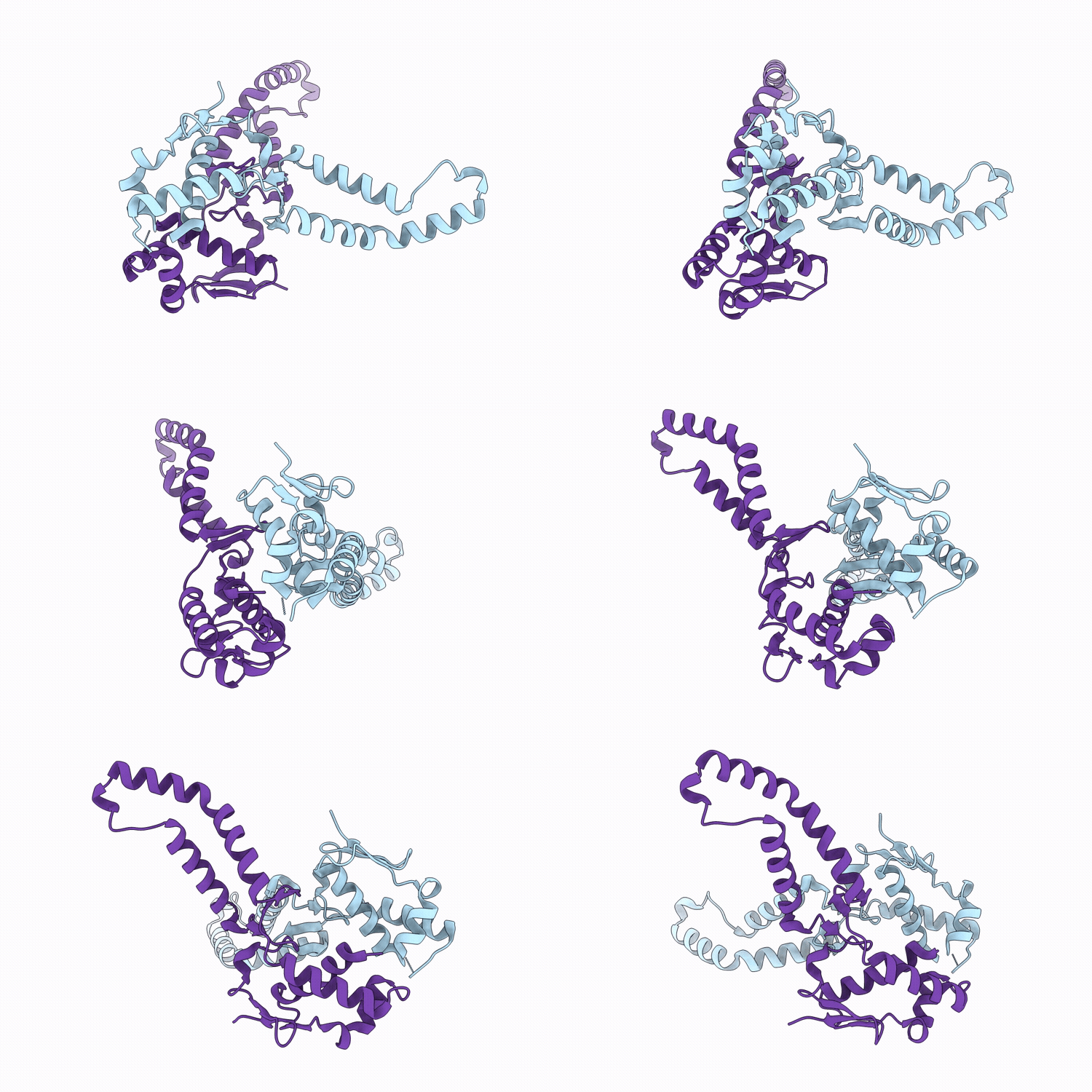
Structure of a putative anti-CRISPR from Streptobacillus moniliformis, ACZ01644
Biological Source:
Source Organism(s):
Expression System(s):
Method Details:
Experimental Method:
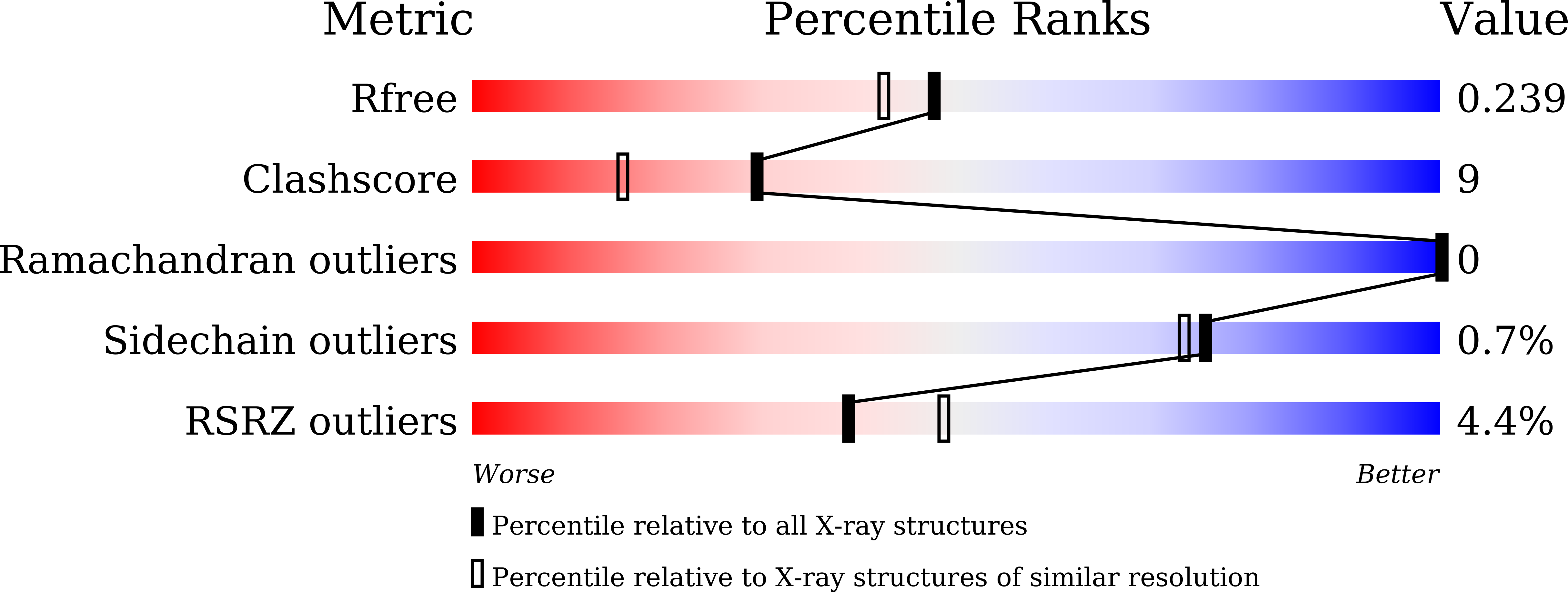
Resolution:
1.98 Å
R-Value Free:
0.23
R-Value Work:
0.21
R-Value Observed:
0.21
Space Group:
H 3
Macromolecular Entities
Polymer Type:polypeptide(L)
Molecule:predicted anti-CRISPR, ACZ016
Gene (Uniprot):Smon_1189
Chain IDs:A, B
Chain Length:161
Number of Molecules:2
Biological Source:Streptobacillus moniliformis
Primary Citation
Structural analysis of predicted anti-CRISPR, ACZ01644.
Biochem.Biophys.Res.Commun. 797 153199 153199 (2026)
PMID: 41453247 DOI: 10.1016/j.bbrc.2025.153199

Abstact

The CRISPR-Cas system provides adaptive immunity in bacteria and archaea against invading genetic elements, while anti-CRISPR (Acr) proteins have evolved in phages to counteract this defense. Here, we report the first structural and biochemical characterization of ACZ01644, a protein previously predicted to be an Acr. The crystal structure of ACZ01644 reveals a unique cone-shaped architecture composed of five alpha-helices and five beta-strands forming a compact core, which represents a fold distinct from any known Acr family. Biochemical analyses demonstrated that ACZ01644 assembles as a trimer in solution, suggesting a potential functional relevance of this oligomeric state. However, in vitro assays revealed that ACZ01644 does not inhibit Cas9-mediated DNA cleavage, indicating that its inhibitory activity, if present, may involve other CRISPR subtypes or yet unidentified cofactors. Our findings reveal an unprecedented structural scaffold among putative Acr proteins and provide a foundation for future studies to elucidate its biological role in CRISPR-Cas regulation.

Legend

Protein

Chemical

Disease

Primary Citation of related structures
Feedback Form
Name
Email
Institute
Feedback