

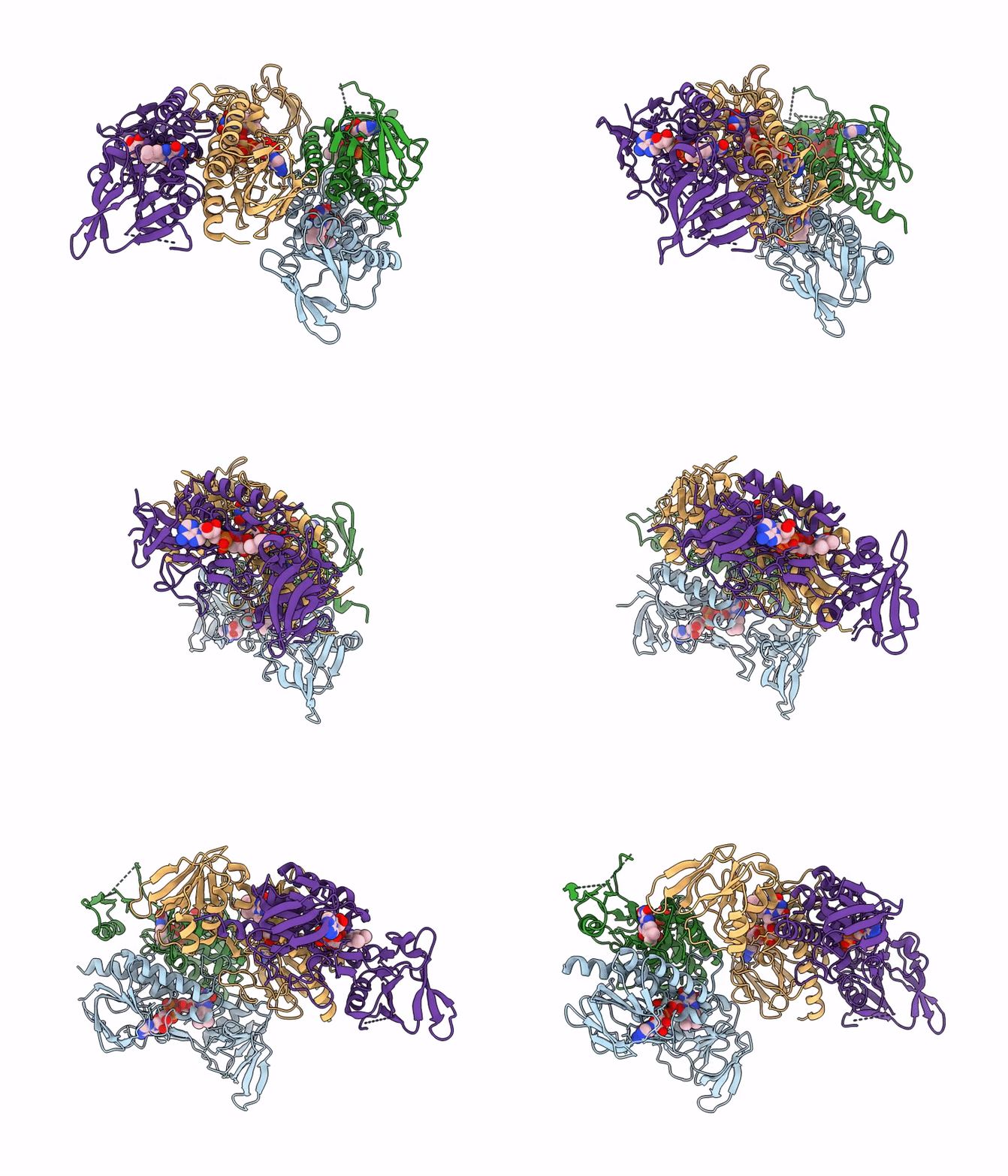
9XUB image
Deposition Date 2025-11-24
Release Date 2026-02-04
Last Version Date 2026-02-25
Entry Detail
PDB ID:
9XUB
Keywords:
Title:
Crystal Structure of Thioredoxin reductase from Mycobacterium tuberculosis.
Biological Source:
Expression System(s):
Method Details:
Experimental Method:
Resolution:
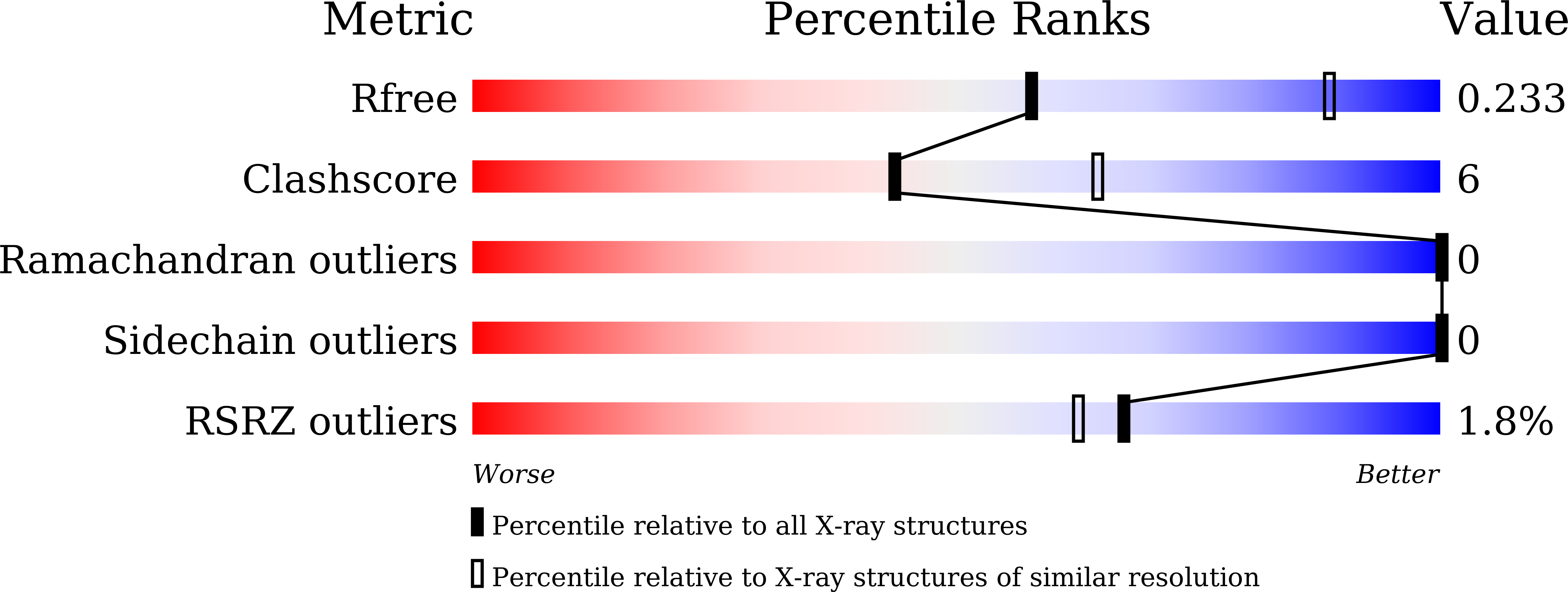
2.60 Å
R-Value Free:
0.23
R-Value Work:
0.17
R-Value Observed:
0.18
Space Group:
C 2 2 21
Macromolecular Entities
Structures with similar UniProt ID
Protein Blast
Polymer Type:polypeptide(L)
Molecule:Thioredoxin reductase
Gene (Uniprot):trxB
Chain IDs:A, B, C, D
Chain Length:309
Number of Molecules:4
Biological Source:Mycobacterium tuberculosis (strain CDC 1551 / Oshkosh)
Ligand Molecules
Primary Citation
Structural and Mechanistic Characterization of Mycobacterium tuberculosis TrxR Inhibition by Glutathione-Coated Gold Nanocluster.
Int J Mol Sci 27 ? ? (2026)
PMID: 41683636 DOI: 10.3390/ijms27031209

Abstact

Mycobacterium tuberculosis (M. tuberculosis) relies on the thioredoxin (Trx)-thioredoxin reductase (TrxR) system to maintain intracellular redox homeostasis and to support Trx-dependent DNA synthesis and repair, making TrxR a potential target for anti-tuberculosis therapy. Gold nanoclusters have been reported to inhibit human TrxR and suppress tumor growth, suggesting that gold-based nanomaterials can modulate TrxR activity. In this study, we report a previously uncharacterized oxidized crystal structure of M. tuberculosis TrxR containing two dimers in the asymmetric unit and use this structure to investigate inhibition by a glutathione-coated gold nanocluster (GSH-AuNC). Biolayer interferometry and enzymatic assays show that GSH-AuNC binds directly to M. tuberculosis TrxR and efficiently inhibits its catalytic activity at the purified enzyme level. Molecular dynamics simulations indicate that GSH-AuNC can occupy a surface pocket proximal to the active site, providing a plausible structural basis for enzyme engagement. AlphaFold3 modeling of the M. tuberculosis TrxR-Trx heterodimeric complex defines the interaction interface required for productive electron transfer and provides a structural hypothesis for how GSH-AuNC disrupts this process. Together, these results provide structural and mechanistic insights into the biochemical modulation of M. tuberculosis TrxR by GSH-AuNC, while the antimycobacterial activity of GSH-AuNC remains to be evaluated in future studies.

Legend

Protein

Chemical

Disease

Primary Citation of related structures
Feedback Form
Name
Email
Institute
Feedback