

9XQR image
Deposition Date 2025-11-18
Release Date 2025-12-24
Last Version Date 2026-06-24
Entry Detail
PDB ID:
9XQR
Title:
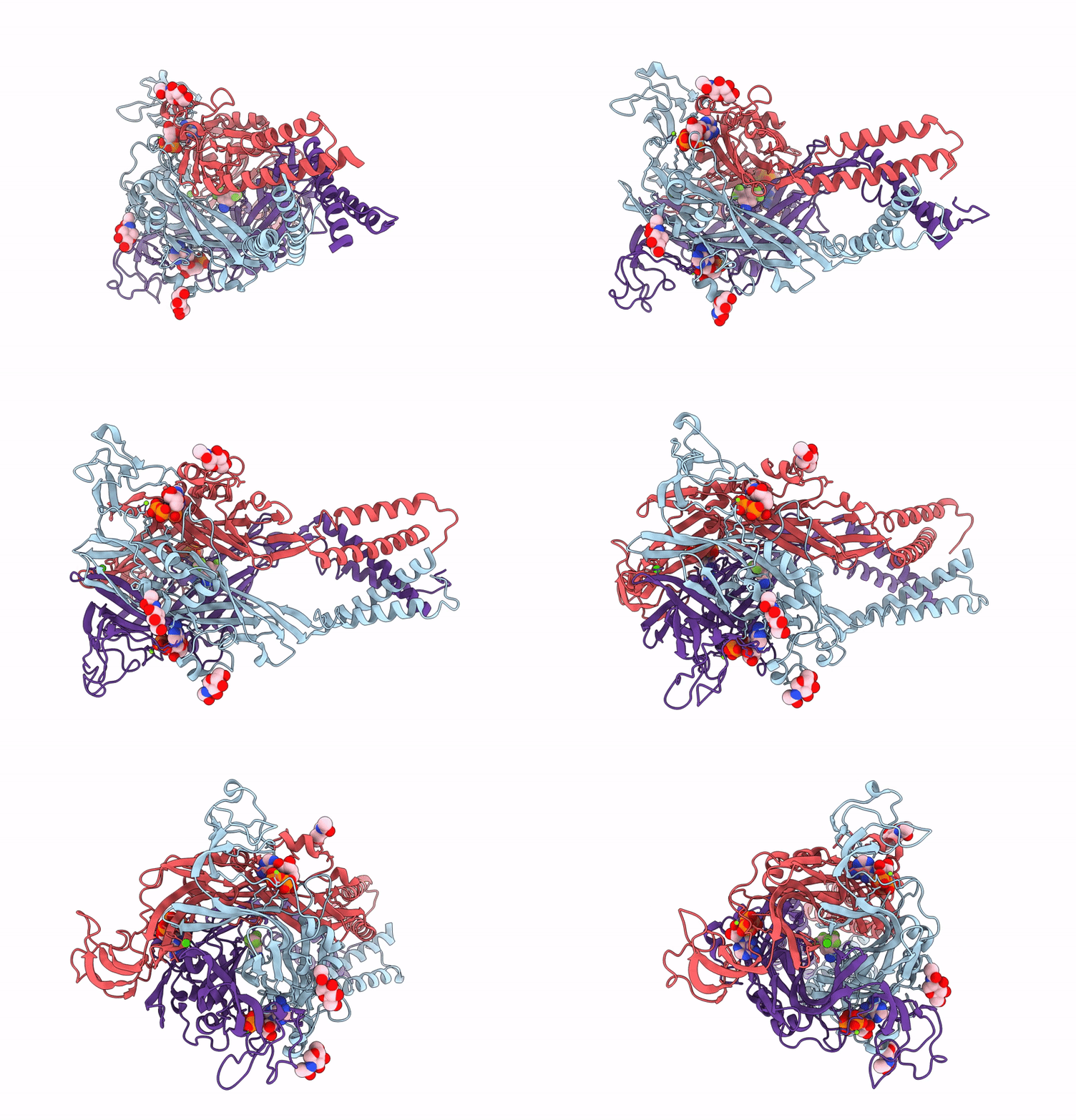
Cryo-EM structure of P1X1 in complex with BTFA
Biological Source:
Source Organism(s):
Mus musculus (Taxon ID: 10090)
Expression System(s):
Method Details:
Experimental Method:
Resolution:
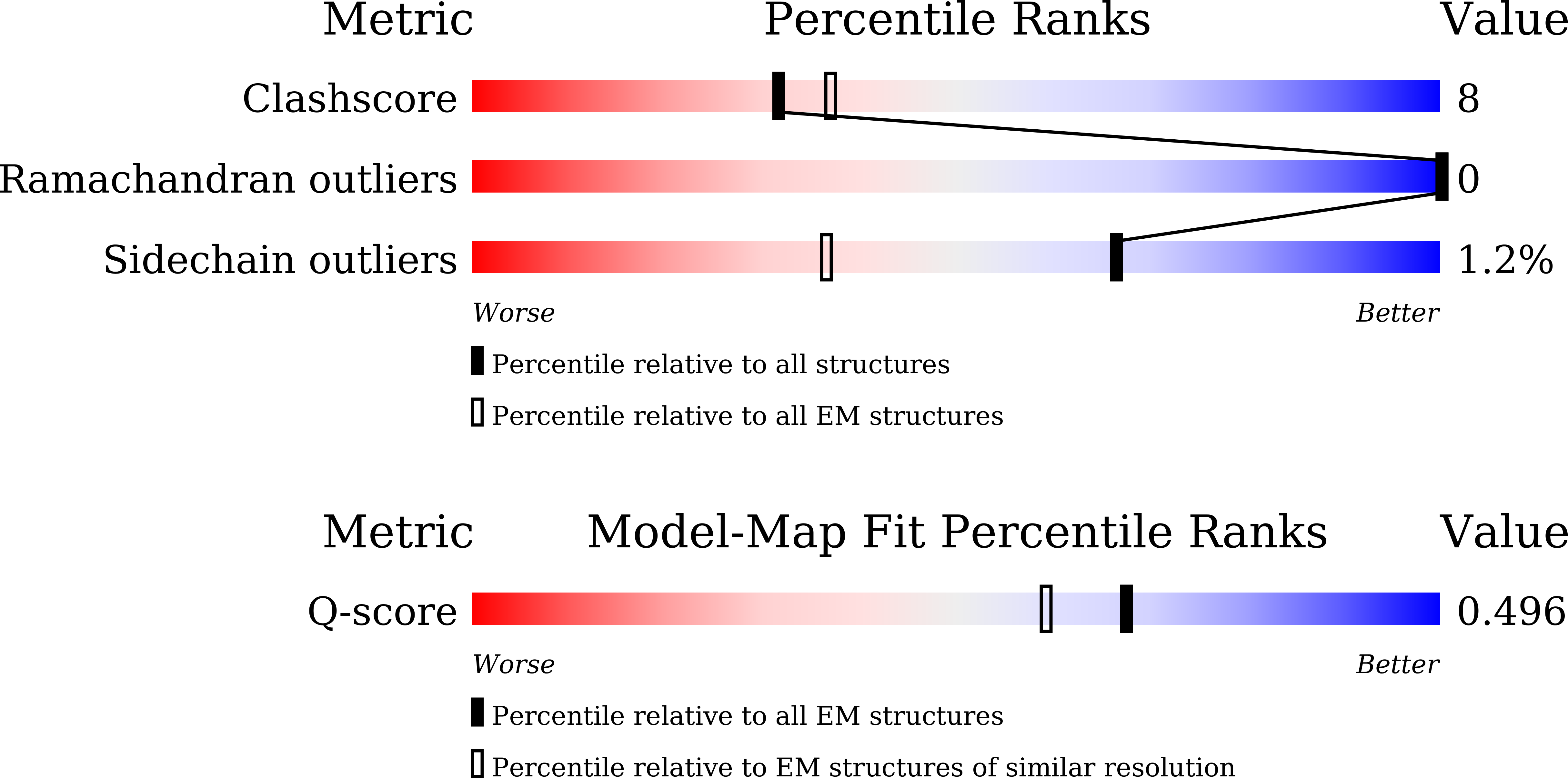
3.14 Å
Aggregation State:
PARTICLE
Reconstruction Method:
SINGLE PARTICLE
Macromolecular Entities
Structures with similar UniProt ID
Protein Blast
Polymer Type:polypeptide(L)
Molecule:P2X purinoceptor 1
Gene (Uniprot):P2rx1
Chain IDs:A (auth: B), B (auth: C), C (auth: A)
Chain Length:427
Number of Molecules:3
Biological Source:Mus musculus
Primary Citation
Structural basis for a central permeation pathway in the P2X1 receptor.
Cell Discov 12 ? ? (2026)
PMID: 42243080 DOI: 10.1038/s41421-026-00881-w

Abstact

The ion permeation pathway is a critical determinant of ion channel function and selectivity; however, the structural basis for ion permeation in the P2X1 receptor, an ATP-gated ion channel crucial for platelet activation, thrombosis, and male infertility, remains incompletely understood. Here, we present high-resolution cryo-electron microscopy (cryo-EM) structures of the P2X1 receptor, which reveal a central ion permeation pathway spanning the entire extracellular domain, complementing the existing paradigms of ion channel architecture for the P2X receptor family. Within this pathway, we identify specific sites that coordinate hydrated calcium ions, including an aspartate ring that acts as a selectivity filter at the apex of the central vestibule. We also discover that a small molecule, 3,5-bis(trifluoromethyl)aniline, binds at the top of the central vestibule and potently inhibits cation flux through this central permeation pathway. Our findings reveal a new inhibitor-binding site in the P2X1 receptor. These insights provide a structural framework for the rational design of subtype-specific P2X receptor inhibitors targeting the central vestibule.

Legend

Protein

Chemical

Disease

Primary Citation of related structures
Feedback Form
Name
Email
Institute
Feedback