

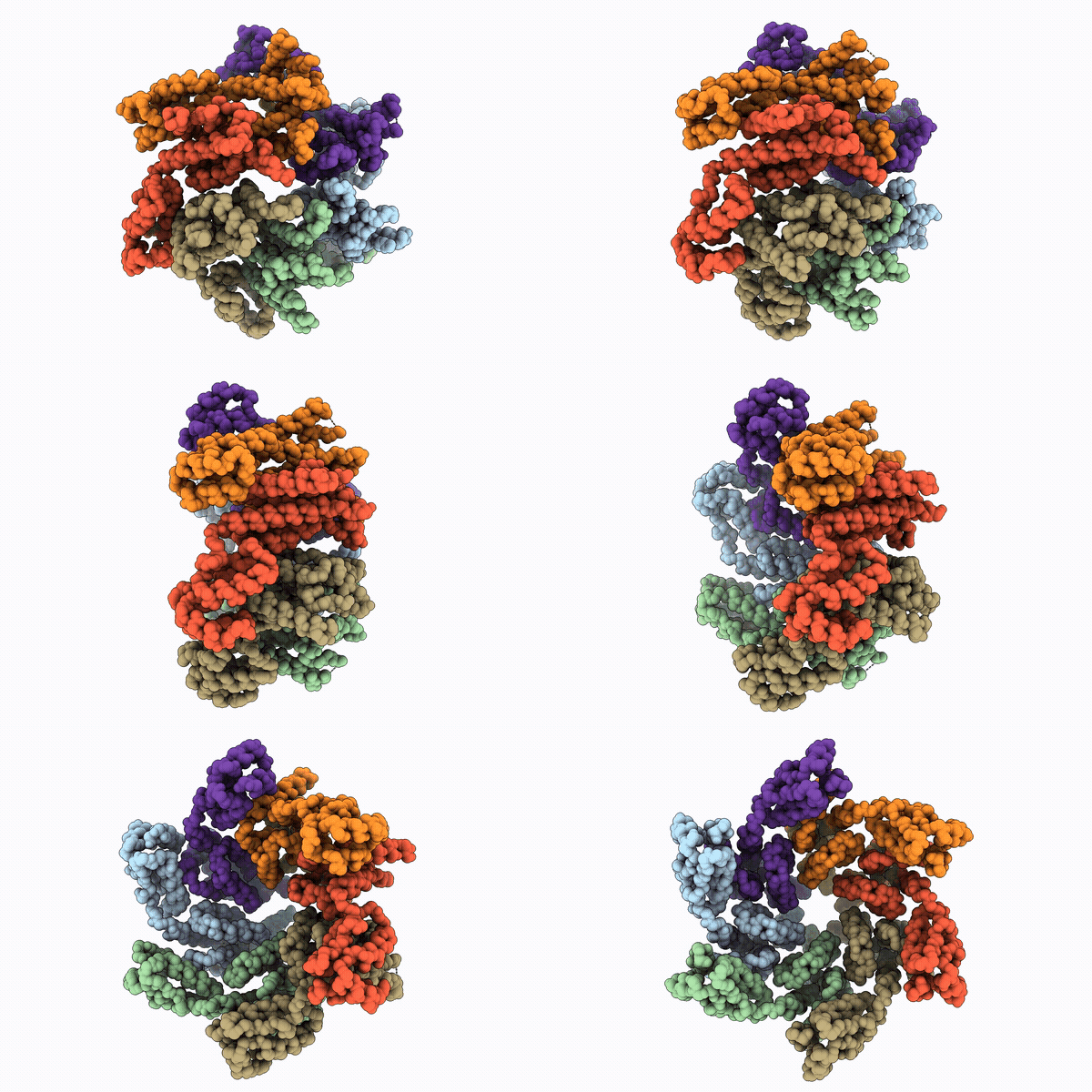
9XQH image
Deposition Date 2025-11-18
Release Date 2026-10-07
Last Version Date 2026-10-07
Entry Detail
PDB ID:
9XQH
Keywords:
Title:
LEN-bound HIV-1 capsid lattice within intact VLPs
Biological Source:
Source Organism(s):
Expression System(s):
Method Details:
Experimental Method:
Resolution:
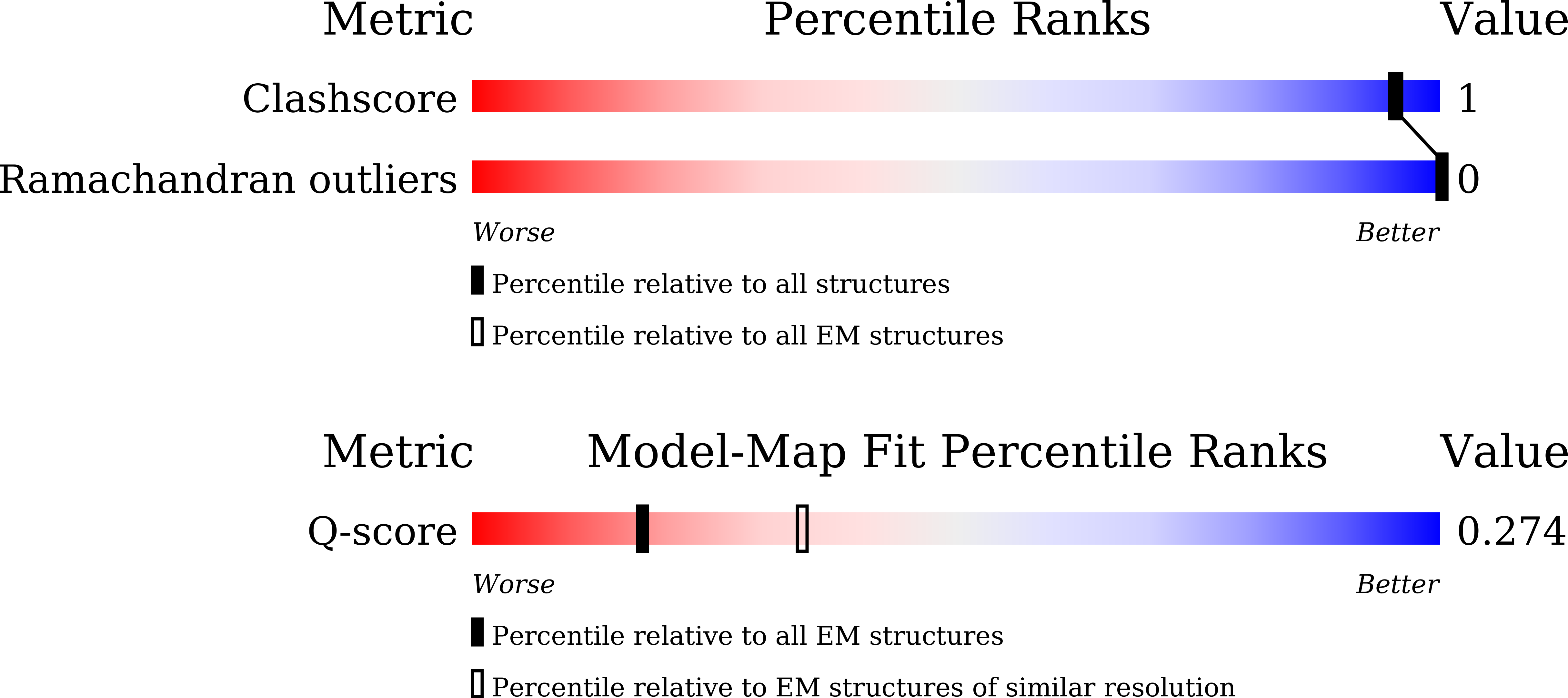
4.37 Å
Aggregation State:
PARTICLE
Reconstruction Method:
SINGLE PARTICLE
Macromolecular Entities
Polymer Type:polypeptide(L)
Molecule:Capsid protein p24
Gene (Uniprot):gag
Mutagens:L138I/L215V
Chain IDs:A, B, C, D, E, F
Chain Length:231
Number of Molecules:6
Biological Source:Human immunodeficiency virus 1
Ligand Molecules
Primary Citation
Structural basis of lenacapavir-induced HIV-1 capsid defects during virion maturation.
Nat Commun 17 ? ? (2026)
PMID: 42773142 DOI: 10.1038/s41467-026-77803-7

Abstact

Long-acting lenacapavir (LEN) has emerged as a highly effective, potentially game-changing therapy for HIV treatment and prevention. Its mechanism of action in the early phase of HIV-1 replication, when the capsid directs key post-entry steps such as reverse transcription, nuclear import, and integration, has been well characterized. In contrast, its effects during the late phase of replication, when the capsid assembles and matures within budding virions, remain poorly understood. Here, we determine the cryo-electron microscopy structure of the mature HIV-1 capsid lattice assembled within virus-like particles in the presence of LEN. Our structural analyses reveal that LEN alters interhexamer interactions, perturbs the capsid lattice curvature, and thereby prevents the formation of a functional cone-shaped capsid. Biochemical analyses further demonstrate that LEN-containing cores lose reverse transcriptase because of compromised capsid integrity, whereas integrase and viral RNA remain associated. Functionally, viruses produced in the presence of LEN exhibit markedly reduced infectivity, low reverse transcription activity, and poor integration. Taken together, these findings provide mechanistic insights into the late-phase action of LEN and provide key directions for the design of future inhibitors.

Legend

Protein

Chemical

Disease

Primary Citation of related structures
Feedback Form
Name
Email
Institute
Feedback