

9XMJ image
Deposition Date 2025-11-10
Release Date 2026-04-29
Last Version Date 2026-04-29
Entry Detail
PDB ID:
9XMJ
Title:
A Potent and Selective ROR gamma Inhibitor for the Treatment of Autoimmune Diseases
Biological Source:
Source Organism(s):
Homo sapiens (Taxon ID: 9606)
Expression System(s):
Method Details:
Experimental Method:
Resolution:
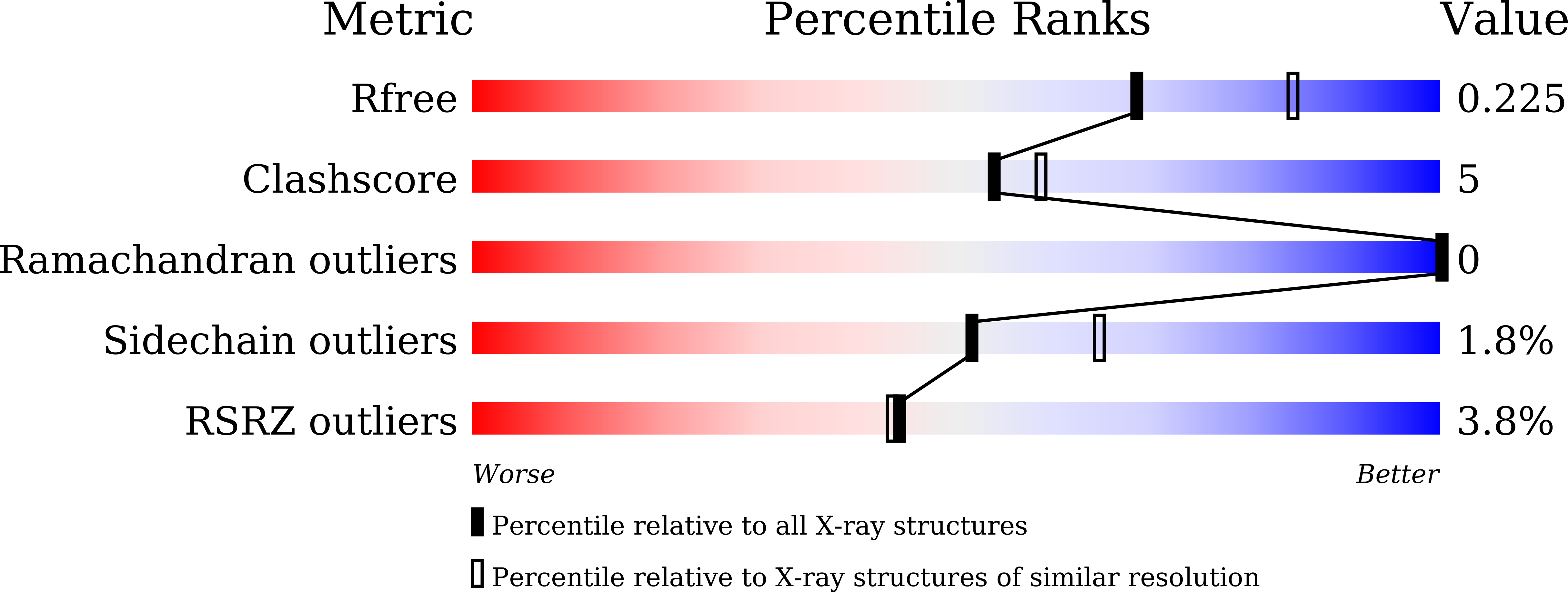
2.18 Å
R-Value Free:
0.21
R-Value Work:
0.17
Space Group:
P 1 21 1
Macromolecular Entities
Structures with similar UniProt ID
Protein Blast
Polymer Type:polypeptide(L)
Molecule:Nuclear receptor ROR-gamma
Gene (Uniprot):RORC
Mutagens:R469A,R473A
Chain IDs:A, C, E, G
Chain Length:258
Number of Molecules:4
Biological Source:Homo sapiens
Structures with similar UniProt ID
Protein Blast
Polymer Type:polypeptide(L)
Molecule:Nuclear receptor corepressor
Gene (Uniprot):NCOR2
Chain IDs:B, D, F, H
Chain Length:22
Number of Molecules:4
Biological Source:Homo sapiens
Ligand Molecules
Primary Citation
A potent and selective ROR gamma inhibitor for the treatment of autoimmune diseases.
Bioorg.Med.Chem.Lett. 132 130494 130494 (2026)
PMID: 41371311 DOI: 10.1016/j.bmcl.2025.130494

Abstact

Retinoic acid receptor-related orphan receptor gamma (RORgamma) is a master transcriptional regulator of Th17 cell differentiation as well as of the production of pro-inflammatory cytokines such as IL-17 and IL-22. Its critical role in Th17 cell function and cytokine production makes it a promising therapeutic target for autoimmune diseases. As a result of our high-throughput screening (HTS) campaign to discover novel chemotypes, we identified Cpd 1, a dihydropyrimidinone scaffold with desirable drug-like properties, including favorable ligand efficiency (LE) and fraction of sp(3) carbons (Fsp(3)). Initial structure-activity relationship (SAR) exploration led to the identification of Cpd 17. Target specificity studies of Cpd 17 indicated high selectivity characteristics for the dihydropyrimidinone scaffold. Subsequent X-ray structural analysis revealed its binding mode against RORgamma, enabling further optimization by structure-based drug design (SBDD). These efforts culminated in the identification of Cpd 21, which exhibited significantly improved RORgamma inhibitory potency along with LE, and Fsp(3) compared to Cpd 1. These results highlight Cpd 21 as a promising lead compound to explore a novel clinical candidate for the development of RORgamma-targeted therapies.

Legend

Protein

Chemical

Disease

Primary Citation of related structures
Feedback Form
Name
Email
Institute
Feedback