

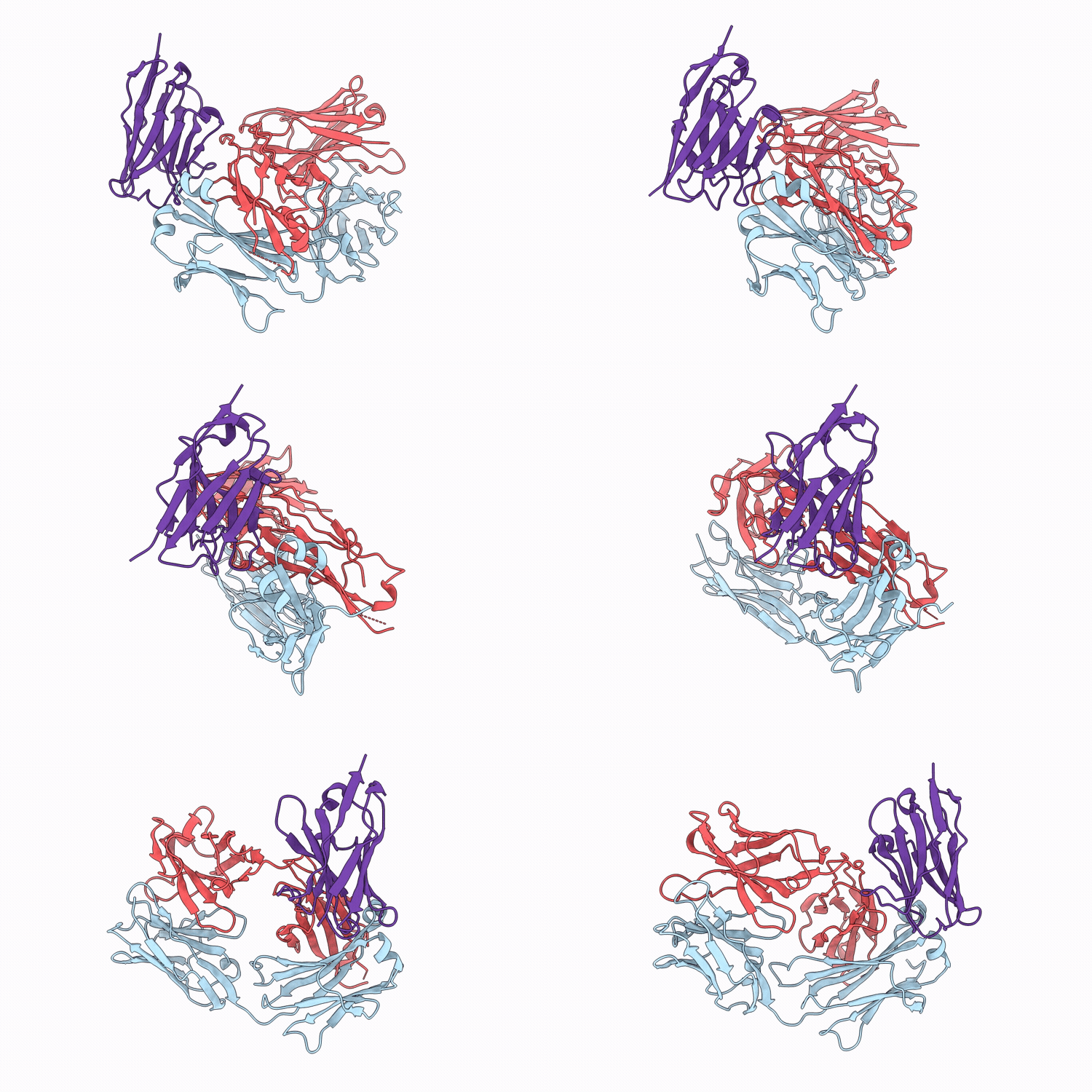
9XL8 image
Deposition Date 2025-11-07
Release Date 2026-09-02
Last Version Date 2026-09-02
Entry Detail
PDB ID:
9XL8
Keywords:
Title:
Crystal structure of the VHH and Trastuzumab-Fab complex
Biological Source:
Source Organism(s):
Homo sapiens (Taxon ID: 9606)
Vicugna pacos (Taxon ID: 30538)
Expression System(s):
Method Details:
Experimental Method:
Resolution:
3.00 Å
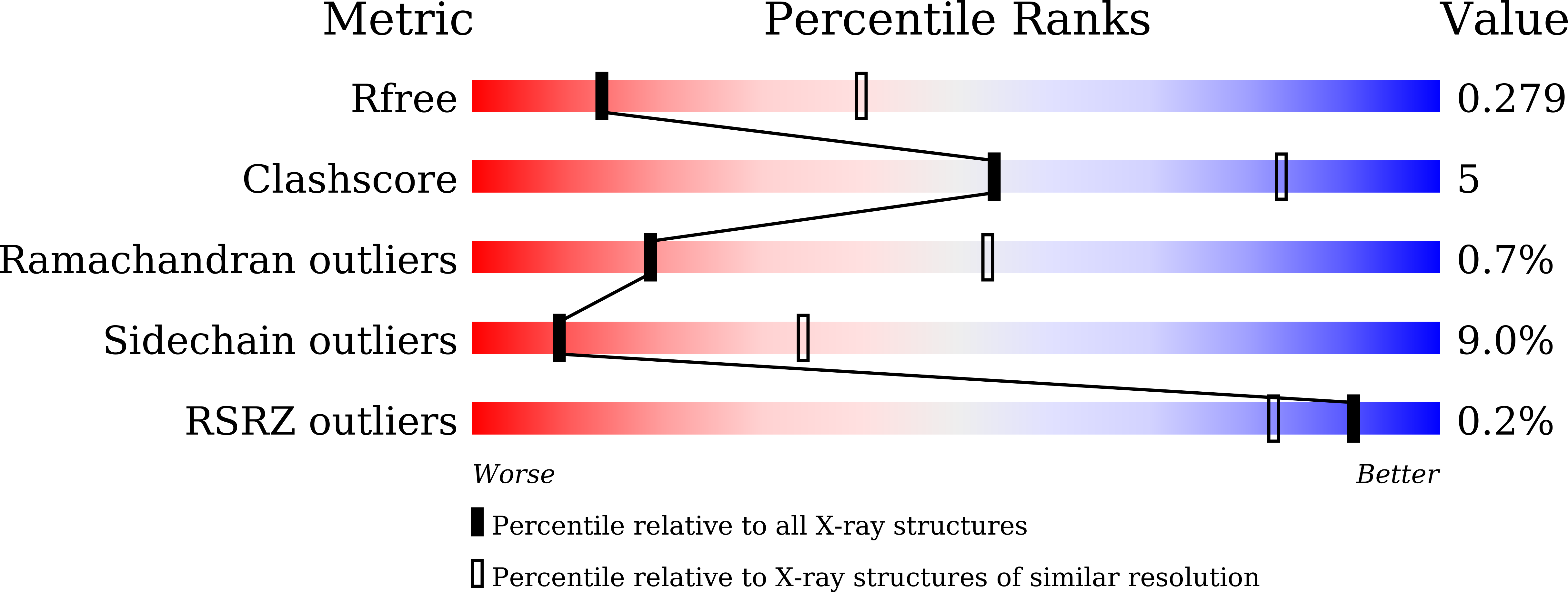
R-Value Free:
0.27
R-Value Work:
0.21
R-Value Observed:
0.21
Space Group:
C 2 2 21
Macromolecular Entities
Structural Superimposition Protein Blast
Polymer Type:polypeptide(L)
Molecule:Antibody
Chain IDs:A
Chain Length:214
Number of Molecules:1
Biological Source:Homo sapiens
Structural Superimposition Protein Blast
Polymer Type:polypeptide(L)
Molecule:Antibody
Chain IDs:B
Chain Length:220
Number of Molecules:1
Biological Source:Homo sapiens
Structural Superimposition Protein Blast
Polymer Type:polypeptide(L)
Molecule:Antibody
Chain IDs:C
Chain Length:118
Number of Molecules:1
Biological Source:Vicugna pacos
Primary Citation
Optimization of antibody binding by adjusting thermodynamic stability during the maturation of antibody affinities.
Protein Sci. 35 e70739 e70739 (2026)
PMID: 42559765 DOI: 10.1002/pro.70739

Abstact

Somatic mutations and antibody clone selection occur in B-cell hyper-evolution over extremely brief periods of time. Herein, we developed a technique for antibody screening by immunizing alpacas with antigens and observing antibody sequence transitions over time, a method we named Tracking the Evolution of Antibodies over time. This technique allows the observation of sequence transitions of somatic mutations in antibody populations originating from the same genome. The accumulation of somatic mutations was significantly associated with enhanced antigen-binding capacity and reduced stability in clusters. In comparison with the first clone to emerge in this cluster, numerous clones exhibited a decline in thermal stability, with a maximum variation of 21 degrees C. Somatic mutations within the clusters demonstrating high similarity were observed to be concentrated in CDR-1, CDR-2, and FR-3. This suggests that these mutations have a significant impact on binding capacity and stability. However, the correlation between antigen binding capacity and stability was insignificant and weak. The thermal stability of antibodies correlated with acid and alkali resistance, with clones exhibiting lower thermal stability demonstrating higher acid and alkali resistance in antigen-antibody complexes. The results indicate that in the antibody selection process, the strength of antigen binding involves optimizing stability, with antibodies with more flexible structures being selected.

Legend

Protein

Chemical

Disease

Primary Citation of related structures
Feedback Form
Name
Email
Institute
Feedback