

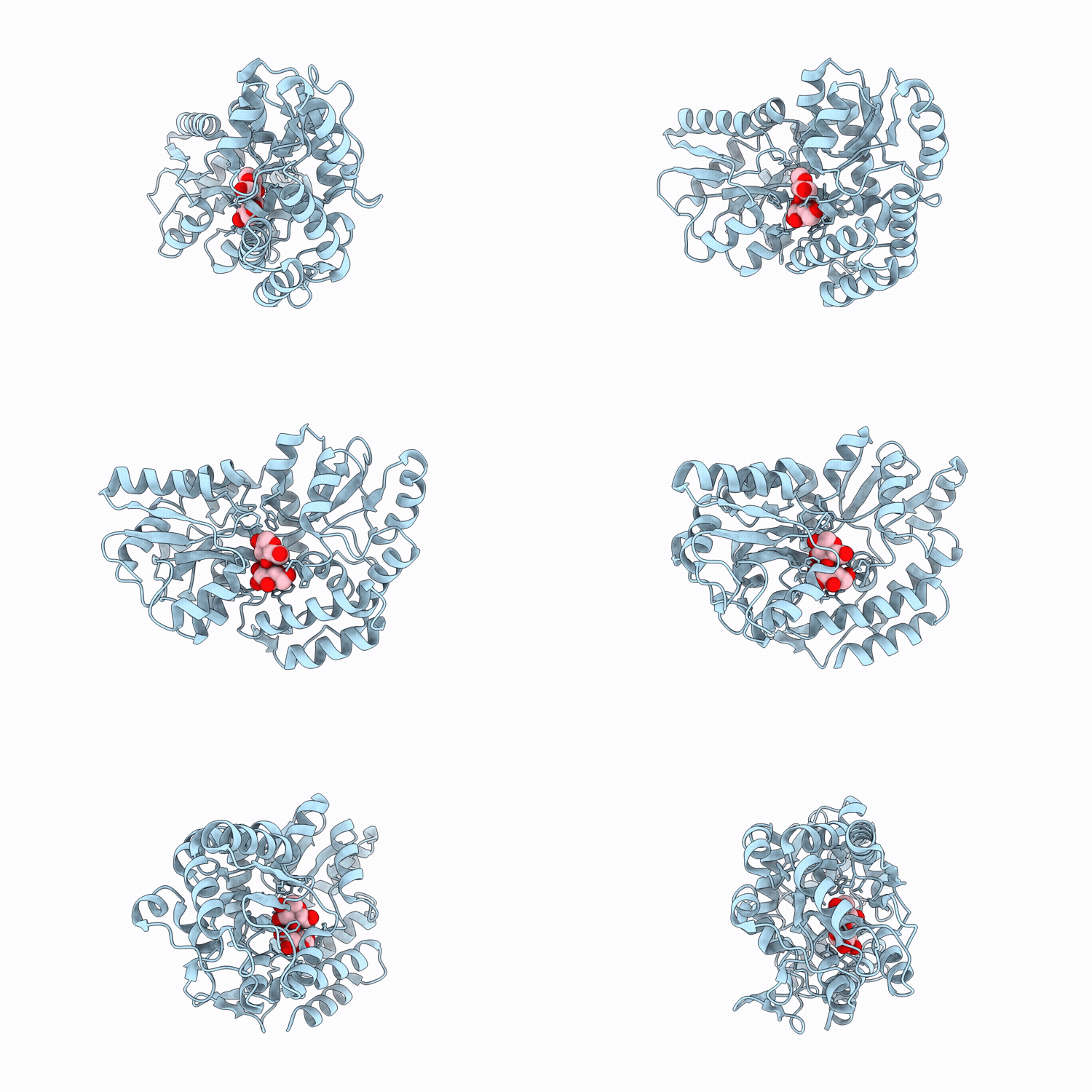
9XKO image
Deposition Date 2025-11-06
Release Date 2026-04-29
Last Version Date 2026-06-24
Entry Detail
PDB ID:
9XKO
Title:
High-resolution cryo-EM structure of Maltose Binding Protein
Biological Source:
Source Organism(s):
Escherichia coli (Taxon ID: 562)
Expression System(s):
Method Details:
Experimental Method:
Resolution:
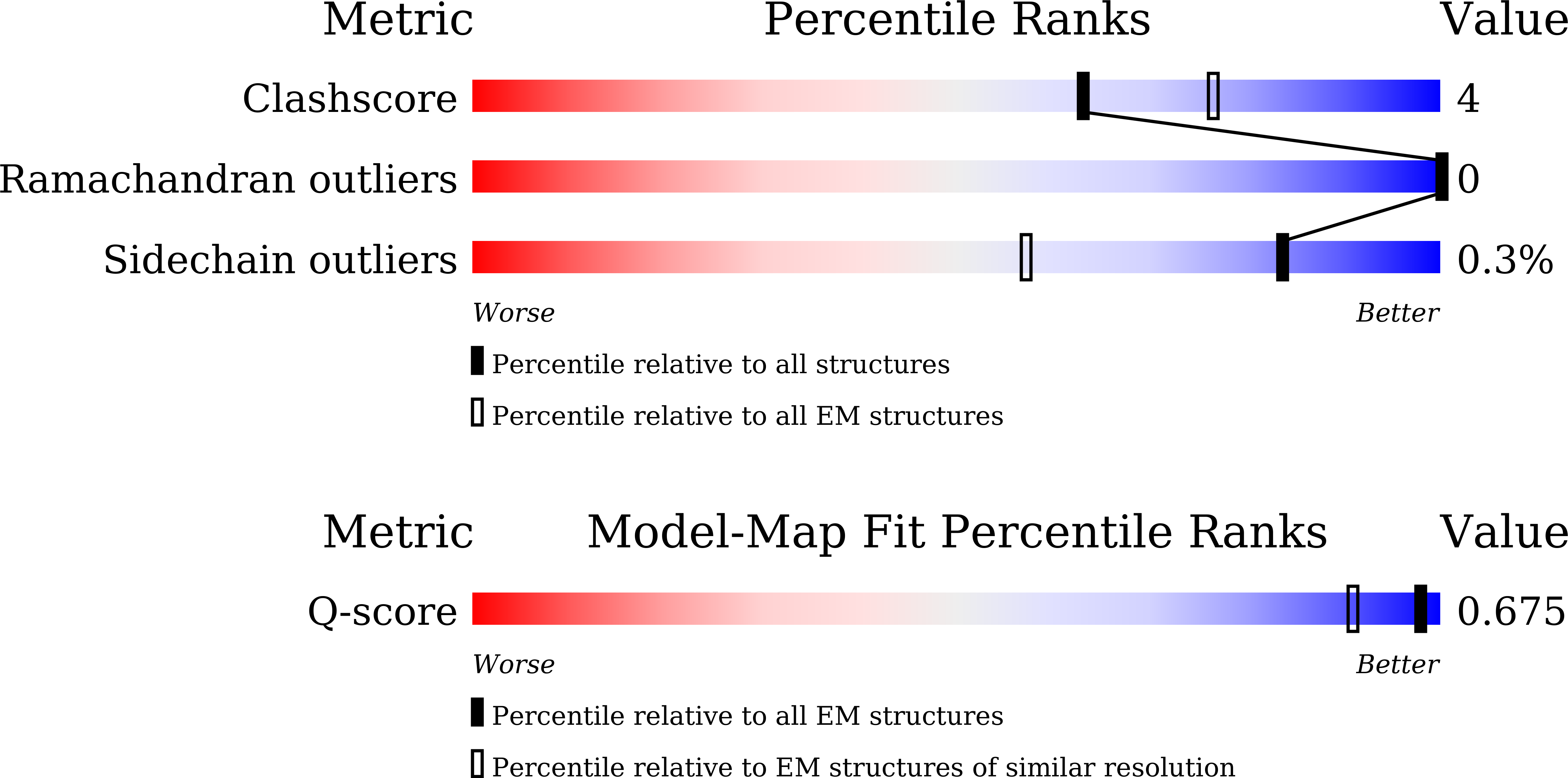
2.35 Å
Aggregation State:
PARTICLE
Reconstruction Method:
SINGLE PARTICLE
Macromolecular Entities
Structures with similar UniProt ID
Protein Blast
Polymer Type:polypeptide(L)
Molecule:Maltose/maltodextrin-binding
Gene (Uniprot):malE
Chain IDs:A
Chain Length:397
Number of Molecules:1
Biological Source:Escherichia coli
Peptide-like Molecules
PRD_900001
Primary Citation
High-resolution cryo-EM structures of small protein-ligand complexes near the theoretical size limit.
Nat Commun 17 ? ? (2026)
PMID: 41980966 DOI: 10.1038/s41467-026-71934-7

Abstact

Cryo-electron microscopy (cryo-EM) is a widely used technique for determining macromolecular structures at near-atomic resolution. The theoretical lower limit of particle sizes suitable for cryo-EM structural analysis is estimated to be 38 kDa; typical constraints involve factors such as image contrast and particle alignment accuracy. In this study, we present cryo-EM structures of two protein-ligand complexes near this lower size threshold. First, the structure of the maltose-binding protein complexed with maltose, with a structurally ordered mass of 40.8 kDa, was determined at a resolution of 2.4 A; both the maltose and water molecules were clearly identified in this structure. The second structure was the kinase domain of human PLK1 complexed with onvansertib, with a structurally ordered mass of 31.6 kDa, below the theoretical 38 kDa limit; this domain was determined at a resolution of 3.4 A using a gold-supported grid in the presence of beta-octyl-glucoside. The density map clearly shows the backbone of PLK1 secondary structure, and the onvansertib. These results demonstrate that cryo-EM can be effectively employed to determine structures of small proteins or domains, and to perform structure-based drug screening for small proteins, without requiring structural fiducials for particle alignment.

Legend

Protein

Chemical

Disease

Primary Citation of related structures
Feedback Form
Name
Email
Institute
Feedback