

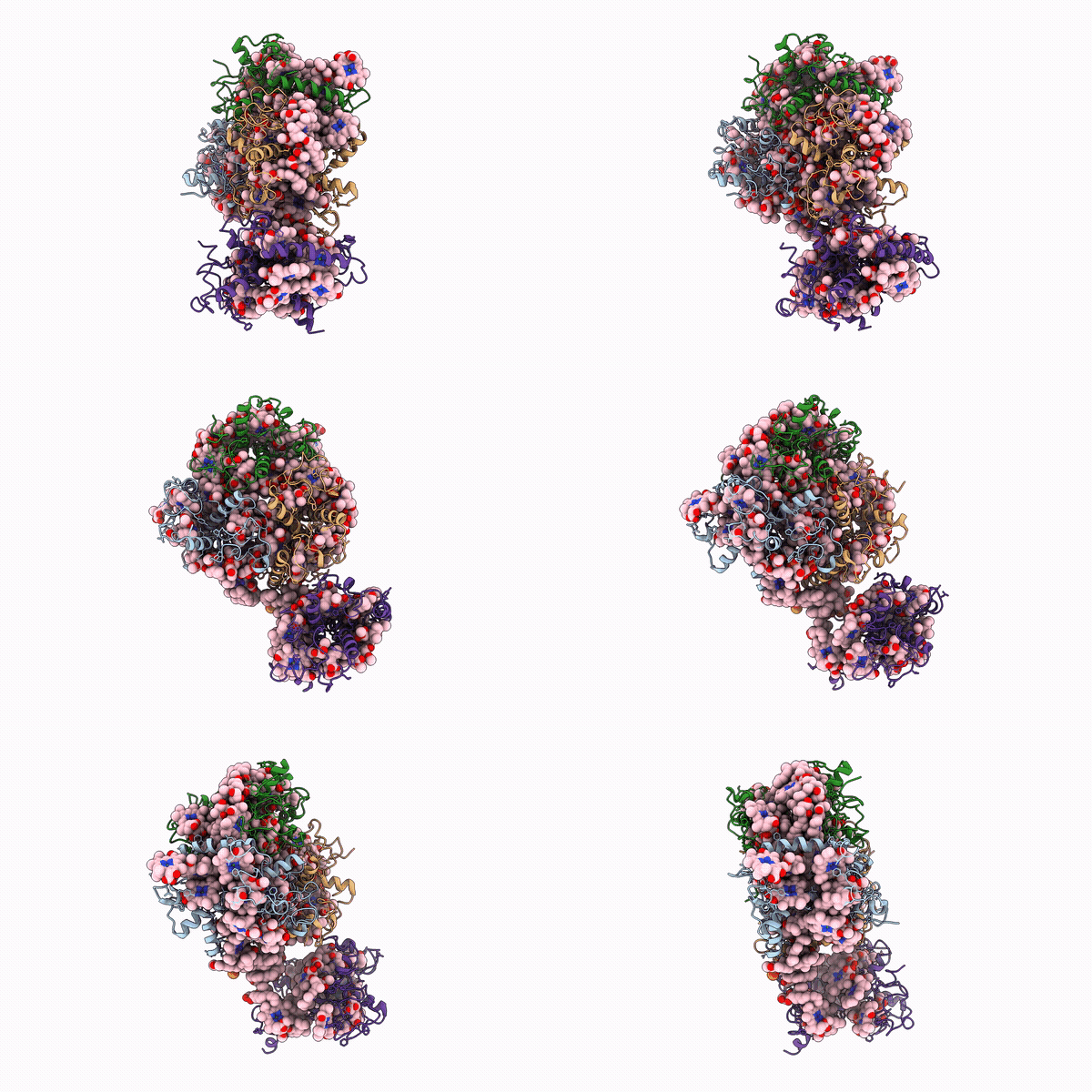
9XK7 image
Deposition Date 2025-11-05
Release Date 2026-10-07
Last Version Date 2026-10-07
Entry Detail
PDB ID:
9XK7
Keywords:
Title:
In situ C2S2M2L4-type PSII-LHCII supercomplex, strongly bound (S-) LHCII trimer with CP26, protomer 2
Biological Source:
Source Organism(s):
Method Details:
Experimental Method:
Resolution:
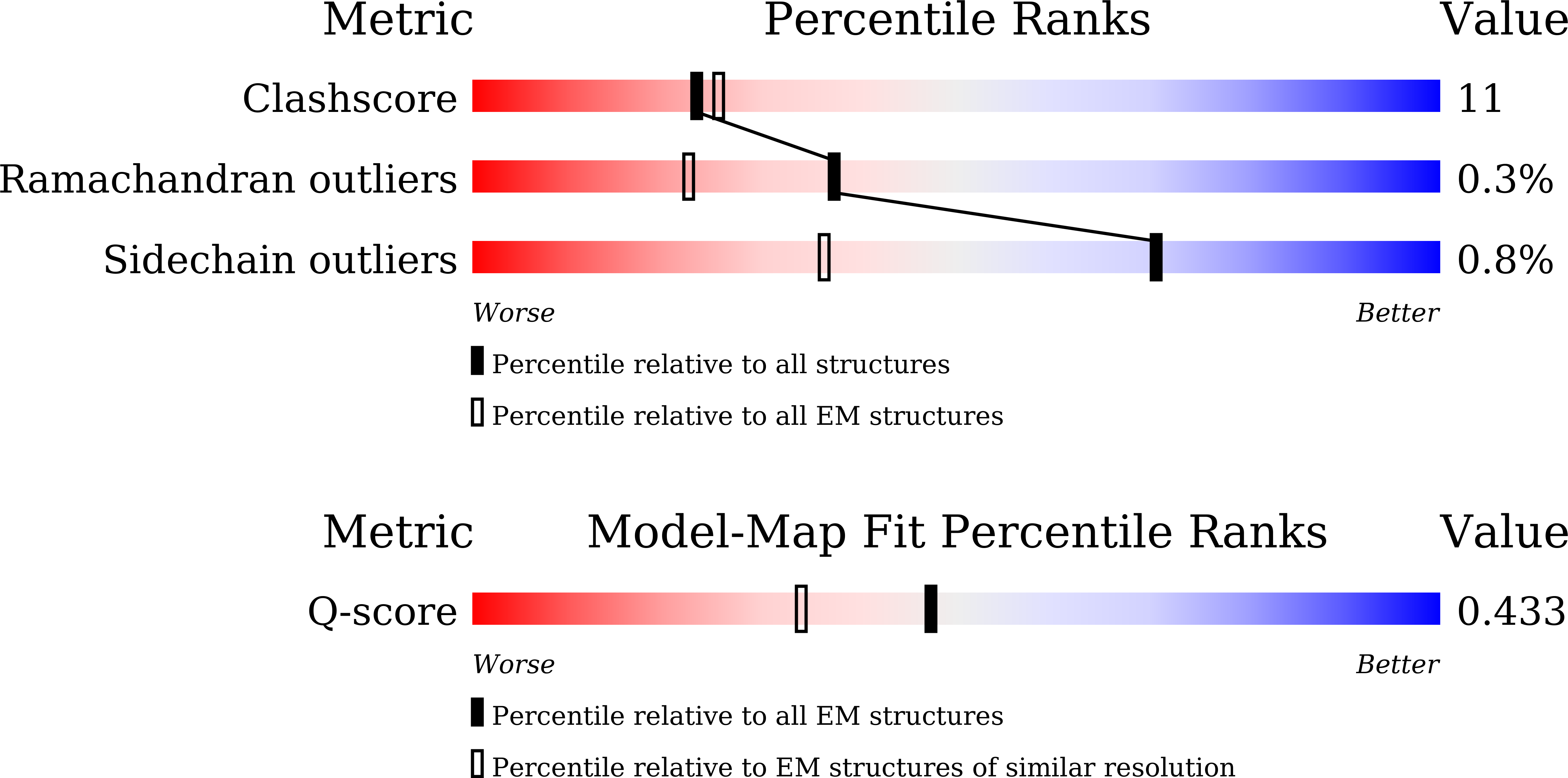
3.25 Å
Aggregation State:
PARTICLE
Reconstruction Method:
SINGLE PARTICLE
Macromolecular Entities
Polymer Type:polypeptide(L)
Molecule:Chlorophyll a-b binding prote
Gene (Uniprot):CAB2R
Chain IDs:A (auth: 09), B (auth: 1g), C (auth: 1n)
Chain Length:219
Number of Molecules:3
Biological Source:Oryza sativa Japonica Group
Polymer Type:polypeptide(L)
Molecule:Chlorophyll a-b binding prote
Gene (Uniprot):OSNPB_110242800
Chain IDs:D (auth: 1s)
Chain Length:218
Number of Molecules:1
Biological Source:Oryza sativa Japonica Group
Primary Citation
In situ structures of plant photosystem supercomplexes.
Nature 657 1094 1103 (2026)
PMID: 42527593 DOI: 10.1038/s41586-026-10847-3

Abstact

Photosynthesis sustains life on Earth by converting light to chemical energy through the coordinated action of photosystem I (PSI) and photosystem II (PSII) within thylakoid membranes(1-4). Although structures of isolated photosystems are available, their native organization in chloroplasts remains unknown. Here, using in situ cryo-electron microscopy, we directly imaged Oryza sativa (rice) chloroplasts and determined structures of photosystem supercomplexes in their native membrane environment. We resolved a C(2)S(2)M(2)L(4)-type PSII-light harvesting complex II (LHCII) supercomplex, including four LHCII antenna trimers that were not retained in purified preparations. Excitation energy transfer calculations based on this architecture closely reproduce in vivo measurements, indicating its physiological relevance. We also resolved asymmetric PSII-LHCII dimers, including side-by-side, trans-lumenal and trans-stromal architectures, and higher-order assemblies of trimers and tetramers. On the basis of these observations, we propose that PSII forms a trans-lumenal and trans-stromal 'skeleton' that shapes thylakoid morphology and supports grana stacking. In addition, we obtained high-resolution structures of PSI-LHCI-LHCII and PSI-LHCI supercomplexes. Together, these structures reveal extensive networks of lipids, pigments and cofactors, providing the first molecular framework for understanding how the native architecture of plant photosystem supports the exceptional photon-to-electron efficiency of photosynthesis.

Legend

Protein

Chemical

Disease

Primary Citation of related structures
Feedback Form
Name
Email
Institute
Feedback