

9XHN image
Deposition Date 2025-11-01
Release Date 2026-04-15
Last Version Date 2026-06-03
Entry Detail
PDB ID:
9XHN
Keywords:
Title:
Crystal structure of the C-terminal domain of AcvB from Agrobacterium tumefaciens
Biological Source:
Source Organism(s):
Expression System(s):
Method Details:
Experimental Method:
Resolution:
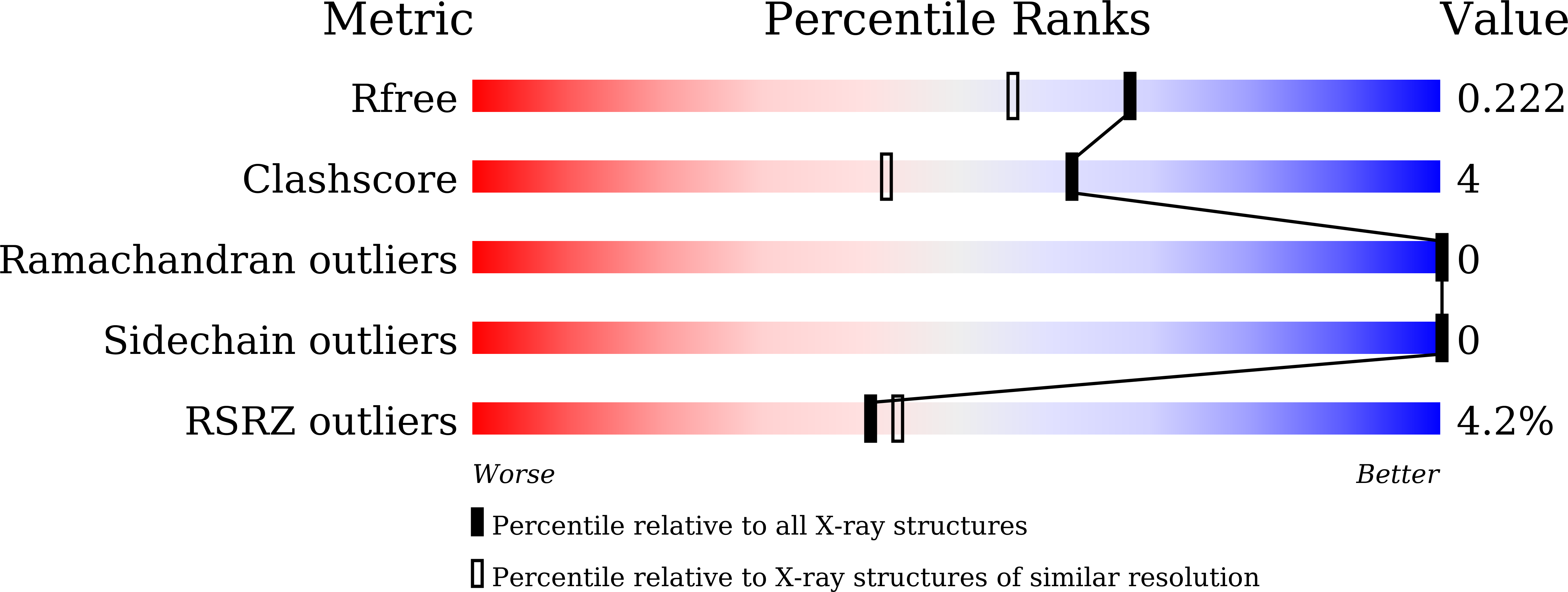
1.83 Å
R-Value Free:
0.22
R-Value Work:
0.19
R-Value Observed:
0.19
Space Group:
P 1
Macromolecular Entities
Structures with similar UniProt ID
Protein Blast
Polymer Type:polypeptide(L)
Molecule:AcvB
Chain IDs:A, B, C, D
Chain Length:212
Number of Molecules:4
Biological Source:Agrobacterium tumefaciens
Ligand Molecules
Primary Citation
Structural basis of substrate recognition and membrane association by the bacterial lysyl-phosphatidylglycerol hydrolase AcvB.
Commun Biol 9 ? ? (2026)
PMID: 42174249 DOI: 10.1038/s42003-026-10087-1

Abstact

Bacteria adapt to environmental stresses via membrane phospholipid remodeling; however, the underlying molecular mechanism remains largely elusive. In Agrobacterium tumefaciens, the lysyl-phosphatidylglycerol (Lys-PG) synthase lpiA and periplasmic hydrolase acvB genes form an operon that controls Lys-PG levels. We determined the crystal structures of mature AcvB and its C-terminal catalytic domain at 3.1 A and 1.8 A resolution, respectively. The catalytic domain forms a negatively charged cavity that recognizes the positively charged Lys-PG head group through multiple acidic residues, including Asp271, Asp340, and Asp370. A hydrophobic protruding loop containing Trp378 and Leu379 mediates membrane association and contributes to Lys-PG hydrolysis. Further, AcvB interacts with LpiA via its C-terminal domain, suggesting a cooperative module for Lys-PG turnover. These findings reveal the structural basis of Lys-PG hydrolysis and provide mechanistic insight into adaptive lipid modification at the bacterial membrane interface, and may guide future development of antibacterial agents against plant-pathogenic bacteria.

Legend

Protein

Chemical

Disease

Primary Citation of related structures
Feedback Form
Name
Email
Institute
Feedback