

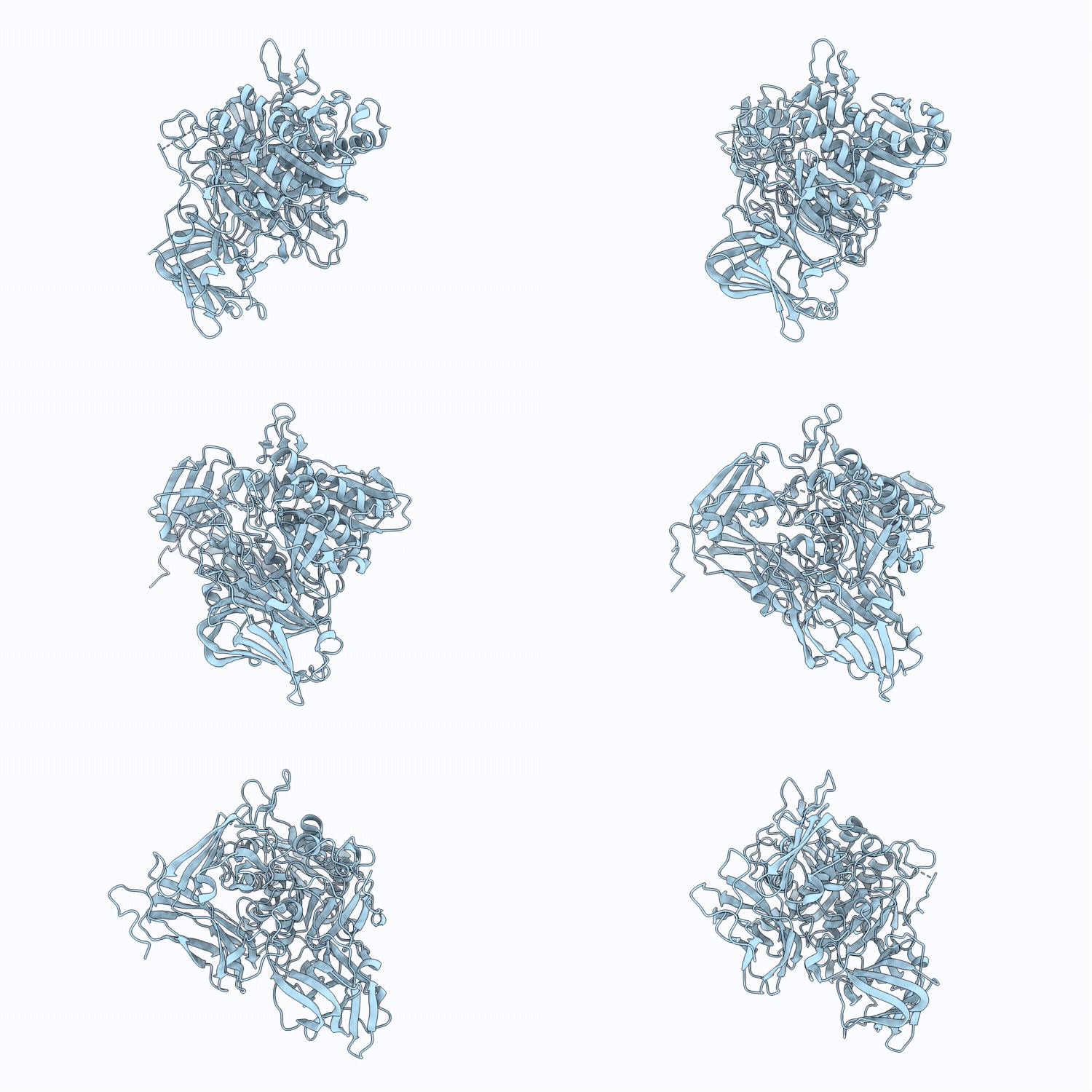
9XG1 image
Deposition Date 2025-10-29
Release Date 2026-04-15
Last Version Date 2026-04-15
Entry Detail
PDB ID:
9XG1
Keywords:
Title:
Crystal structure of protein-asparaginase from Amycolatopsis deserti
Biological Source:
Source Organism(s):
Expression System(s):
Method Details:
Experimental Method:
Resolution:
2.08 Å
R-Value Free:
0.24
R-Value Work:
0.17
R-Value Observed:
0.18
Space Group:
P 21 21 21

Macromolecular Entities
Structures with similar UniProt ID
Protein Blast
Polymer Type:polypeptide(L)
Molecule:Protein-asparaginase
Gene (Uniprot):GCM10017786_13890
Chain IDs:A
Chain Length:793
Number of Molecules:1
Biological Source:Amycolatopsis deserti
Primary Citation
Structural and Biochemical Characterization of a Minimal Protein-Asparaginase.
Chembiochem 27 e202500893 e202500893 (2026)
PMID: 41704006 DOI: 10.1002/cbic.202500893

Abstact

Enzymatic deamidation of proteins, catalyzed by protein glutaminase (PG) for Gln or by protein asparaginase (PA) for Asn residues, is a key strategy for improving functional properties such as solubility and foaming. However, the only known PA, from Luteimicrobium album (LalPA), is a large, thermally unstable multidomain protein (1355 aa) that has proven challenging to express heterologously. To overcome these limitations, we identified a novel, compact PA from Amycolatopsis deserti (AdePA) using a comprehensive database search. We then solved the first experimental structure of any PA, which revealed a catalytic mechanism utilizing a Ser-His-Asp catalytic triad indicative of a serine protease-like function, which is distinct from that of L-asparaginase. AdePA offers significant advantages over LalPA; it is a smaller (785 aa) single-domain enzyme with superior thermal stability (retaining 50% activity at 40 degrees C, where LalPA is inactivated) and is readily produced through heterologous expression. Furthermore, AdePA shows inverted substrate specificity, preferring sterically small N-terminal groups, making it highly effective for modifying unstructured proteins like gelatin. These findings demonstrate that AdePA is a robust candidate for industrial applications in protein modification.

Legend

Protein

Chemical

Disease

Primary Citation of related structures
Feedback Form
Name
Email
Institute
Feedback