

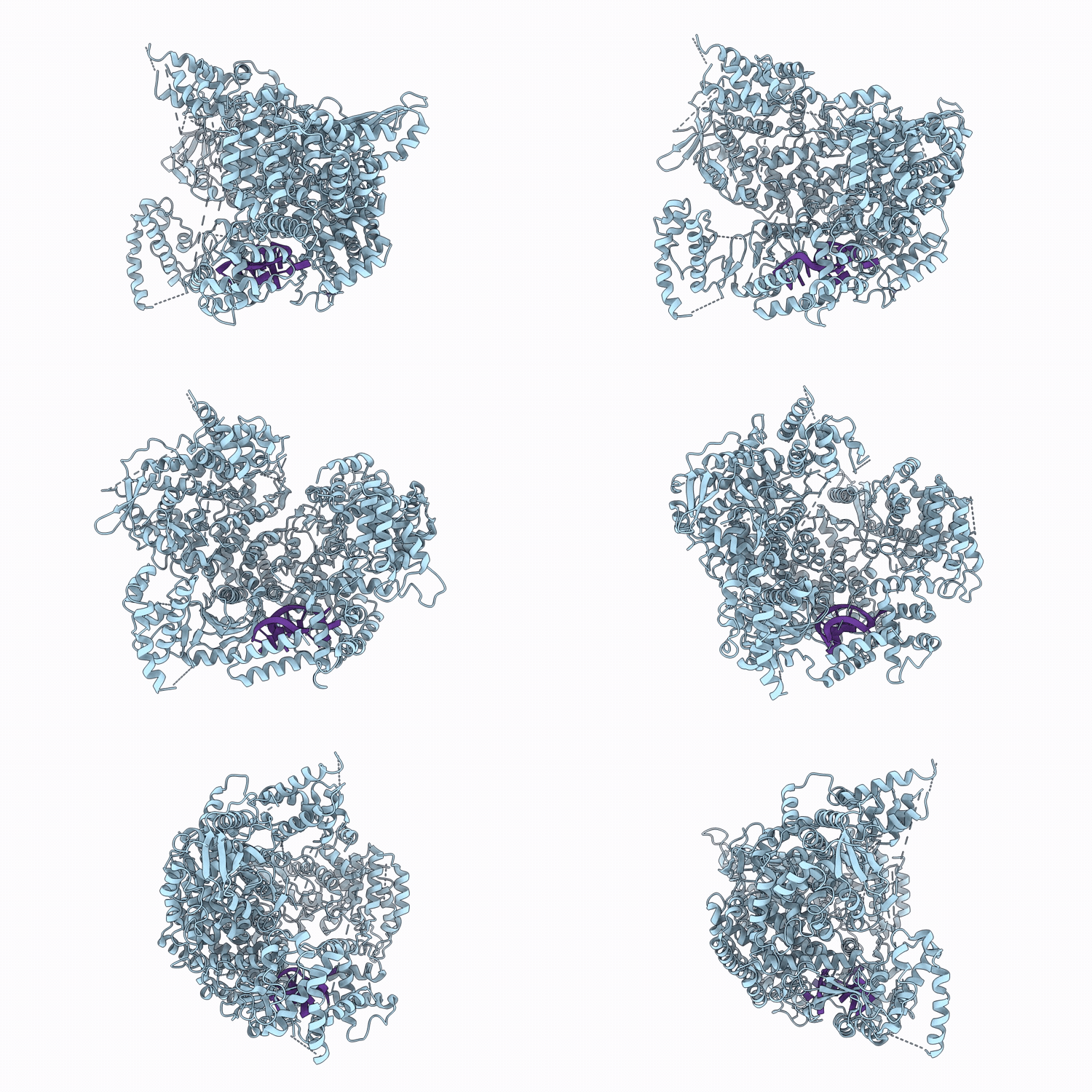
9XD5 image
Deposition Date 2025-10-27
Release Date 2026-05-06
Last Version Date 2026-08-05
Entry Detail
PDB ID:
9XD5
Title:
Crimean-Congo hemorrhagic fever virus RNA polymerase in complex with the 5' vRNA
Biological Source:
Expression System(s):
Method Details:
Experimental Method:
Resolution:
2.72 Å
Aggregation State:
PARTICLE
Reconstruction Method:
SINGLE PARTICLE
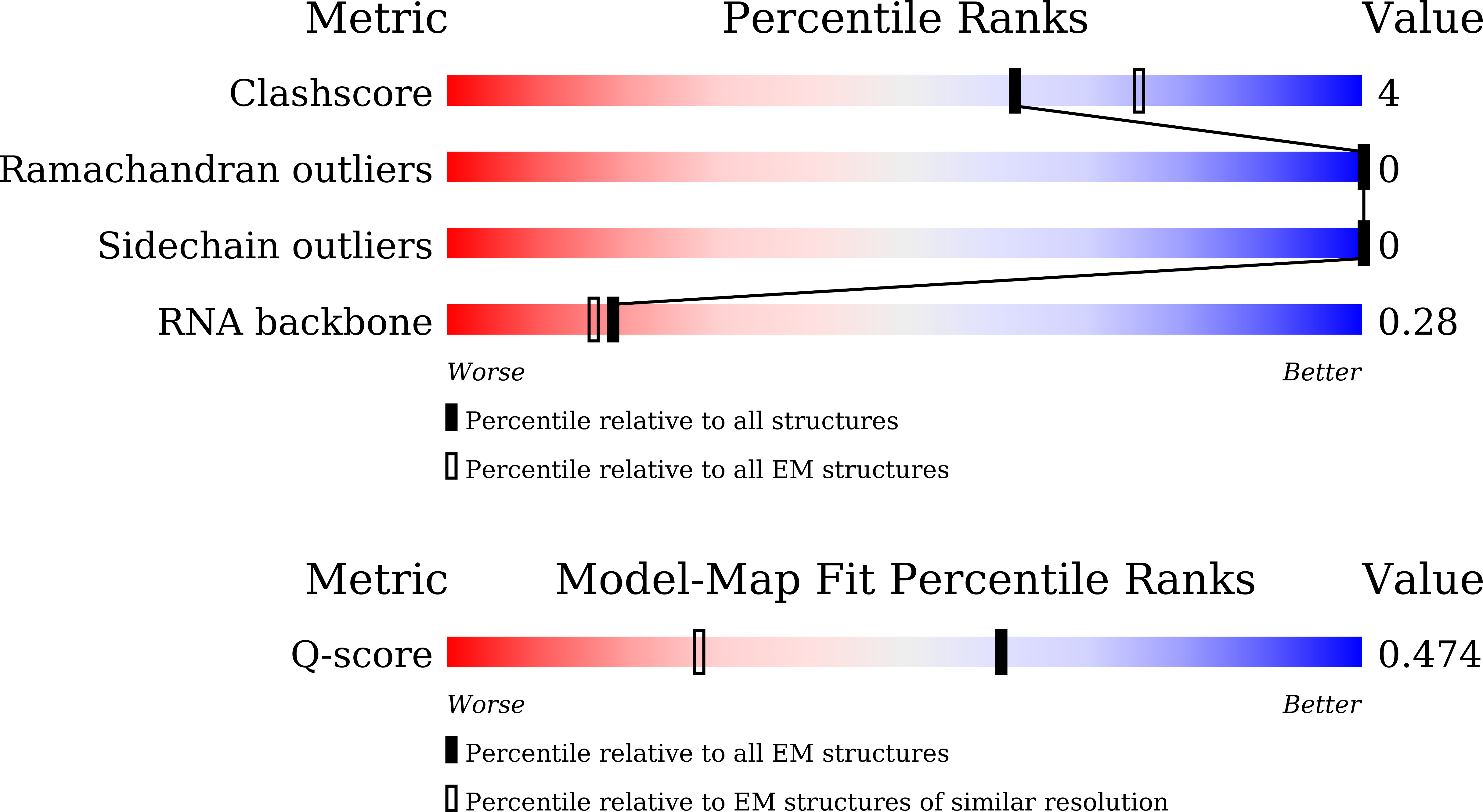
Macromolecular Entities
Polymer Type:polypeptide(L)
Molecule:RNA-directed RNA polymerase L
Gene (Uniprot):L
Chain IDs:A
Chain Length:0
Number of Molecules:1
Biological Source:Crimean-Congo hemorrhagic fever virus strain IbAr10200
Polymer Type:polyribonucleotide
Molecule:RNA (5'-R(*UP*CP*UP*CP*AP*AP*
Chain IDs:B (auth: C)
Chain Length:0
Number of Molecules:1
Biological Source:Crimean-Congo hemorrhagic fever virus strain IbAr10200
Ligand Molecules
Primary Citation
Structures and inhibition of the Crimean-Congo haemorrhagic fever virus polymerase.
Nature ? ? ? (2026)
PMID: 42486991 DOI: 10.1038/s41586-026-10701-6

Abstact

Crimean-Congo haemorrhagic fever virus (CCHFV) is a tick-borne virus and causes severe, often fatal, human infections. Lacking licensed vaccines or drugs, CCHFV is a World Health Organization priority pathogen requiring urgent development of medical countermeasures(1,2). The CCHFV Large (L) protein functions as the viral RNA-dependent RNA polymerase CCHFV-L, representing a promising antiviral target, and is among the largest viral polymerases in the order Bunyavirales. Here we define the cofactors required for CCHFV-L RNA synthesis in vitro, enabling capture and determination of elongating CCHFV-L-RNA complex structures. The structures show a markedly enlarged polymerase architecture, revealing that CCHFV-L RNA synthesis is accompanied by ordering of the polymerase peripheral domains. We also define how the baloxavir-derived experimental drug WXSH0208 (ref. (3)) and the nucleoside analogue 2'-deoxy-2'-fluorocytidine(4,5), which has nanomolar cellular potency, inhibit this polymerase through endonuclease inhibition and post-translocation chain termination, respectively. Together, these results should structurally guide rational optimization of inhibitors directed against CCHFV-L.

Legend

Protein

Chemical

Disease

Primary Citation of related structures
Feedback Form
Name
Email
Institute
Feedback