

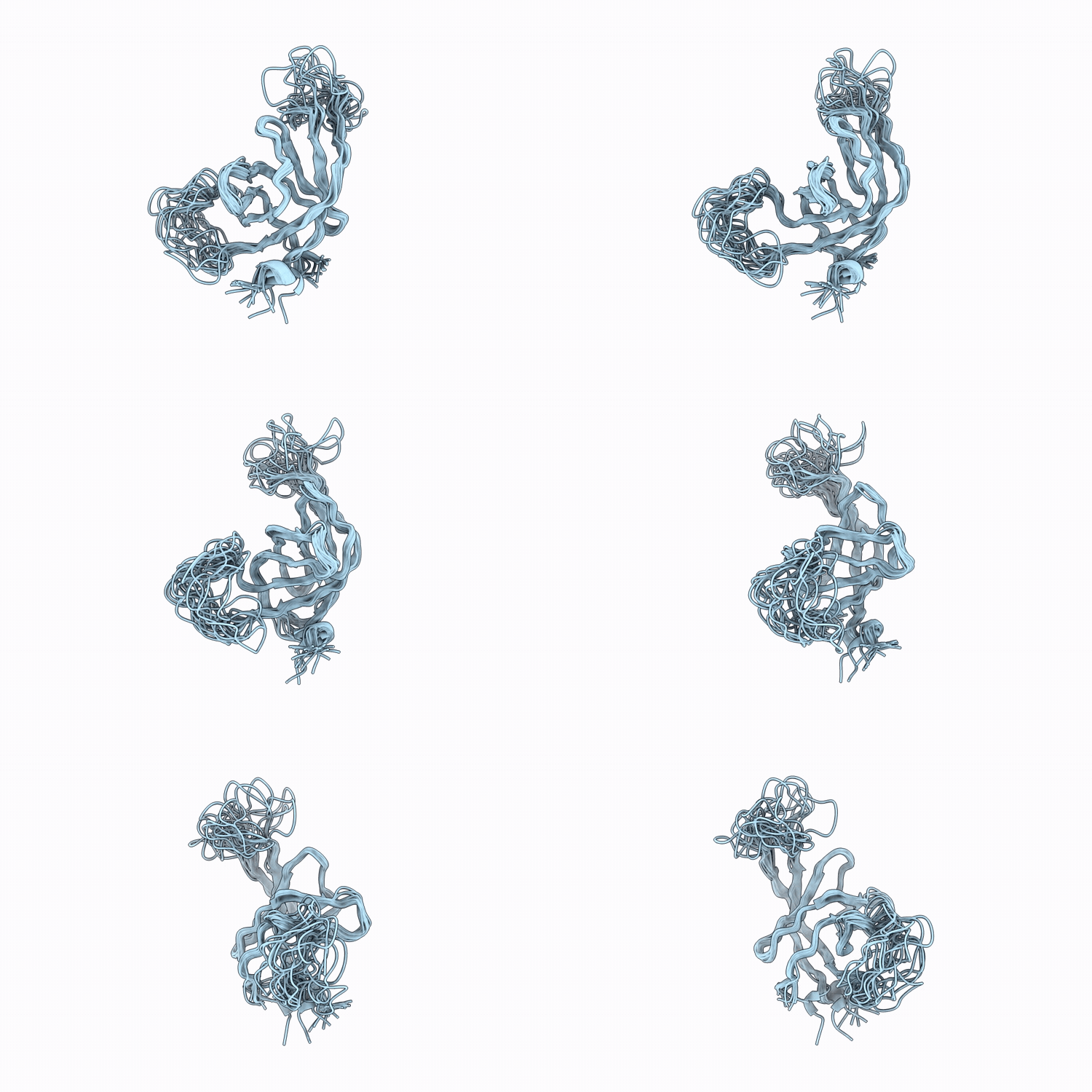
9X91 image
Deposition Date 2025-10-20
Release Date 2026-06-24
Last Version Date 2026-06-24
Entry Detail
PDB ID:
9X91
Keywords:
Title:
Solution structure of anti-CRISPR AcrIIA8
Biological Source:
Source Organism(s):
metagenome (Taxon ID: 256318)
Expression System(s):
Method Details:
Experimental Method:
Conformers Calculated:
2000
Conformers Submitted:
20
Selection Criteria:
structures with acceptable covalent geometry

Macromolecular Entities
Structures with similar UniProt ID
Protein Blast
Polymer Type:polypeptide(L)
Molecule:Inhibitor of Type II CRISPR-C
Gene (Uniprot):acrIIA8
Chain IDs:A
Chain Length:105
Number of Molecules:1
Biological Source:metagenome
Ligand Molecules
Primary Citation
AcrIIA8 is a putative phage structural protein of the HTJ2 family that does not inhibit Streptococcus pyogenes Cas9.
Protein Sci. 35 e70651 e70651 (2026)
PMID: 42223080 DOI: 10.1002/pro.70651

Abstact

Anti-CRISPR (Acr) proteins are phage-encoded anti-defense factors that suppress CRISPR-Cas immunity in bacteria. AcrIIA8 was previously identified as an inhibitor of Streptococcus pyogenes Cas9 (SpyCas9) through functional assays of metagenomic libraries. Here, we report that AcrIIA8 does not inhibit SpyCas9 in biochemical assays under a range of buffer conditions and temperatures. The solution structure and dynamics of AcrIIA8 reveal a six-stranded beta-barrel fold with flexible beta1-beta2 and beta2-beta3 loops, characteristic of phage virion-assembly proteins. In addition, genomic context analysis places AcrIIA8 and its homologs within conserved prophage morphogenetic regions at the position expected for type II head-tail joining (HTJ2) proteins. We further detected no interaction between AcrIIA8 and SpyCas9 in NMR titration experiments, suggesting that they do not specifically associate. Taken together, these findings argue against assigning AcrIIA8 as a SpyCas9 inhibitor and instead support its annotation as a putative phage structural protein of the HTJ2 family.

Legend

Protein

Chemical

Disease

Primary Citation of related structures
Feedback Form
Name
Email
Institute
Feedback