

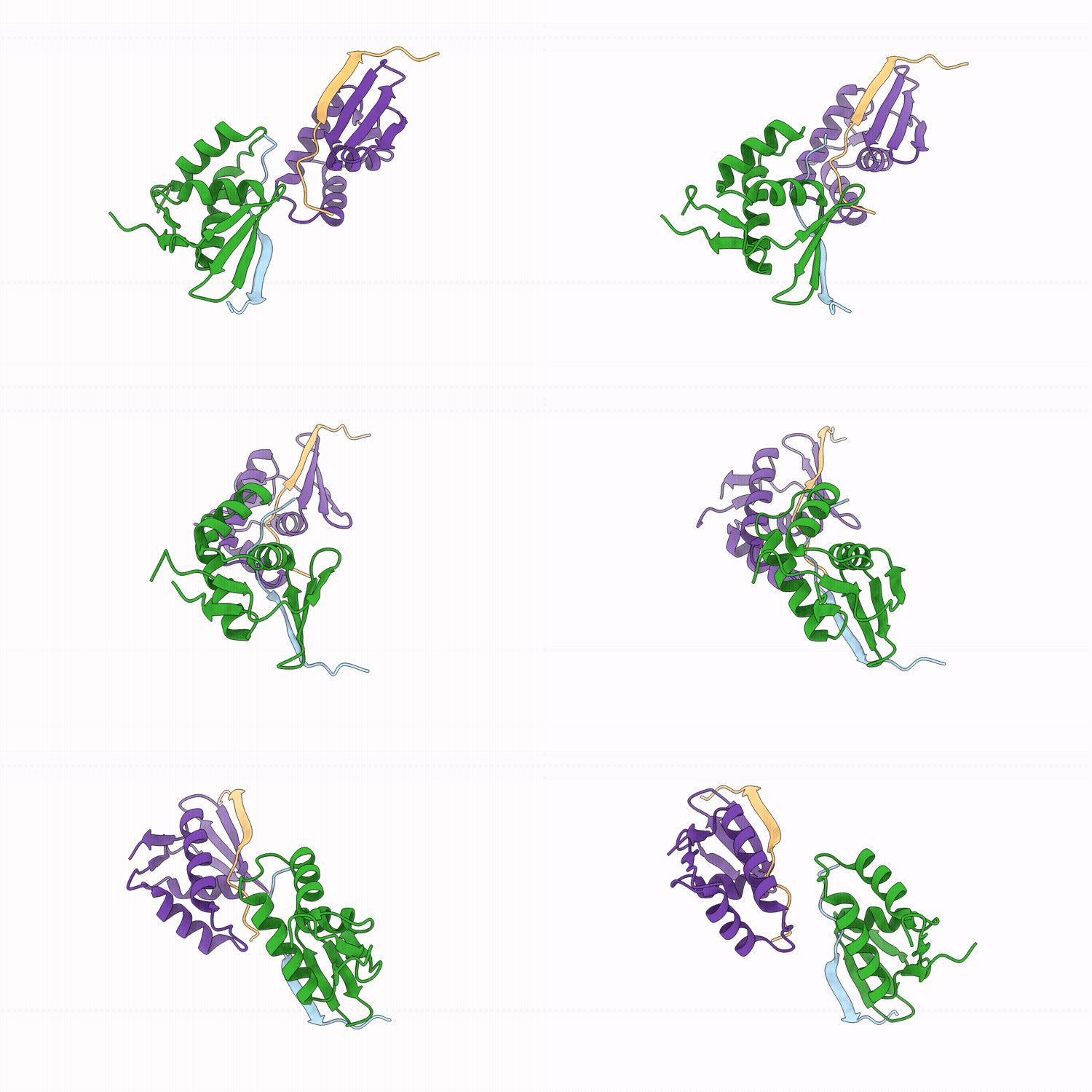
9X8Z image
Deposition Date 2025-10-20
Release Date 2026-05-27
Last Version Date 2026-06-03
Entry Detail
PDB ID:
9X8Z
Title:
LppB in Complex with LppA leader peptide
Biological Source:
Source Organism(s):
Expression System(s):
Method Details:
Experimental Method:
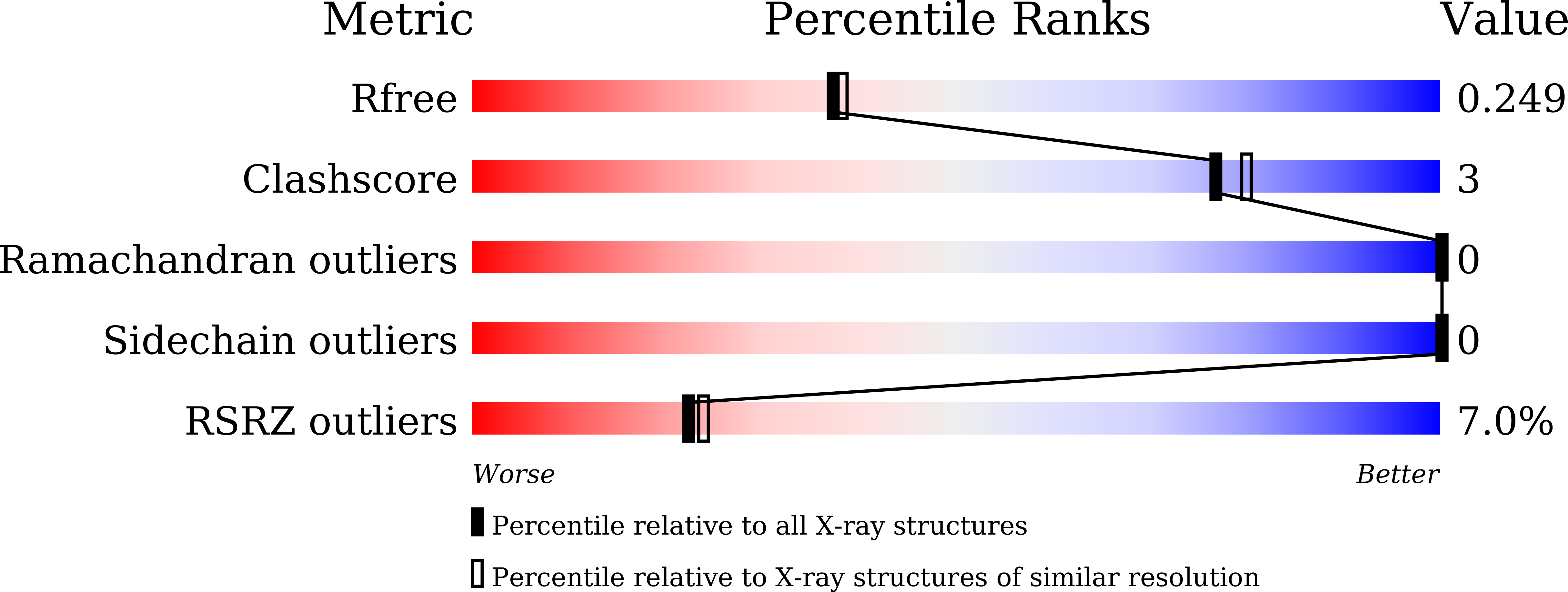
Resolution:
2.10 Å
R-Value Free:
0.24
R-Value Work:
0.20
R-Value Observed:
0.20
Space Group:
P 21 21 21
Macromolecular Entities
Structures with similar UniProt ID
Protein Blast
Polymer Type:polypeptide(L)
Molecule:LppA-leader
Gene (Uniprot):M5X19_06830
Chain IDs:B (auth: A), D (auth: C)
Chain Length:27
Number of Molecules:2
Biological Source:Paenibacillus alginolyticus
Structures with similar UniProt ID
Protein Blast
Polymer Type:polypeptide(L)
Molecule:PqqD family protein
Gene (Uniprot):M5X19_06840
Chain IDs:A (auth: B), C (auth: D)
Chain Length:107
Number of Molecules:2
Biological Source:Paenibacillus alginolyticus
Primary Citation
RiPP recognition elements evolved to prevent pathway interference through leader peptide discrimination.
Nat Commun ? ? ? (2026)
PMID: 42161943 DOI: 10.1038/s41467-026-73250-6

Abstact

Ribosomally synthesized and post-translationally modified peptides (RiPPs) are natural products with diverse structures and functions. Here, we report the discovery of a family of RiPPs whose biosynthetic gene clusters are widespread in the Bacillota genomes and often co-localize with those of lasso peptides, another distinct family of RiPPs. The synthesis of both kinds of RiPPs relies on specific interactions between small adapter protein domains known as RiPP recognition elements (RREs) with their precursor peptides. As these latter share a conserved RRE-binding motif, conflicts between the two biosynthetic pathways may emerge. Through biochemical and structural studies, we reveal how the two RiPP biosynthetic systems evolved to discriminate between their cognate precursors and leader peptidases, allowing them to coexist within a single host. Thus, our study provides insights into the evolutionary diversification of RiPP families.

Legend

Protein

Chemical

Disease

Primary Citation of related structures
Feedback Form
Name
Email
Institute
Feedback