

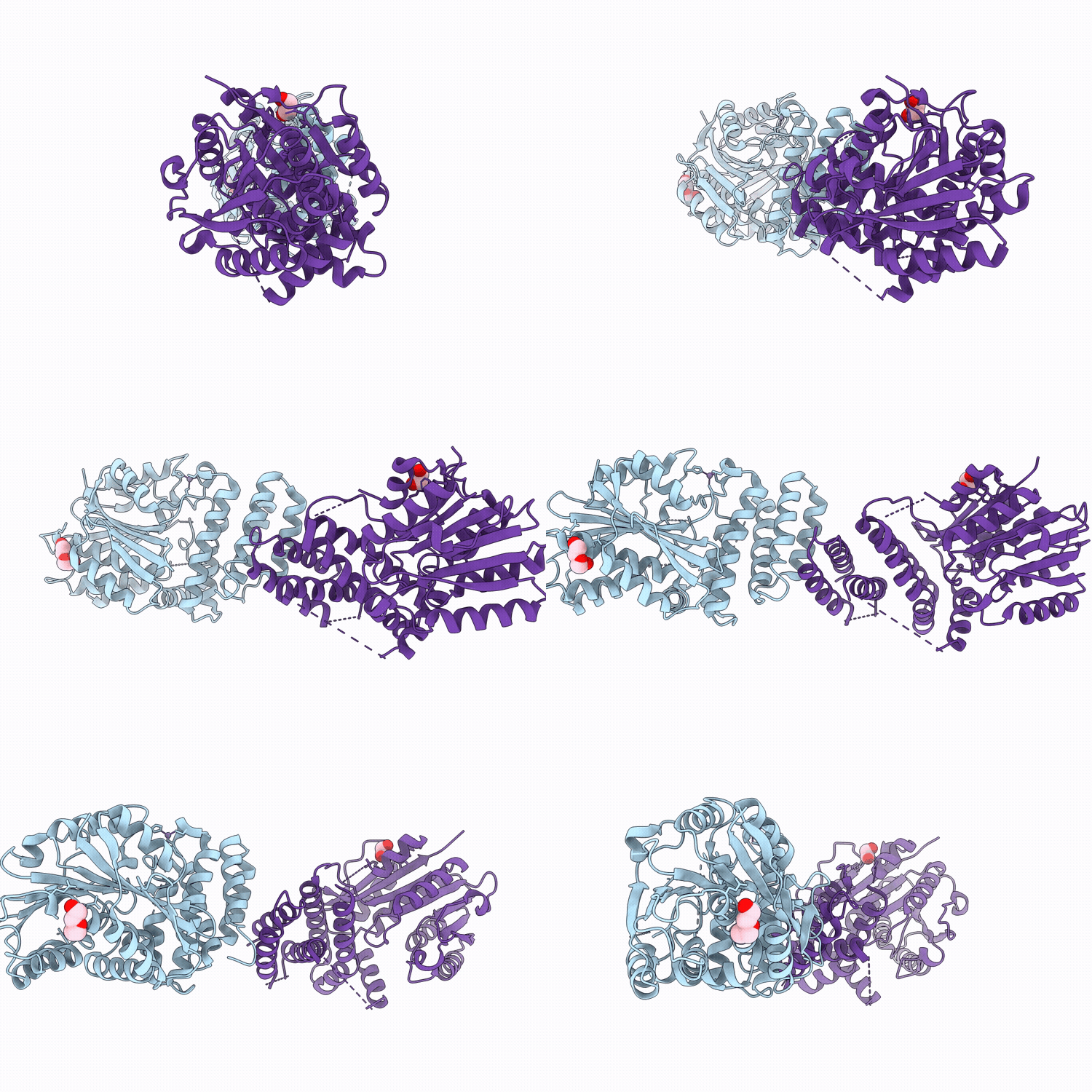
9X2R image
Deposition Date 2025-10-07
Release Date 2026-06-24
Last Version Date 2026-08-19
Entry Detail
PDB ID:
9X2R
Keywords:
Title:
Crystal structure of Medicago truncatula NSP1-NSP2 heterodimer
Biological Source:
Source Organism(s):
Expression System(s):
Method Details:
Experimental Method:
Resolution:
2.41 Å
R-Value Free:
0.24
R-Value Work:
0.19
R-Value Observed:
0.19
Space Group:
C 1 2 1
Macromolecular Entities
Polymer Type:polypeptide(L)
Molecule:Protein NODULATION SIGNALING
Gene (Uniprot):NSP1
Chain IDs:A
Chain Length:0
Number of Molecules:1
Biological Source:Medicago truncatula
Polymer Type:polypeptide(L)
Molecule:Protein NODULATION SIGNALING
Gene (Uniprot):NSP2
Chain IDs:B
Chain Length:0
Number of Molecules:1
Biological Source:Medicago truncatula
Primary Citation
Structural basis of NSP1-NSP2 heterodimerization and its regulatory mechanism in legume nodulation.
Plant Cell 38 ? ? (2026)
PMID: 42262896 DOI: 10.1093/plcell/koag161

Abstact

Legumes establish symbiotic relationships with rhizobia, leading to the development of nitrogen-fixing root nodules. Two GRAS transcription factors, nodulation signaling pathway (NSP) 1 and NSP2, are essential for Nod factor-induced transcription and subsequent nodulation in legumes. However, the structural basis of their interaction and functional mechanism remains poorly understood. Here, we report the crystal structure of the Medicago truncatula NSP1-NSP2 complex at 2.4 A resolution. The structure reveals that NSP1 and NSP2 assemble into a heterodimer with a small, triangular interface exclusively composed of their leucine heptad repeat I motifs. This direct interaction is essential for nodulation, as NSP2 facilitates NSP1-DNA binding. Furthermore, we identified an HCCC-type zinc finger in NSP1 that modulates nodulation by influencing its DNA-binding activity. Together, our findings provide structural insights into NSP1-NSP2 heterodimerization and elucidate the regulatory mechanism underlying legume nodulation, offering a theoretical foundation for rationally engineering NSP1 and NSP2 to optimize plant-microbe relationships for agricultural applications.

Legend

Protein

Chemical

Disease

Primary Citation of related structures
Feedback Form
Name
Email
Institute
Feedback