

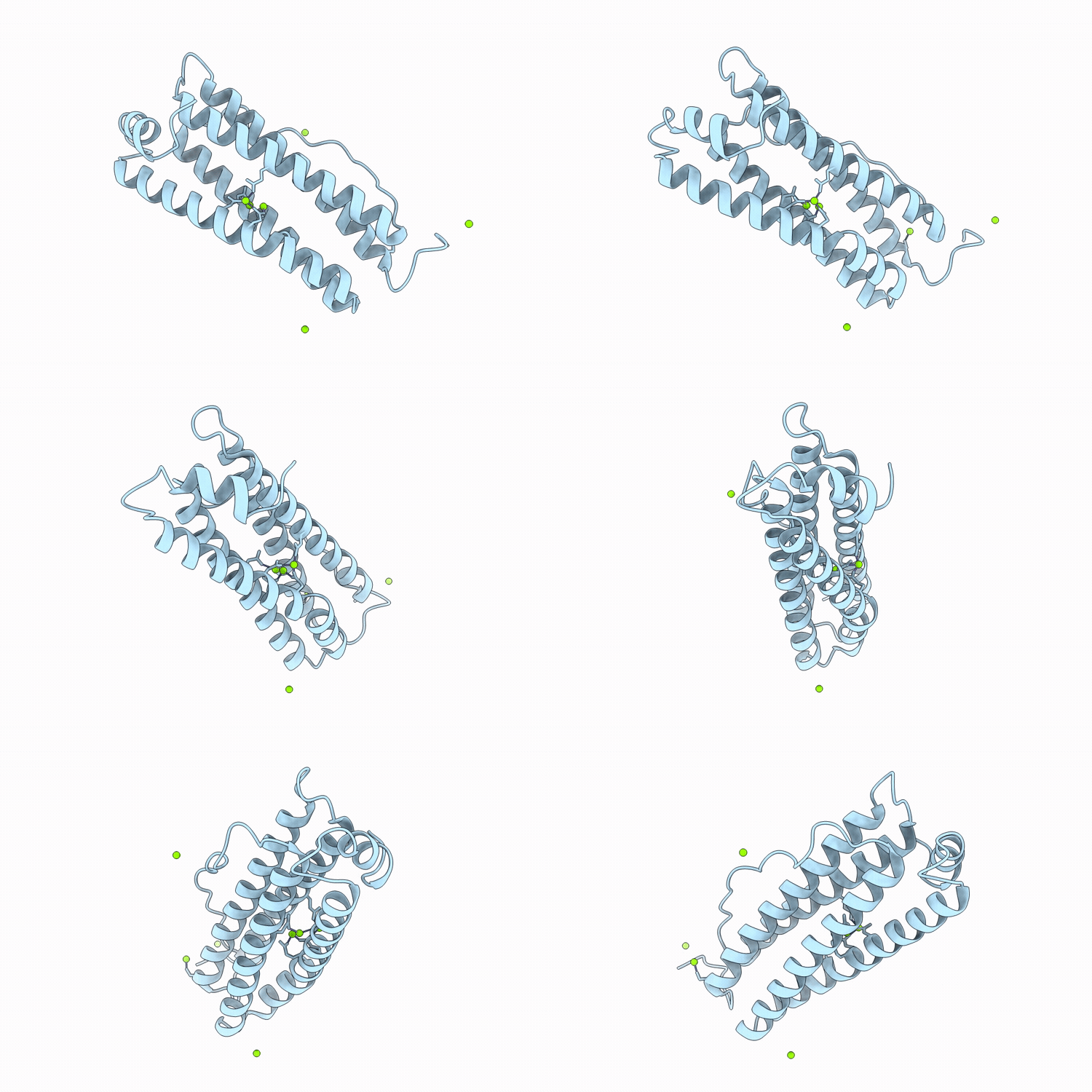
9X16 image
Deposition Date 2025-10-01
Release Date 2026-04-15
Last Version Date 2026-04-15
Entry Detail
PDB ID:
9X16
Keywords:
Title:
Crystal structure of Frog M-ferritin E130A_M161Q_L165D_K168E_H169D mutant
Biological Source:
Source Organism(s):
Expression System(s):
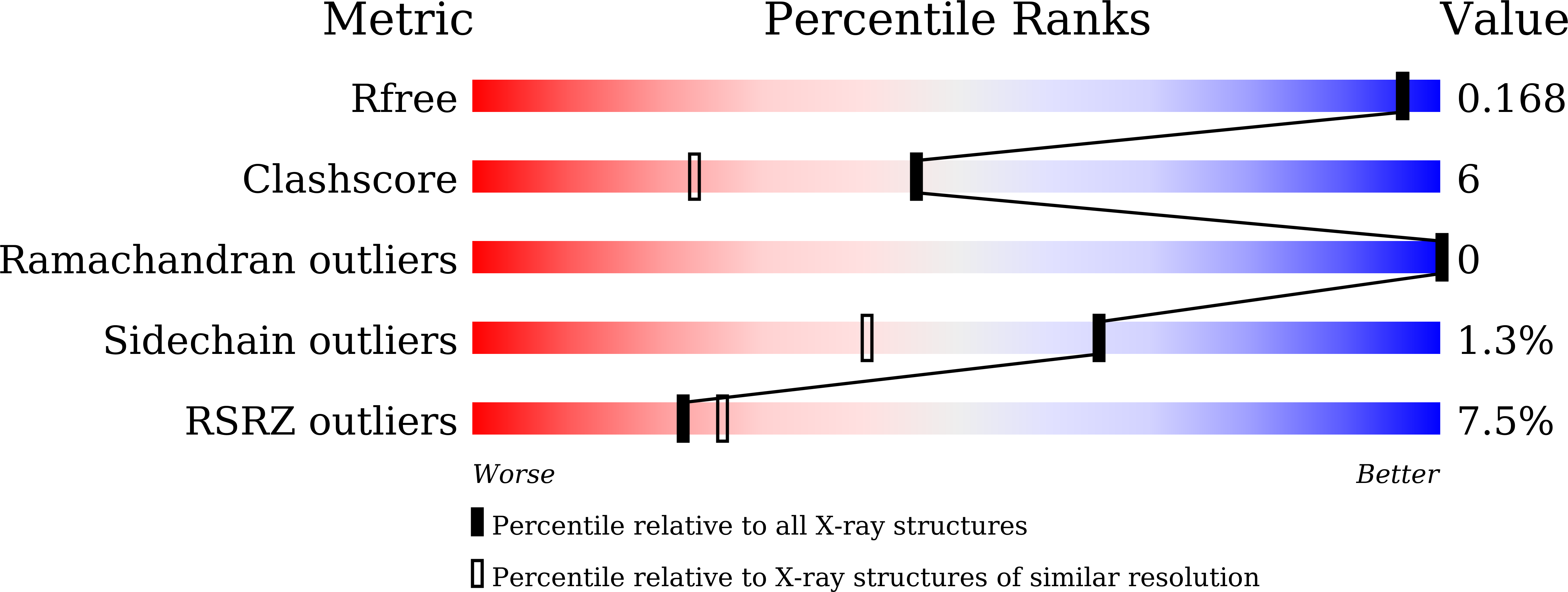
Method Details:
Experimental Method:
Resolution:
1.55 Å
R-Value Free:
0.15
R-Value Work:
0.12
Space Group:
F 4 3 2
Macromolecular Entities
Structures with similar UniProt ID
Protein Blast
Polymer Type:polypeptide(L)
Molecule:Ferritin, middle subunit
Mutagens:E130A,M161Q,L165D,K168E,H169D
Chain IDs:A
Chain Length:174
Number of Molecules:1
Biological Source:Aquarana catesbeiana
Primary Citation
Gradual Modification of Ferritin 4-Fold Pore Promotes Cage Instability, Fe 2+ Exit, and Iron-Induced Protein Precipitation.
Biochemistry 65 614 625 (2026)
PMID: 41700891 DOI: 10.1021/acs.biochem.5c00744

Abstact

Ferritins are symmetrical, hollow nanocaged iron storage proteins, which sequester and concentrate iron as a hydrated ferric oxyhydroxide (ferrihydrite) biomineral. Spontaneous self-assembly of 24 subunits in eukaryotic ferritins leads to the formation of symmetrical pores, i.e., eight hydrophilic 3-fold pores and six hydrophobic 4-fold pores. However, unlike the relatively wider 3-fold pores, which drive Fe(2+) inside, the functions of narrow 4-fold pores are relatively understudied. The current work investigates the role of 4-fold pores by gradual alterations of specific amino acids using site-directed mutagenesis, structural analysis by X-ray crystallography, and solution-based kinetic studies. Increasing the negative charge in ferritin 4-fold pore retained the cage integrity and iron-loading capability despite altering the pore structure/size/electrostatics. As additional substitutions accumulated within the same channel, the aperture widens further and the electrostatic environment became progressively more acidic around the pore lining. These gradual alterations resulted in an enhanced rate of iron mobilization (up to approximately 10-fold), possibly due to remodeling of the 4-fold (C4) pore, leading to a progressive increase in 4-fold pore diameter. Moreover, these modifications decreased cage stability, both thermally ( approximately 5 degrees C) and chemically ( approximately 3-4 folds), and increased iron-induced ferritin precipitation, similar to the case of neuroferritinopathy.

Legend

Protein

Chemical

Disease

Primary Citation of related structures
Feedback Form
Name
Email
Institute
Feedback