

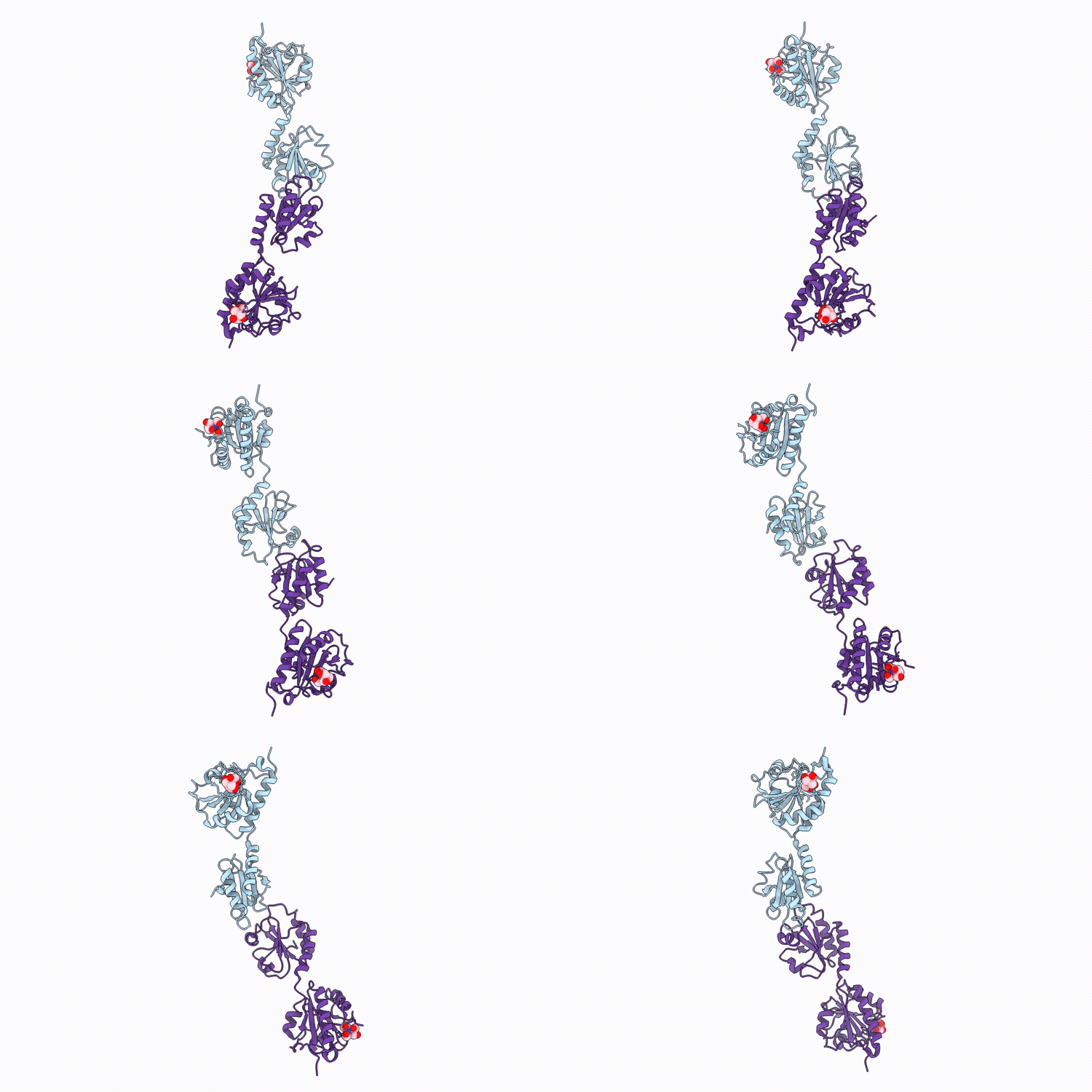
9WZK image
Deposition Date 2025-09-29
Release Date 2026-04-08
Last Version Date 2026-04-29
Entry Detail
PDB ID:
9WZK
Keywords:
Title:
Crystal structure of the inactive mutant of rice protein disulfide isomerase-like protein OsPDIL2-3 a-b domains
Biological Source:
Source Organism(s):
Expression System(s):
Method Details:
Experimental Method:
Resolution:
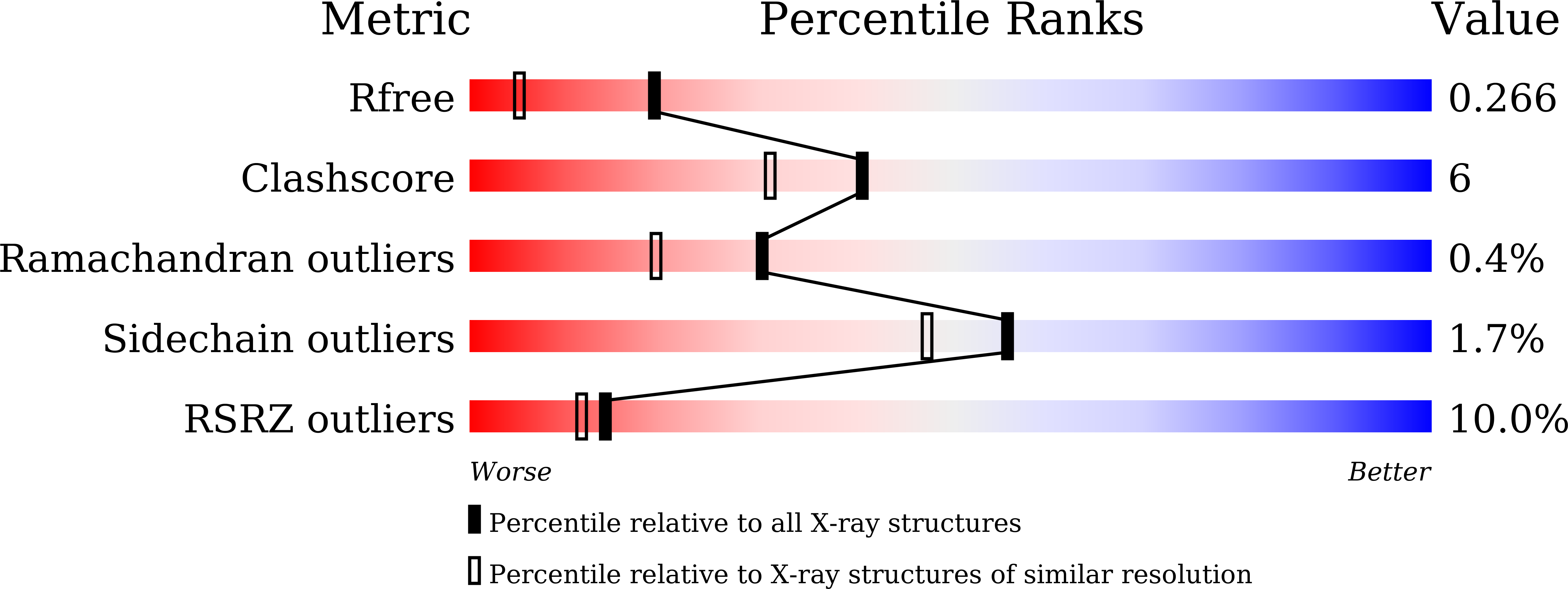
1.80 Å
R-Value Free:
0.26
R-Value Work:
0.22
Space Group:
P 1 21 1
Macromolecular Entities
Structures with similar UniProt ID
Protein Blast
Polymer Type:polypeptide(L)
Molecule:Protein disulfide isomerase-l
Gene (Uniprot):PDIL2-3
Mutagens:C195A, C198A
Chain IDs:A, B
Chain Length:296
Number of Molecules:2
Biological Source:Oryza sativa subsp. japonica
Ligand Molecules
Primary Citation
Structural characterization of OsPDIL2-3, a rice protein disulfide isomerase involved in prolamin accumulation.
Biochem.J. 483 639 655 (2026)
PMID: 41873876 DOI: 10.1042/BCJ20253474

Abstact

Protein disulfide isomerase-like 2-3 (OsPDIL2-3) is a rice endosperm-specific member of the PDI family that localizes to protein body-I and is essential for the accumulation of the cysteine-rich 10-kDa prolamin crP10. OsPDIL2-3 comprises three thioredoxin-like domains (a0, a, and b). Here, we combined X-ray crystallography, size-exclusion chromatography-coupled small-angle X-ray scattering (SEC-SAXS), and ensemble optimization analysis to characterize the structural basis of OsPDIL2-3 function. Crystal structures of truncated constructs revealed that domain a0 forms a stable homodimer, whereas domain a mediates a weaker and labile dimeric interaction. SEC-SAXS analysis of the full-length protein demonstrated that OsPDIL2-3 predominantly exist as a flexible dimer in solution, populating a broad ensemble of conformational states rather than a single quaternary structure. This conformational heterogeneity arises from the flexible linker between the a0 and a domains, which acts as a molecular hinge permitting large-amplitude domain rearrangements. Structural prediction of OsPDIL2-3-crP10 complex suggested that domain a0 preferentially captures unfolded or partially folded crP10, whereas domain a promotes disulfide-bond rearrangement toward the native fold. These results support a model in which OsPDIL2-3 functions as a linker-mediated dynamic dimer, in which interdomain flexibility spatially coordinates substrate capture and oxidative refolding. Our results provide mechanistic insight into the specialized functions of plant PDIs and highlight their roles in the assembly of cereal seed storage protein complexes.

Legend

Protein

Chemical

Disease

Primary Citation of related structures
Feedback Form
Name
Email
Institute
Feedback