

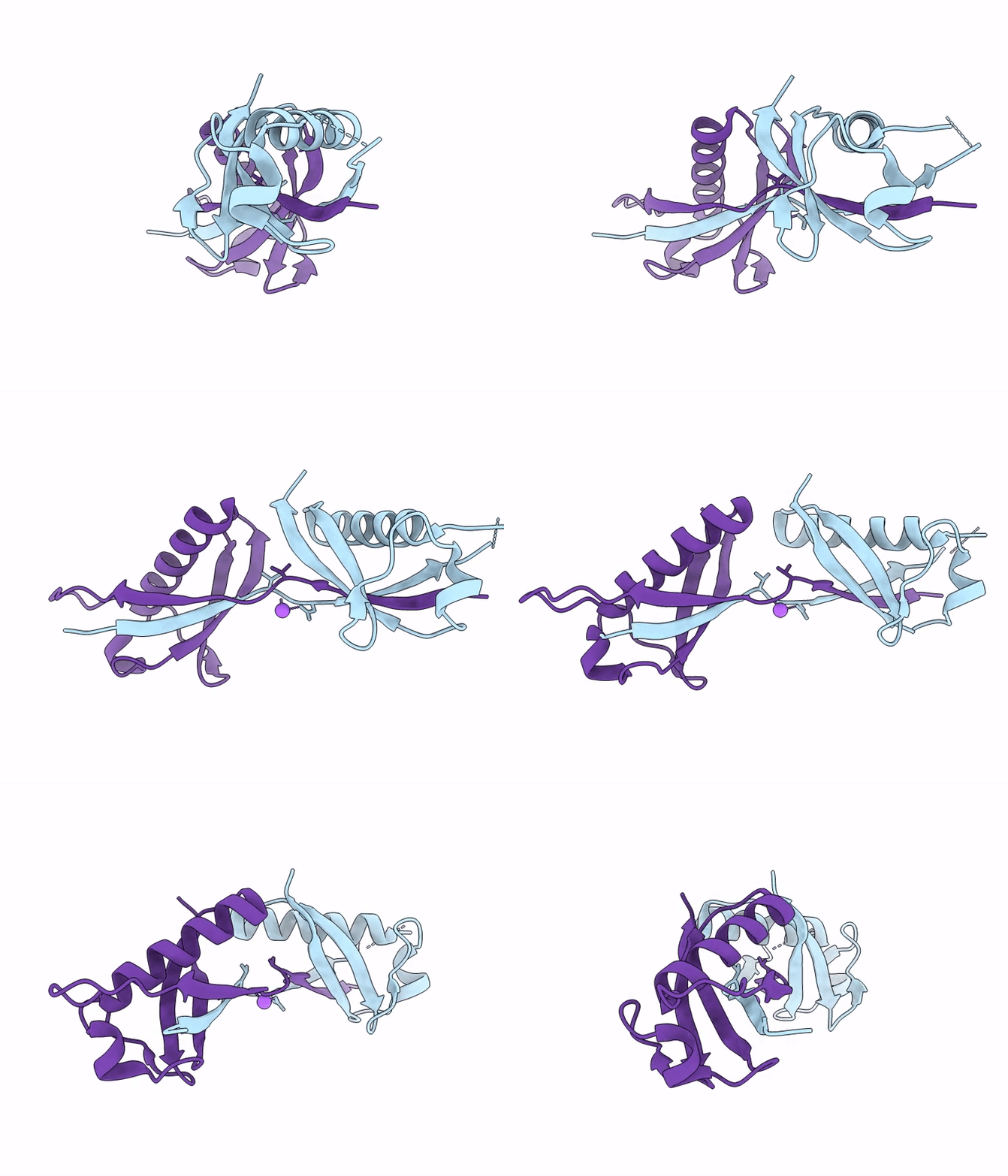
9WVH image
Deposition Date 2025-09-20
Release Date 2025-10-08
Last Version Date 2026-08-12
Entry Detail
PDB ID:
9WVH
Keywords:
Title:
Crystal structure of TONSL UBL domain
Biological Source:
Source Organism(s):
Homo sapiens (Taxon ID: 9606)
Expression System(s):
Method Details:
Experimental Method:
Resolution:
1.96 Å
R-Value Free:
0.20
R-Value Work:
0.19
R-Value Observed:
0.19
Space Group:
I 4 2 2
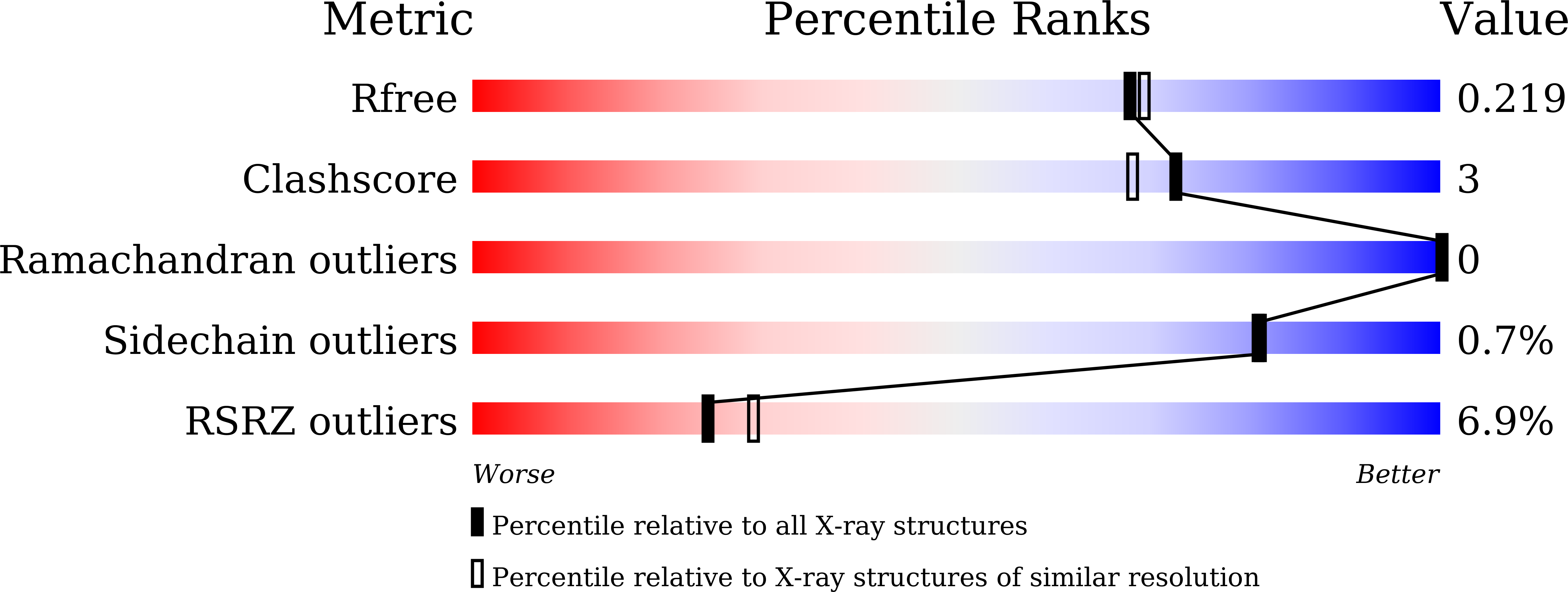
Macromolecular Entities
Polymer Type:polypeptide(L)
Molecule:Tonsoku-like protein
Gene (Uniprot):TONSL
Chain IDs:A, B
Chain Length:0
Number of Molecules:2
Biological Source:Homo sapiens
Ligand Molecules
Primary Citation
Pathogenic variants in the human TONSL protein associated with SPONASTRIME dysplasia impair protein dimerization and DNA repair.
Sci Adv 12 eaee1129 eaee1129 (2026)
PMID: 42525765 DOI: 10.1126/sciadv.aee1129

Abstact

TONSL safeguards genome stability by facilitating replication-dependent DNA damage repair and protecting stalled replication forks through homologous recombination. Mutations in TONSL cause SPONASTRIME dysplasia, a rare skeletal disorder. We reveal that TONSL homo-dimerizes via its ubiquitin-like domain (UBL), and two recurrent SPONASTRIME dysplasia causative variants (R934W and G973R) abolish this dimerization. Crystal structures at 1.9 A resolution show UBL(WT) forms domain-swapped dimers that assemble into ring-like octamers. The R934W variant eliminates critical hydrogen bonds and introduces steric clashes, forcing monomeric conformation. G973R destabilizes an evolutionarily conserved residue within a conformationally restricted beta-turn. Biochemically, UBL(WT) exists as dimers while UBL(R934W) remains monomeric. Functionally, dimerization-deficient variants fail to suppress replication stress-induced DNA damage, show impaired RAD51 foci formation, and exhibit severely compromised survival following genotoxic stress. These findings establish TONSL dimerization as essential for genome maintenance and provide structural and mechanistic insights into SPONASTRIME dysplasia pathogenesis.

Legend

Protein

Chemical

Disease

Primary Citation of related structures
Feedback Form
Name
Email
Institute
Feedback