

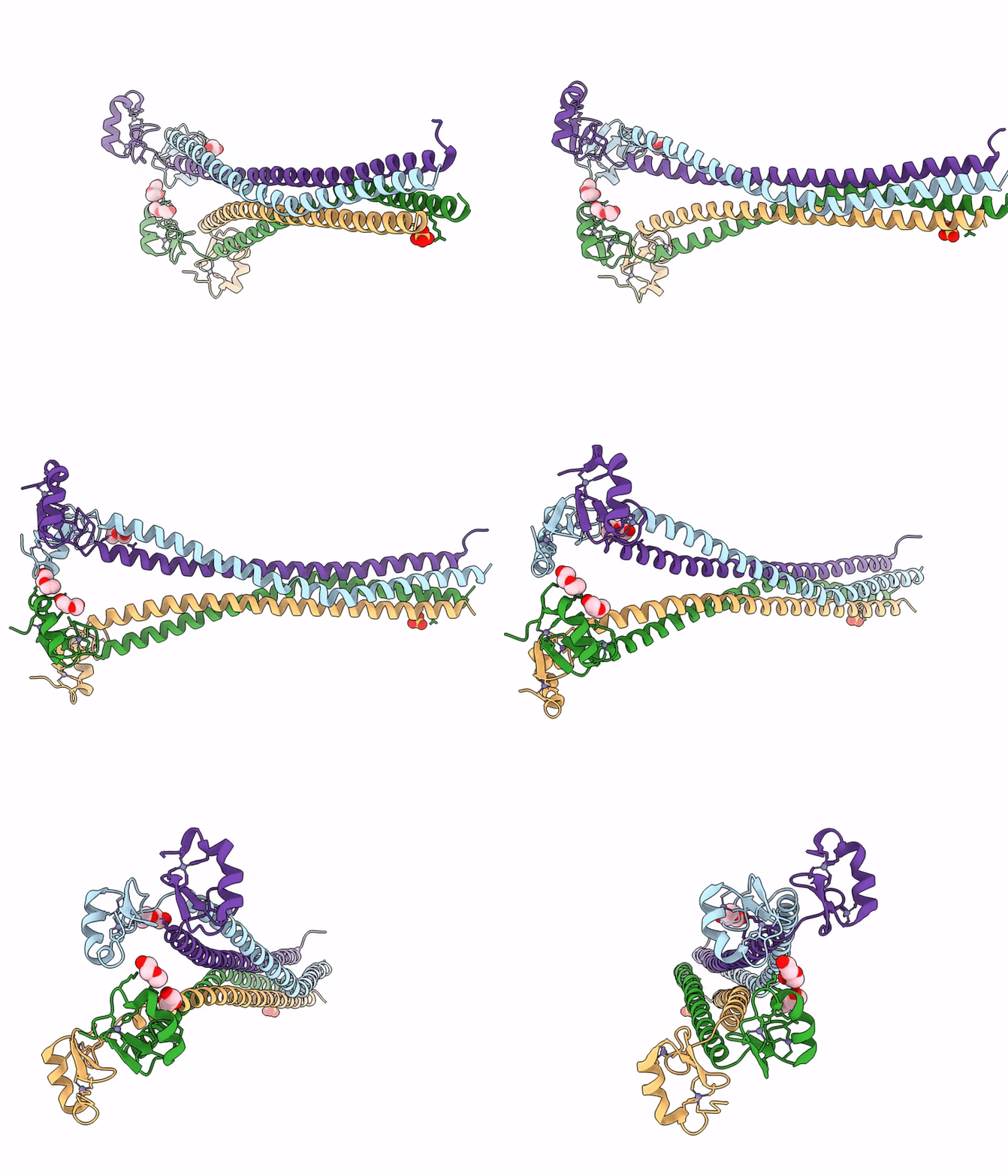
9WV4 image
Deposition Date 2025-09-19
Release Date 2025-10-08
Last Version Date 2026-08-12
Entry Detail
PDB ID:
9WV4
Title:
Crystal structure of human ZMYND8 MYND domain
Biological Source:
Source Organism(s):
Homo sapiens (Taxon ID: 9606)
Expression System(s):
Method Details:
Experimental Method:
Resolution:
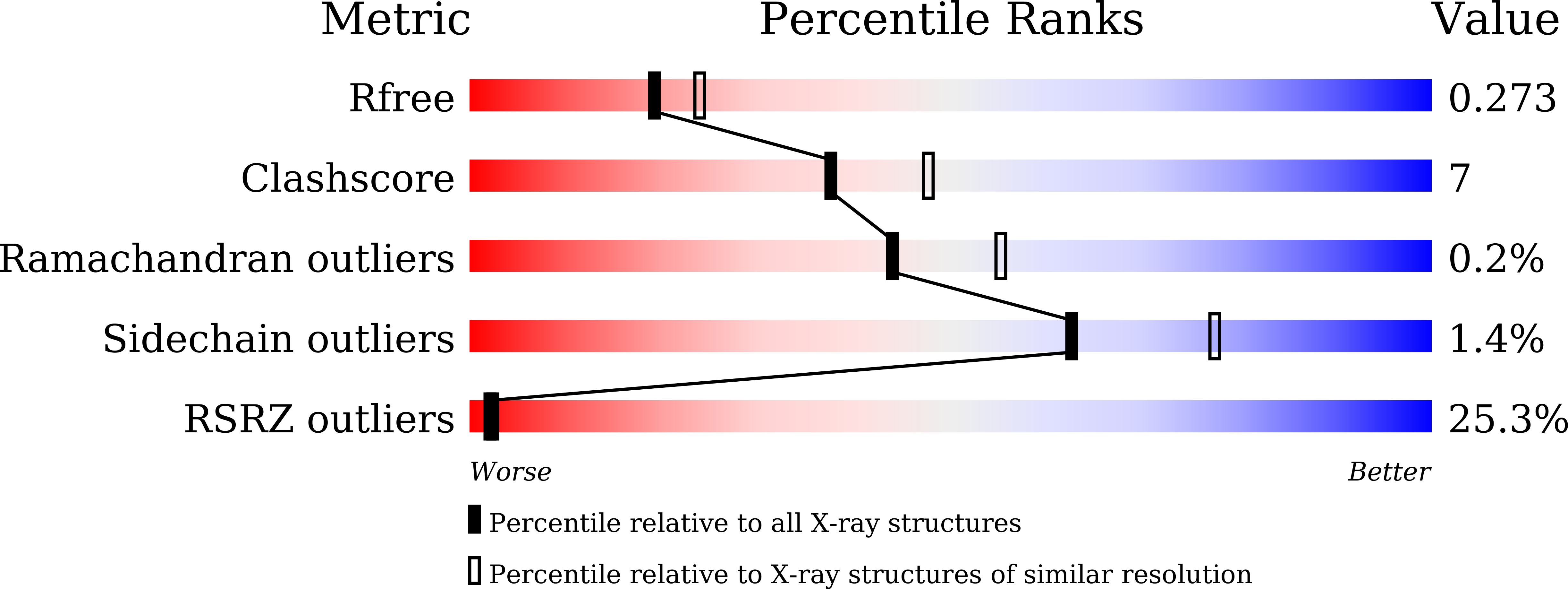
2.29 Å
R-Value Free:
0.27
R-Value Work:
0.24
R-Value Observed:
0.24
Space Group:
P 21 21 21
Macromolecular Entities
Polymer Type:polypeptide(L)
Molecule:MYND-type zinc finger-contain
Gene (Uniprot):ZMYND8
Chain IDs:A (auth: B), B (auth: C), C (auth: A), D
Chain Length:126
Number of Molecules:4
Biological Source:Homo sapiens
Primary Citation
The chromatin reader ZMYND8 recruits the NuRD component GATAD2A through its MYND domain to regulate MAPT213 long noncoding RNA transcription.
J.Biol.Chem. 302 111463 111463 (2026)
PMID: 41999894 DOI: 10.1016/j.jbc.2026.111463

Abstact

The zinc finger MYND-type containing eight protein (ZMYND8) is a chromatin reader that regulates neuronal gene expression by controlling the microtubule-associated protein tau (MAPT) locus. Here, we investigate how ZMYND8 regulates expression of the long non-coding RNA MAPT213 through its interaction with GATA zinc finger domain containing 2A (GATAD2A), a component of the Nucleosome Remodelling and Deacetylase complex. ZMYND8 exhibits opposite regulatory effects on protein-coding MAPT and non-coding MAPT213 transcripts in a manner dependent on its MYND domain, promoting MAPT expression while suppressing MAPT213 levels. Chromatin immunoprecipitation experiments demonstrated that ZMYND8 specifically recruits GATAD2A to the MAPT213 internal regulatory region, establishing a direct link between protein binding and transcriptional control. We determined the crystal structure of the ZMYND8 coiled-coil MYND domain at high resolution, revealing a homodimeric architecture. The MYND domain specifically recognizes GATAD2A through direct interaction with proline-rich motifs in GATAD2A's central region. Structure-function analysis identified critical binding interface residues, while quantitative measurements revealed moderate-affinity interactions enhanced through multivalent binding mechanisms. These findings establish the molecular basis for ZMYND8-mediated recruitment of chromatin remodeling complexes to specific genomic loci and provide a structural framework for understanding transcriptional regulation of MAPT213.

Legend

Protein

Chemical

Disease

Primary Citation of related structures
Feedback Form
Name
Email
Institute
Feedback