

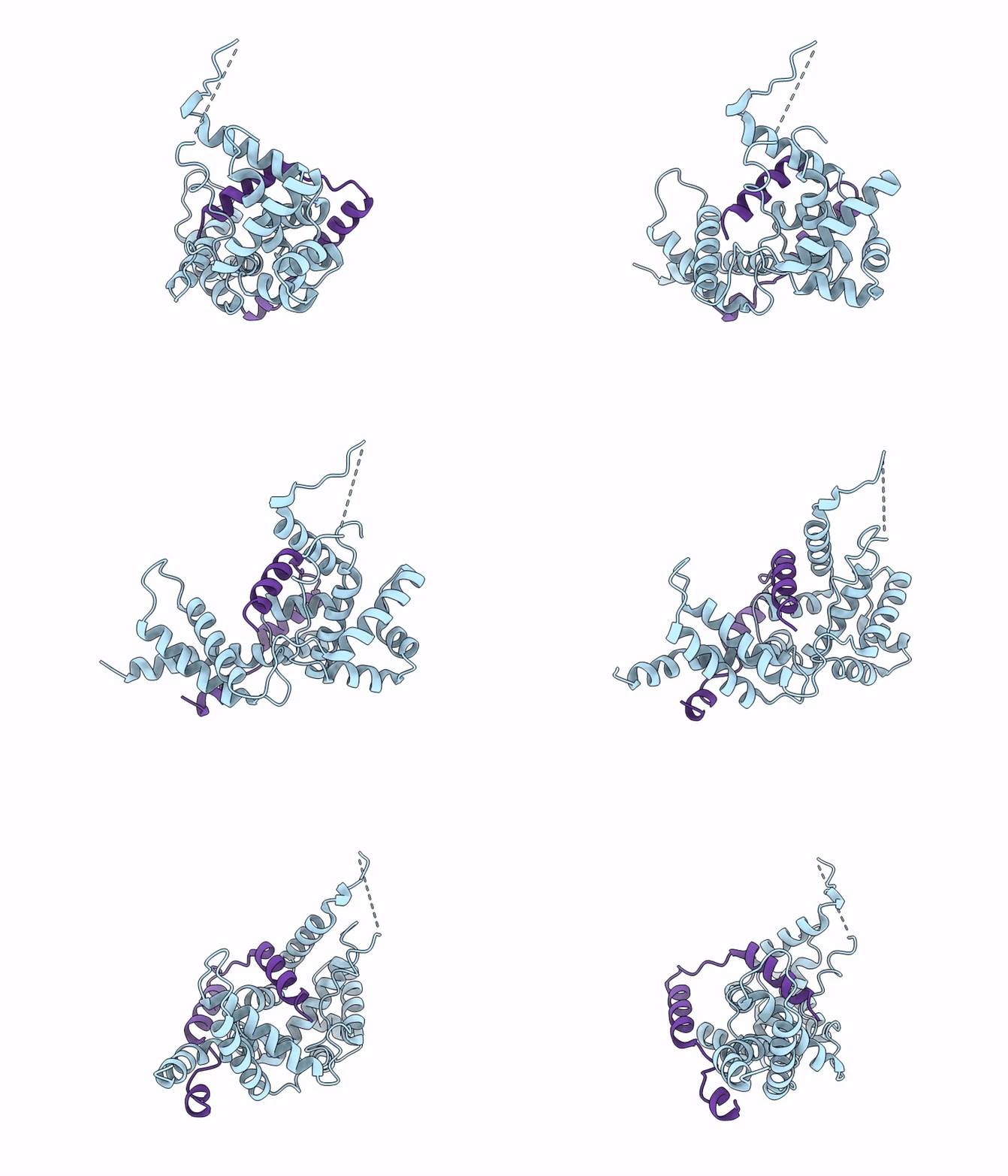
9WSF image
Deposition Date 2025-09-13
Release Date 2026-02-25
Last Version Date 2026-02-25
Entry Detail
PDB ID:
9WSF
Keywords:
Title:
Crystal structure of Sigma28/FlgM complex from Pseudomonas aeruginosa at 1.95 Angstrom resolution
Biological Source:
Source Organism(s):
Expression System(s):
Method Details:
Experimental Method:
Resolution:
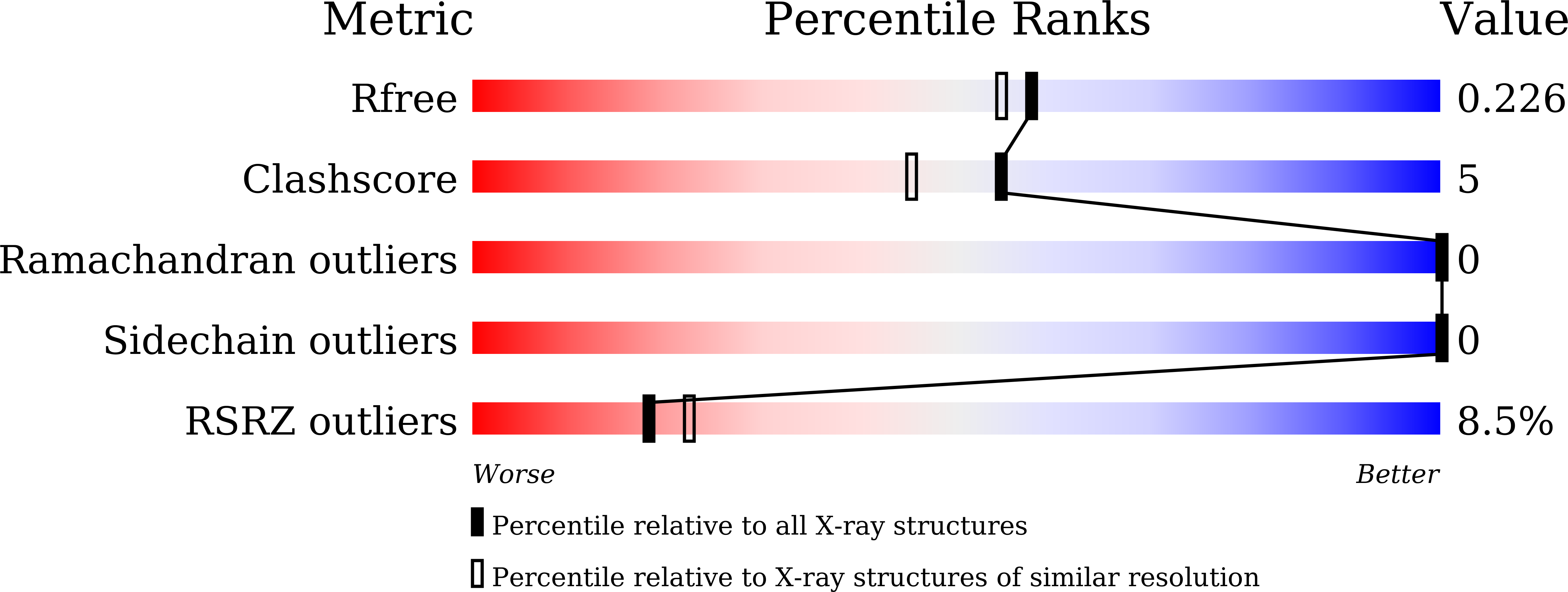
1.95 Å
R-Value Free:
0.22
R-Value Work:
0.17
R-Value Observed:
0.17
Space Group:
C 2 2 21
Macromolecular Entities
Structures with similar UniProt ID
Protein Blast
Polymer Type:polypeptide(L)
Molecule:RNA polymerase sigma factor F
Gene (Uniprot):fliA
Chain IDs:A
Chain Length:254
Number of Molecules:1
Biological Source:Pseudomonas aeruginosa
Structures with similar UniProt ID
Protein Blast
Polymer Type:polypeptide(L)
Molecule:Negative regulator of flagell
Chain IDs:B
Chain Length:111
Number of Molecules:1
Biological Source:Pseudomonas aeruginosa
Primary Citation
Structural insights into sigma 28-dependent transcription initiation and its regulation by anti-sigma factor in Pseudomonas aeruginosa
Nucleic Acids Res. 54 ? ? (2026)
PMID: 41521663 DOI: 10.1093/nar/gkaf1414

Abstact

Late flagellar genes in Pseudomonas aeruginosa are transcribed by the group 3 sigma factor, FliA (sigma28). sigma28 drives the expression of flagellin, which assembles into the flagellar filament in this monoflagellated bacterium. This function is suppressed by the anti-sigma factor FlgM. Here, we present the 1.95A resolution crystal structure of sigma28-FlgM complex, along with a 3.4A structure of sigma28RNAP open promoter complex determined using single particle cryo-electron microscopy from P. aeruginosa. The sigma28 adopts a compact conformation upon binding to the anti-sigma factor FlgM, which contacts all three domains of the sigma factor. This conformation is neither conducive to interactions with RNA polymerase nor the promoter DNA. The cryo-EM structure reveals base-specific interactions of sigma28 domain 4 (sigma4) with -35 element, flipping of -11 base of the template strand, novel interactions of template strand with domain 2 (sigma2) and 3 (sigma3), and partial insertion of sigma finger into the active site cleft, offering unique features of group 3 sigma interactions with promoter DNA. Perturbation of key residues affects transcription in vitro and flagellar phenotypes as well as bacterial motility in vivo. Analysis of the structural data presented here reveals new insights into transcription regulation of late flagellar genes.

Legend

Protein

Chemical

Disease

Primary Citation of related structures
Feedback Form
Name
Email
Institute
Feedback