

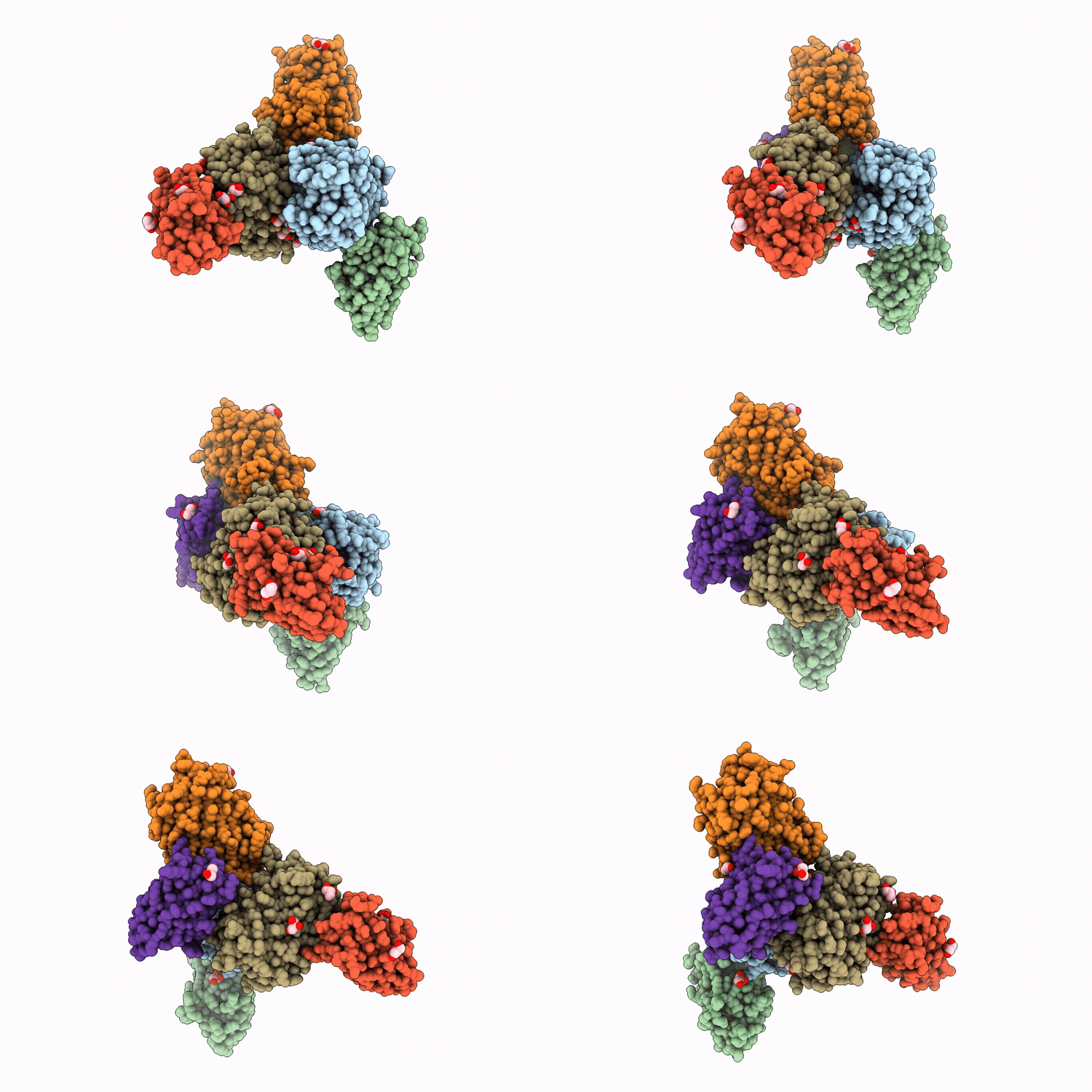
9WPI image
Deposition Date 2025-09-09
Release Date 2026-06-24
Last Version Date 2026-06-24
Entry Detail
PDB ID:
9WPI
Keywords:
Title:
Crystal structure of the Sb32-TGP complex
Biological Source:
Source Organism(s):
Expression System(s):
Method Details:
Experimental Method:
Resolution:
1.82 Å
R-Value Free:
0.17
R-Value Work:
0.14
R-Value Observed:
0.14
Space Group:
C 1 2 1
Macromolecular Entities
Protein Blast
Polymer Type:polypeptide(L)
Molecule:TGP
Chain IDs:A, C, E
Chain Length:232
Number of Molecules:3
Biological Source:Galaxea fascicularis
Protein Blast
Polymer Type:polypeptide(L)
Molecule:Sb32
Chain IDs:B, D, F
Chain Length:144
Number of Molecules:3
Biological Source:synthetic construct
Ligand Molecules
Primary Citation
Screening and structural characterization of a nanobody targeting a thermostable green fluorescent protein.
Acta Biochim.Biophys.Sin. Vol. 1 9 (2026)
PMID: 42178281 DOI: 10.3724/abbs.2025256

Abstact

Nanobody-fluorescent protein pairs are powerful tools in imaging, protein purification, and structural biology studies. While thermostable green fluorescent protein (TGP) offers improved characteristics over conventional GFP, nanobodies that specifically recognize TGP remain relatively limited. Here, we report the screening and identification of a synthetic nanobody Sb32 that binds TGP with nanomolar affinity using the ribosome technique. The crystal structure of the Sb32-TGP complex, solved at 1.82 A resolution, reveals an unusual binding mode in which complementarity determining region 2 (CDR2) provides the major contribution, rather than the typically dominant CDR3. Moreover, the interface is stabilized by an extensive hydration network, which compensates for relatively few direct contacts and may explain the fast association and dissociation kinetics observed for this complex. These findings expand the repertoire of TGP-specific nanobodies and highlight an alternative strategy by which nanobodies achieve high affinity. Sb32 provides a new reagent for TGP-based applications, with potential utility in membrane protein purification and structural studies.

Legend

Protein

Chemical

Disease

Primary Citation of related structures
Feedback Form
Name
Email
Institute
Feedback