

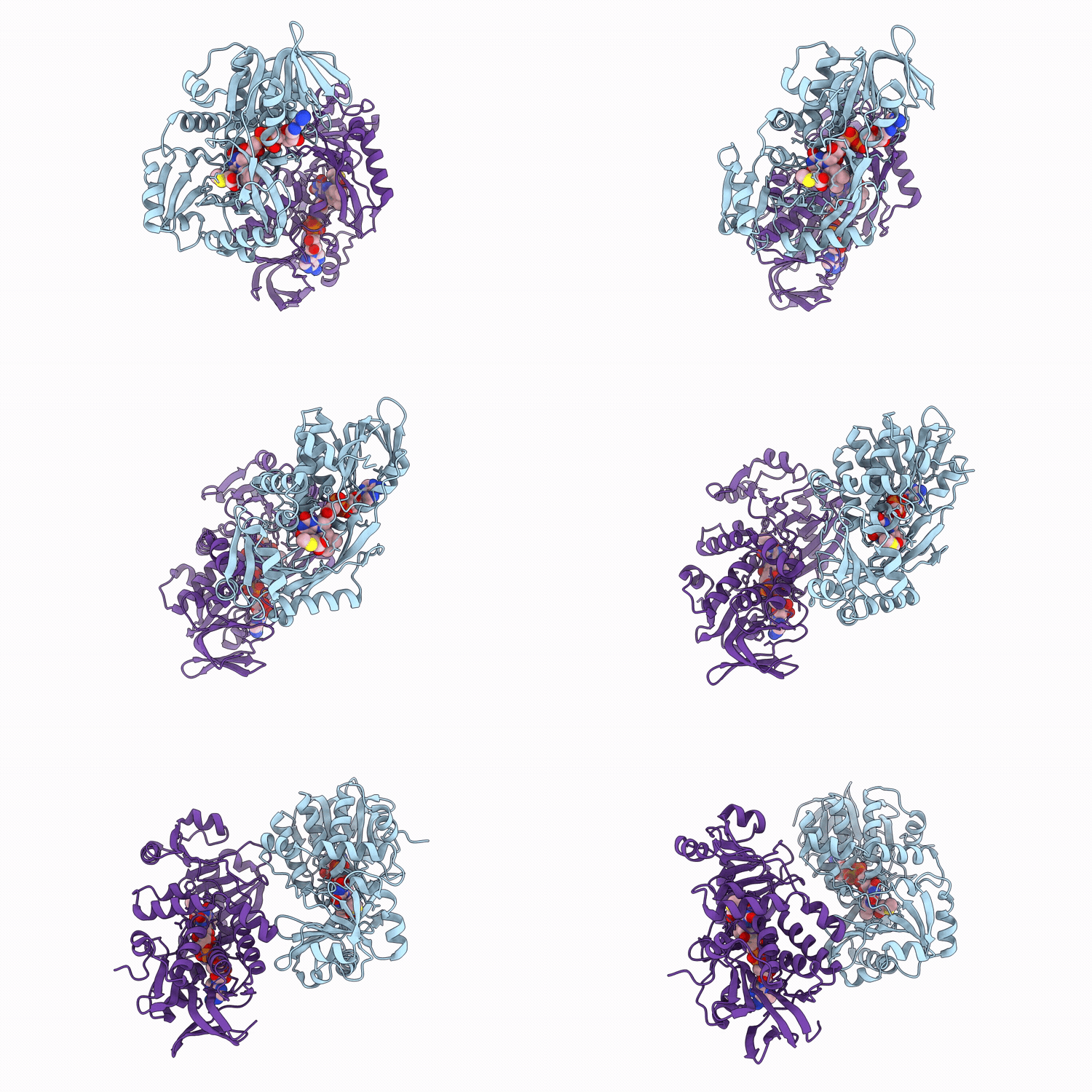
9WOZ image
Deposition Date 2025-09-08
Release Date 2026-07-22
Last Version Date 2026-07-22
Entry Detail
PDB ID:
9WOZ
Keywords:
Title:
Crystal structure of the glycine oxidase from Bacillus subtilis with FAD and 2-(Methylthio)acetic acid
Biological Source:
Source Organism(s):
Expression System(s):
Method Details:
Experimental Method:
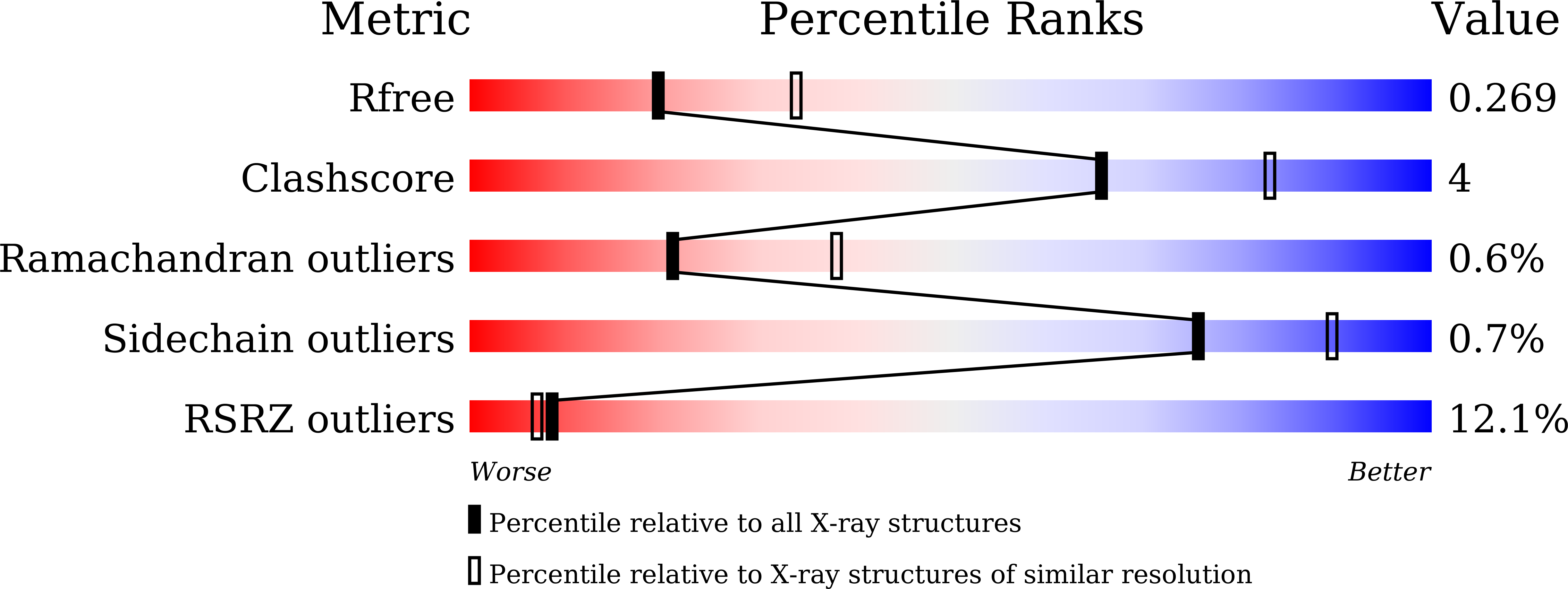
Resolution:
2.49 Å
R-Value Free:
0.26
R-Value Work:
0.22
R-Value Observed:
0.22
Space Group:
P 61 2 2
Macromolecular Entities
Polymer Type:polypeptide(L)
Molecule:Glycine oxidase
Gene (Uniprot):thiO
Chain IDs:A, B
Chain Length:390
Number of Molecules:2
Biological Source:Bacillus subtilis (strain 168)
Primary Citation
Ultrafast Photochemistry of Ligand-Bound Flavoprotein Amine Oxidases: Conformational Insights and Photocatalytic Implications.
Jacs Au 6 3048 3058 (2026)
PMID: 42212076 DOI: 10.1021/jacsau.6c00440

Abstact

Flavoenzymes primarily function in a light-independent manner, yet their intrinsic photophysical properties offer potential for nonnatural photocatalytic applications. Herein, we focus on three physiologically "photoinactive" flavoprotein amine oxidases, namely, monomeric sarcosine oxidase (MSOX), N-methyltryptophan oxidase (MTOX), and glycine oxidase (GOX), which can bind various carboxylate ligands in the active sites in a manner analogous to the binding of fatty acid substrates in the natural flavin-dependent photoenzyme, fatty acid photodecarboxylase (FAP), in the ground state. Using ultrafast spectroscopy, protein mutagenesis with natural and noncanonical amino acids, X-ray crystallography, and classical and quantum chemical calculations, we systematically characterize the photochemistry of these amine oxidases in ligand-free and ligand-bound states. We demonstrate that the binding of carboxylate ligands does not lead to productive photochemical transformation such as photodecarboxylation; instead, the ligands either alter the dynamics of photoinduced electron transfer (ET) between the flavin and nearby aromatic residue(s) or participate in a reversible photoswitching reaction. This allows us to utilize the dynamics of the ultrafast photochemical processes as a probe, and the ligands as surrogates for substrates, to characterize the active-site conformational properties and structure-function relationships of the proteins. Furthermore, we explore why the carboxylate ligands do not undergo photodecarboxylation in GOX by comparing the active-site features and excited-state properties of GOX with those of FAP. The results indicate that the presence of intrinsic quenchers, improper positioning of the ligands, and high energy barriers for ligand-to-flavin ET prevent FAP-like reactivity. Our findings provide critical insights into the active-site conformational landscapes of flavoprotein amine oxidases and offer design principles for engineering new flavin-based photobiocatalysts.

Legend

Protein

Chemical

Disease

Primary Citation of related structures
Feedback Form
Name
Email
Institute
Feedback